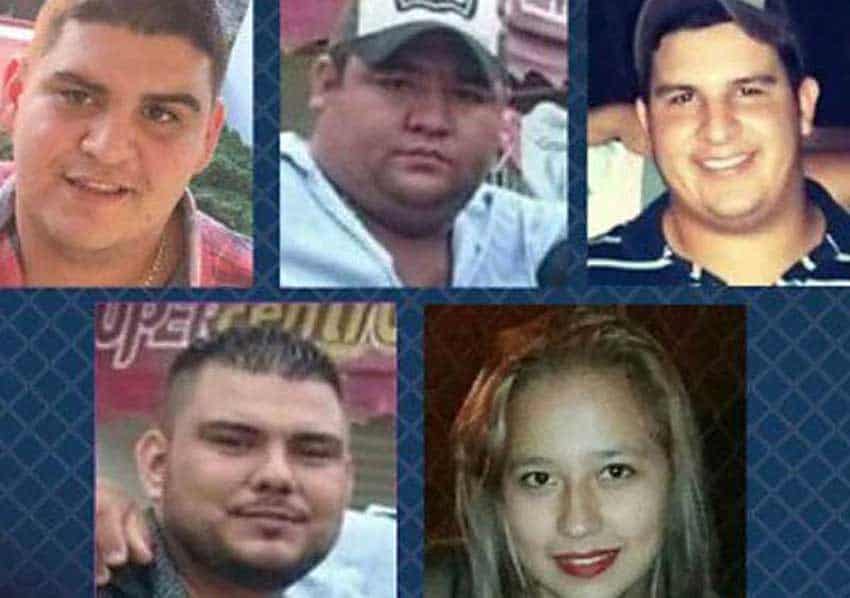
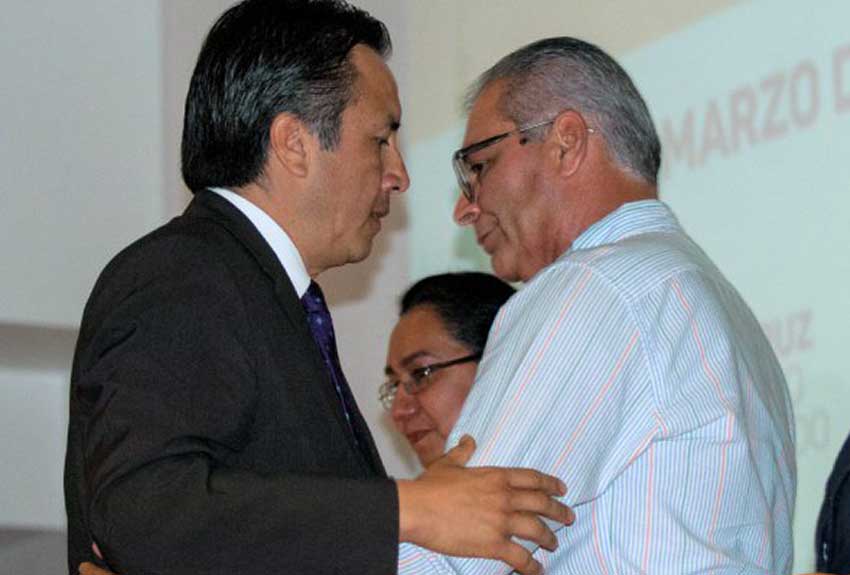
Veracruz Governor Cuitláhuac García issued a public apology to the parents of five youths who were detained by state police three years ago and turned over to the Jalisco New Generation Cartel (CJNG) to be tortured and executed.
In a ceremony yesterday at Mexico City’s Museum for Tolerance and Memory, the governor recognized and condemned the 2016 tragedy in the municipality of Tierra Blanca.
“Today we publicly recognize the state’s responsibility for the actions of state government officials on January 11, 2016 in the forced disappearance, torture and arbitrary execution of five youths, whose rights to liberty, integrity and life were violated.”
“I offer all of you an apology for the actions of the police and the illegal and arbitrary detention of your children as they traveled along a Veracruz highway. I offer this apology because without just cause, the police took them and turned them over to presumed members of a criminal organization.”
The five friends, four men and a teenage girl, were detained while returning home to Playa Vicente from the city of Veracruz and turned over to the CJNG. Their remains were later found on a ranch known as El Limón in the municipality of Tlalixcoyan.
Three of the parents were also among the speakers yesterday.
Businessman Bernardo Benítez told yesterday’s gathering he had intended to speak about justice, but decided he was not the person to do so.

“I have reason not to believe in it. If it existed my son would be alive, working, studying. I do not believe in the justice of the Mexican state.”
It was Benítez who was the first up to make the coffee every morning during the 87 days that parents and supporters camped out in front of the prosecutors’ office in Tierra Blanca. Their protest — to defend the innocence of the five youths — took 1,158 days and lasted through three state governments before authorities recognized that the five were indeed innocent.
Benítez said the parents would “neither forgive nor forget” what happened to their children.
In an interview with the newspaper El Universal, Carmen Garibo Maciel relived the day that her daughter Susana Tabia, 16, went missing. Susana sent a text message that morning to say she and her friends would be on their way home after eating breakfast.
But there was no further communication; calls to the young woman’s cell phone went unanswered.
“And so the hours passed on, thinking and imagining [what might have happened]. We even began to call the hospitals and police stations, but they had no news. I lived in agony from then on, and more so when the Veracruz police told us that our children were criminals and that there were no leads in the investigation.”
Speaking at the ceremony, she begged the governor to expedite the investigation, which has dragged on despite the arrest of 21 suspects, eight of whom were police officers. They have been in custody for as long as three years, awaiting trial.
“The Veracruz police cannot go on working for organized crime. They cannot go on taking our children away from us . . . .We cannot accept their inaction in these cases and for the mothers to have to just bear the pain.”
Federal human rights undersecretary Alejandro Encinas said the federal government will assist family members to get to the bottom of what truly happened.
“With a feeling of great responsibility, I will put all of our resources into attending to this grievance so that the family members of the victims can obtain justice and the guarantee that this will not happen again.”
Source: El Universal (sp), e-veracruz (sp)