Jalisco is facing “a dengue epidemic,” Governor Enrique Alfaro said on Thursday, explaining that the metropolitan area of Guadalajara is the worst affected area of the state.
There were 4,290 confirmed cases of the mosquito-borne tropical disease in Jalisco to September 15 and 25,000 probable cases. Only Veracruz has reported a higher number of confirmed cases.
The state Secretariat of Health confirmed this week that two people have died of dengue in Jalisco this year, while 22 other deaths are being investigated to determine whether the disease was the cause.
In a video posted to social media, Alfaro said that dengue is not only affecting Jalisco but most of Mexico and the greater region.
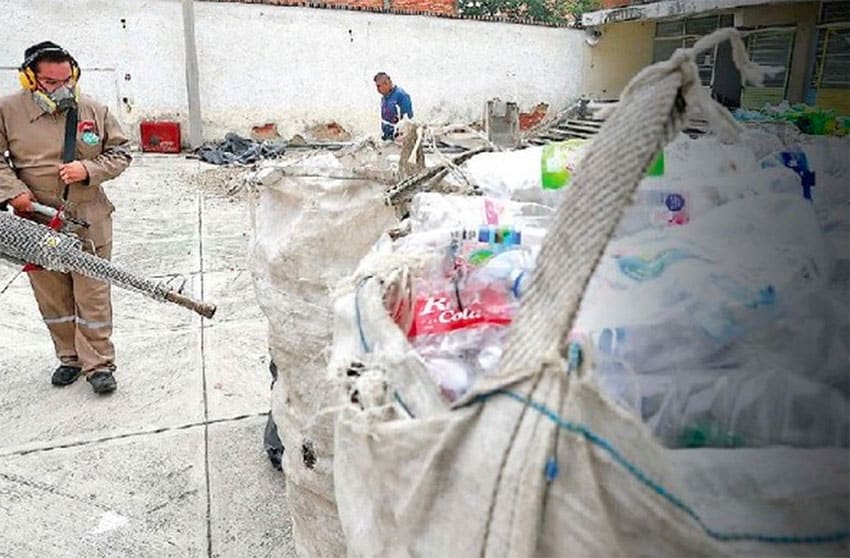
He rejected the claim that his government is to blame for the high number of cases in the state this year, explaining that 116 million pesos (US $5.9 million) has been spent on anti-dengue measures such as mosquito spraying.
The figure is 45 million pesos higher than the amount spent on spraying and other preventative measures in 2018, Alfaro said.
“There’s no shortage of material [pesticides], personnel or equipment to fumigate,” he said.

At the start of the video, the governor took aim at opponents of his government as well as media outlets who he claimed have been spreading misinformation about the dengue outbreak.
“There has been a lot of speculation about this issue and as always there are those who are trying to spread fear and take a political advantage with something that is more dangerous than the disease itself: lies,” Alfaro said.
“The same people as always have tried to generate the perception that the government is responsible . . . that it has been negligent and hasn’t acted on time. They’ve tried to make the public believe that it’s an issue of a lack of medicines when in fact there isn’t even a vaccine against dengue,” he added.
“. . . We’re up against a systematic attempt by our adversaries and some manipulative media to land a blow against our government.”
Alfaro said that climate change was to blame for the high number of dengue cases in Jalisco, pointing to higher temperatures and heavier rain this year.
He also said that a new strain of dengue, serotype-2, has reached Mexico from South and Central America, explaining that people are more susceptible to it because there is no immunity among the population.
“This is a serious and complex problem that hasn’t been created by government actions or negligence,” Alfaro said.
There were more than 16,000 confirmed cases of dengue fever in 16 states during the first eight and a half months of the year, more than triple the number reported in the same period of 2018. Forty-three deaths have been reported across the country.
It came to light earlier this month that federal health authorities didn’t spend a single peso on insecticides until early August despite a higher than user number of dengue cases.
However, the director of the National Center for Disease Prevention and Control Programs, Dr. Ruy López Ridaura, explained that states allocated their own funds to purchase pesticides and asserted that mosquito spraying has occurred throughout the year in all areas susceptible to dengue outbreaks.
On September 5, Health Secretariat undersecretary Hugo López-Gatell accused insecticide vendors of conducting a disinformation campaign that links this year’s outbreak of dengue fever to the federal government’s later than usual purchase of the product.
Two-thirds of insecticides for the control of dengue are purchased by state governments, he said, explaining that federal authorities buy the product later in the year because they only assist spraying efforts when the states’ own capacity to combat mosquitoes is exceeded.
Source: El Sol de México (sp), Milenio (sp)