Major Mexican food supplier Grupo Pinsa agreed to conserve a watershed in the northern state of Sinaloa to neutralize its water footprint, the company announced on Friday.
Grupo Pinsa signed an agreement with the National Forestry Commission (Conafor) and the community of La Noria on Friday to fund the protection of 1,375 hectares of forest in the upper Presidio River Basin, east of Mazatlán, for five years.
Head of Conafor Joanna Acosta Velázquez, representatives of the La Noria Community Assembly and Grupo Pinsa representatives Javier Humarán and Bernabé Herrera participated in the contract signing.
The replenishment of the water body is equivalent to the annual volume of water used by the company, and the move makes it the first company in Mexico to offset its total water footprint through watershed conservation.
“This agreement reflects our real and tangible commitment to the environment. It’s not just about compensating, but also about regenerating and protecting the sources of life we share with the communities,” said Grupo Pinsa’s CEO Víctor Manuel Ledón Lizárraga.
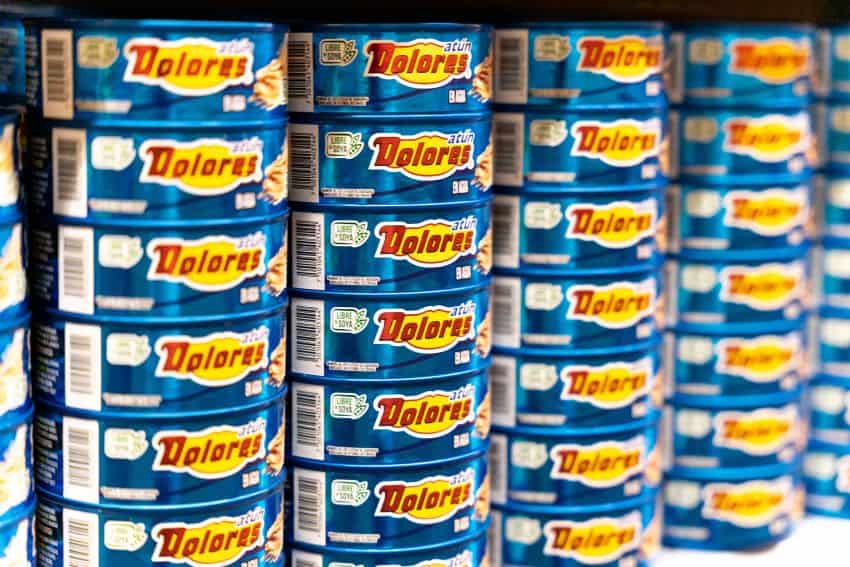
Grupo Pinsa was established over 30 years ago and is a major producer of canned tuna and sardines, with over 100 products under the Dolores, Mazatún and El Dorado brands, sold in Mexico, the United States and Europe. It is Sinaloa’s largest employer, contributing over 6,000 direct jobs.

The conservation strategy was approved as part of the Local Payment Mechanism for Environmental Services with Concurrent Funds (MLPSA FC) and is the largest MLPSA FC agreement approved in Sinaloa so far this year.
The water conservation organization Conselva, Costas y Comunidades, helped identify Grupo Pinsa’s offset needs using hydrological models and will serve as a technical advisor for the program.
The agreement “represents a model of water co-responsibility, in which the public, private and social sectors collaborate to address the water crisis with concrete, science-based actions,” the organization wrote on its Facebook page on Tuesday.
“The community of La Noria will be a direct beneficiary of the mechanism, receiving payments for conserving its territory and participating in activities such as reforestation, soil restoration, community surveillance and fire brigades. These actions are also expected to contribute to increasing water production in the micro-basin, positively impacting water availability for Mazatlán.”
Availability of surface water in the Presidio River has decreased by 56.6% in the last 13 years, while its aquifer has an annual deficit of 22.10 cubic hectometers, making it one of Sinaloa’s most overexploited bodies of water, according to official data.
The worsening water situation is due to deforestation, uncontrolled urban and agricultural growth, irregular extraction and the effects of climate change.
The recent agreement with Pinsa “is the result of more than a decade of technical and community work in the Presidio River basin,” said Executive Director of Conselva Sandra Guido Sánchez.
“It demonstrates that it is possible to build local solutions to a global crisis when the private sector assumes its shared environmental responsibility.”
With reports from Revista Espejo and Periódico Noroeste