Guadalajara households are eligible for an 80% discount on their water bills once they’re verified as having been affected by the contaminated water problem plaguing the state capital.
The discount, approved Monday by the Jalisco state Congress, will apply until December 15 to approximately 600 neighborhoods and as many as 750,000 beneficiaries supplied by the Intermunicipal System of Potable Water and Sewerage Services (SIAPA).
Congress will consult with the state Human Rights Commission to determine which neighborhoods have been affected, according to the president of the Finance Commission, Congresswoman Gabriela Cárdenas Rodríguez.
The Human Rights Commission will report the neighborhoods from which it has received complaints during 2026, with areas being added to the list throughout the year upon their request and with the approval of the SIAPA governing board.
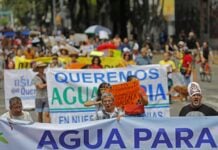
The decision came after Guadalajara Morena party Councilman José María Martínez delivered a citizen petition to the local Congress on July 13, signed by 31,508 people and titled “If there is no clean water, no payment.” The measure aimed to support families who have not been provided with the water quality and hygiene standards they are entitled to by law.
The discount has been set at 80% because the remaining 20% of the user fee to SIAPA contributes to the operation of non-water services, such as drainage, sewage and other sanitary infrastructure.

To receive the discount, users must meet the following conditions:
- Live in a neighborhood included in the list of affected areas.
- Have been receiving poor-quality or cloudy water.
- Have a monthly consumption of up to 25 cubic meters.
- Be a residential or small business user.
- Not belong to the industrial sector or be a large consumer.
During the same session, the Finance Committee approved another initiative to eliminate 100% of the late fees generated by outstanding water bills.
Also, Jalisco Governor Pablo Lemus Navarro has outlined an investment of 100 million pesos (US $5.7 million) for the use of portable water treatment plants, which will rotate across different areas of the city to provide clean drinking water to affected neighborhoods.
With reports from La Jornada, N+ Noticias and Eje Central