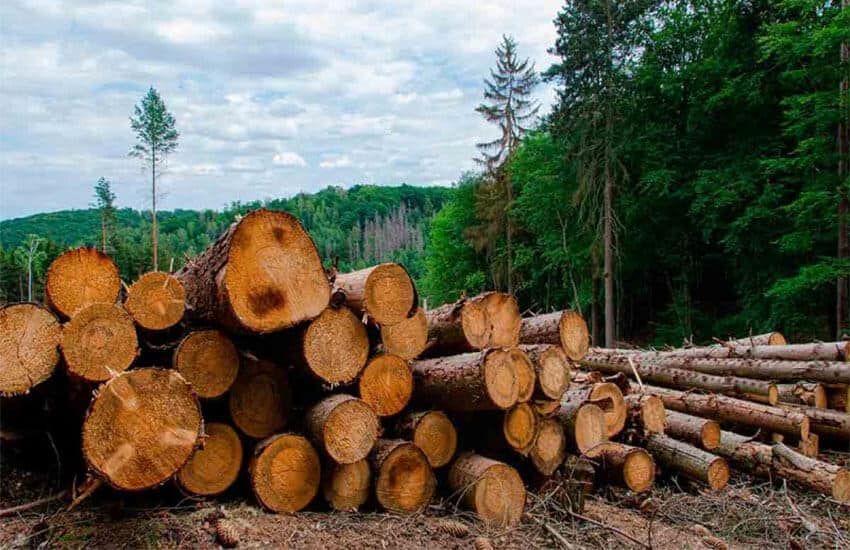
Trees have been cut down on more than 1,000 parcels of land in Quintana Roo in order for the land to be used for the Sembrando Vida (Sowing Life) reforestation program, according to an investigation by the newspaper El Universal.
The newspaper obtained information about the location of 5,142 of some 10,000 parcels of land authorized for inclusion in the federal government’s tree-planting employment scheme in the Caribbean coast state.
By consulting land use maps, it determined that 2,426 of the parcels are located in areas classified as jungle, and 2,651 are on agricultural land.
Via an analysis of satellite photos, El Universal discovered that deforestation had occurred on at least 1,032 parcels. Their combined area is more than 2,500 hectares, or four times the size of Mexico City’s Chapultepec Forest. El Universal said it was unable to determine whether trees had been cleared on an additional 907 plots of land.
A reporter for the newspaper subsequently visited many of the parcels to corroborate the findings of the analysis.
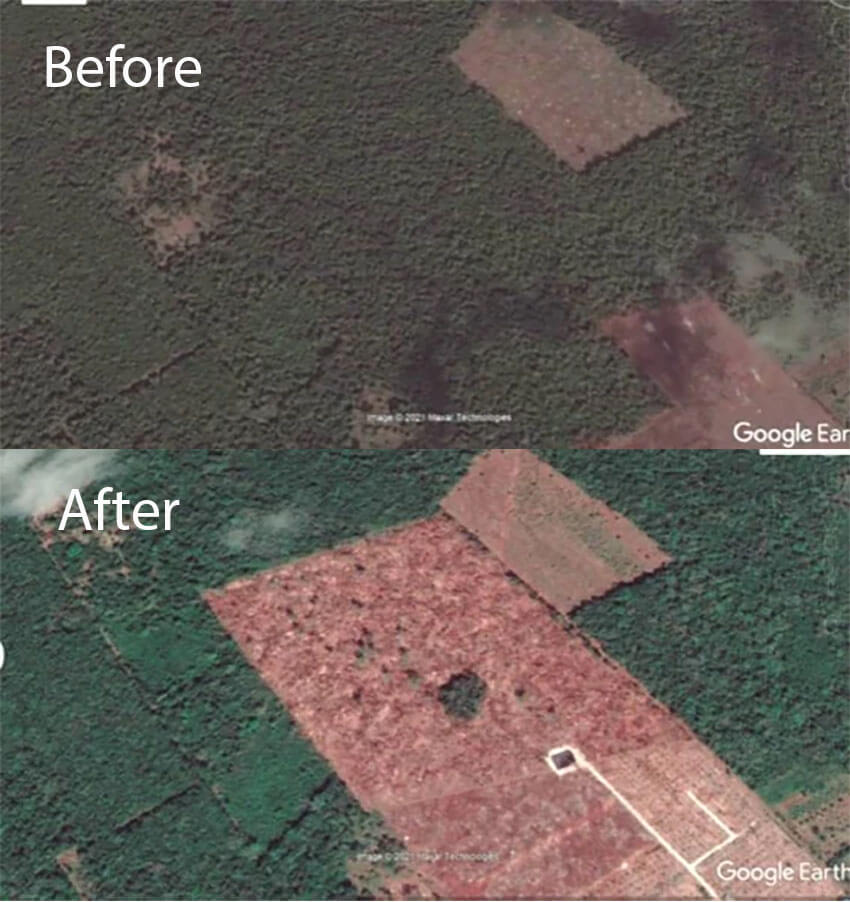
“We had to cut down … trees to enter [Sembrando Vida],” said one beneficiary in the north of Quintana Roo who has planted trees on land classified as jungle.
El Universal sought comment about its findings from the federal Welfare Ministry, which manages Sembrando Vida, but received no response.

It’s far from the first time a deforestation accusation has been leveled at the program, which pays some 440,000 people 5,000 pesos (US $230) per month to plant timber-yielding and fruit trees in poor, rural areas.
El Universal said in a report published in June 2020 that cases had been identified in which people deforested parcels of land in order to participate in Sembrando Vida and collect a monthly salary from the government. The practice – known in the context of the scheme as sembrando muerte, or sowing death – occurred in several municipalities where the program operates, the newspaper said.
A Bloomberg report published in March said that forested land had been cleared in Yucatán and Campeche so that saplings could be planted where mature trees formerly stood, while the World Resources Institute, a United States-based environmental non-profit organization, determined via an analysis of satellite images that people had also cut down trees in Veracruz, Tabasco, Quintana Roo and Chiapas so they could participate.
A recent report by the magazine Gatopardo also highlighted that the program’s requirement for trees to be planted on unforested land was driving farmers to clear their land to join it.
Sembrando Vida, one of President López Obrador’s signature initiatives, has also faced accusations of corruption.
Nevertheless, the United States has agreed to invest in the program both in the south of Mexico and Central America.
In addition to reforesting land – López Obrador describes Sembrando Vida as the world’s largest reforestation scheme – a central aim of the program is to provide opportunities that dissuade people from migrating in search of work, especially to the United States.
With reports from El Universal