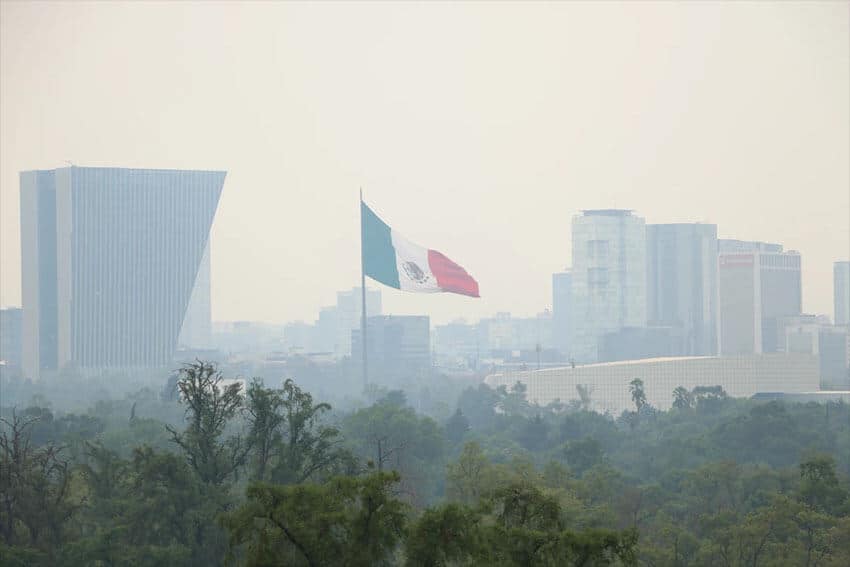
Another of Mexico’s frequent bursts of heightened fireworks activity is upon us and for Mexico City that means higher pollution on Christmas and New Year’s Day.
Mexico City has recorded elevated pollution levels on those days every year for the past 21 years due to the explosion of fireworks, according to the agency responsible for monitoring air quality in the capital.
The fine particle pollution was so bad at Christmas in 2018 and 2019 that air quality emergencies were declared.
Pollution has already been a problem in the capital this month as mobility increased due to the switch to low risk green on the federal government’s coronavirus stoplight map. There have been six December days when air quality in the capital was deemed very bad or extremely bad.
The explosion of cohetes (bottle rockets) and cuetes (fireworks) only exacerbates the problem.
“During fireworks displays there is a significant increase of metal traces in the air and they can sometimes also produce highly toxic contaminants such as dioxins and polychlorinated furans,” said a National Polytechnic Institute study.
Pollution from fireworks is also a problem in neighboring México state, especially in the municipalities of Tultepec, Tultitlán and Zumpango, where the explosives are sold at markets.

Fireworks are a staple of all kinds of celebrations in Mexico, including religious, patriotic and sporting ones.
With reports from Reforma