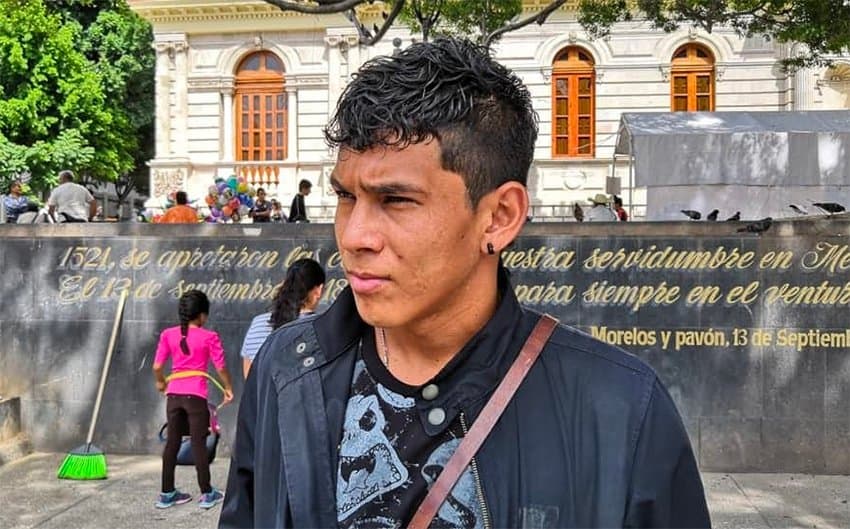
A young man from Honduras who was part of the first caravan of migrants to enter Mexico in October has had a change of heart about making a new life in the United States: he is considering staying in Guerrero.
Jefferson Rodríguez, 21, left what little he had to flee drug violence, unemployment and a lack of opportunities.
Rodríguez abandoned his travel companions in the first and largest of the migrants’ caravans after he met with representatives from the Chilpancingo-based Minerva Bello Center for Human Rights while in the southern state of Chiapas.
The non-governmental organization told Rodríguez that it could help him get established in Mexico and become a law student in the capital of Guerrero.
He told the newspaper Milenio that to demand change in his home country was impossible because “if you confront the government, they make you disappear.”
He said most of his friends are dead or have disappeared.
“There they do not look for those who have disappeared like they do here. When you disappear there you disappear and no one sees anything. Most of my childhood friends were killed and disappeared.”

And no one can do anything about the government, “no one can.”
Source: Milenio (sp)