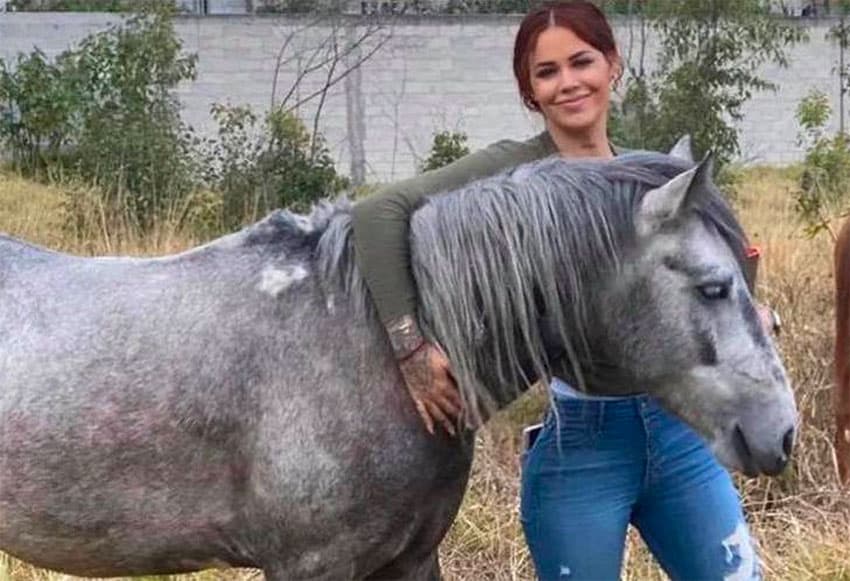
Elena Larrea is literally saving lives. The young woman from Puebla runs Cuacolandia, a sanctuary for abused and mistreated horses that is one of just a handful of similar organizations in Mexico.
The photos she posts to Facebook of the horses that find their way to her are dramatic, a testament to her love for the animals and determination to allow them to live what remains of their lives with health and dignity.
Larrea considers herself an activist in defense of animal rights of all species, but horses have a special place in her heart.
“There is nothing deeper than the gaze of a horse,” she told the newspaper Milenio in an interview. “Horses are the windows to your own soul. That nobility they have is not possessed by any other animal.”
Cuacolandia is located in the Haras Ciudad Ecológica area of Puebla’s capital and is home to more than 100 rescued horses from all over the country.
“We have cart horses from the state of Mexico and the carriages of Acapulco, we have retired mounted police horses, we have horses who were abandoned in the streets,” she says.
This spring Larrea received 42 former carriage horses from Acapulco after the city began enforcing Guerrero’s animal welfare act of 2014, which prohibits their use.

One of them was Unicorn, so-named because his former owners used to slap a fake horn on his forehead when he pulled tourists through the city’s streets. Unicorn arrived at Cuacolandia not much more than skin and bones, yet after just six months he’s returned to a healthy weight.
Another new arrival is Willy, a brown horse with a ghastly open wound the circumference of a melon at the base of his neck, the result of pulling a garbage cart in Reyes La Paz, Mexico state.
Larrea is treating his injury with medication, has removed his horseshoes and is showering him with “love and carrots” as he heals.
According to Larrea, most of the horses are over 18 years old, The oldest is El Abuelo, at 29, and the youngest is El Covid, who at two months old is the first foal born at the sanctuary.
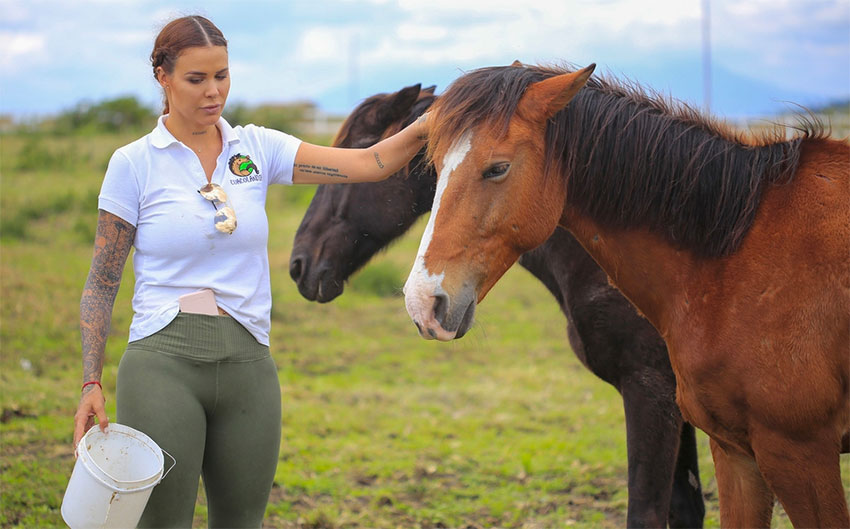
Unfortunately, most horses arrive at the ranch in similar states to Unicorn and Willy. Often they are abused, malnourished, or simply abandoned by their owners after they have served their purpose.
Larrea even takes in former racehorses who have been injected with cocaine or other performance-enhancing drugs until they are no longer useful.
Around 30% of the animals that arrive at Cuacolandia suffer from obvious injuries and malnutrition, and another 10% come to her in a state Larrea describes as alarming.
She hopes her labor of love will remind people that horses have been humanity’s constant companion throughout history, and should be treated with respect and kindness.
“We need to start treating them as sentient beings, which is what they are. Beings who feel pleasure, who feel pain, who dream. We must stop seeing them as an object and if you are going to have them as an object, at least have respect for them and give them a good life, and if you are going to exploit them, at least feed them,” she says.
Maintaining so many animals and the space they need is no small feat. Food is Larrea’s top expense, and Cuacolandia tries to produce its own forage to offset costs. Donations of any kind are always welcome.
But no matter the expense, no horse will be sold or adopted out, and Larrea says that the property could support up to 300 horses if need be.
“We don’t use them for anything, they just come to a place to have a decent life after having served the human under deplorable conditions all their lives,” Larrea says. The goal is to give the animals a break and a moment of peace.
“It costs nothing to be kind to a being lower than you,” Larrea says. “They are here with us, not for us.”
Source: Milenio (sp)