More than 66 million pesos allocated to the previous government’s anti-hunger initiative was converted to dollars and transferred to bank accounts in eight foreign countries, audits show.
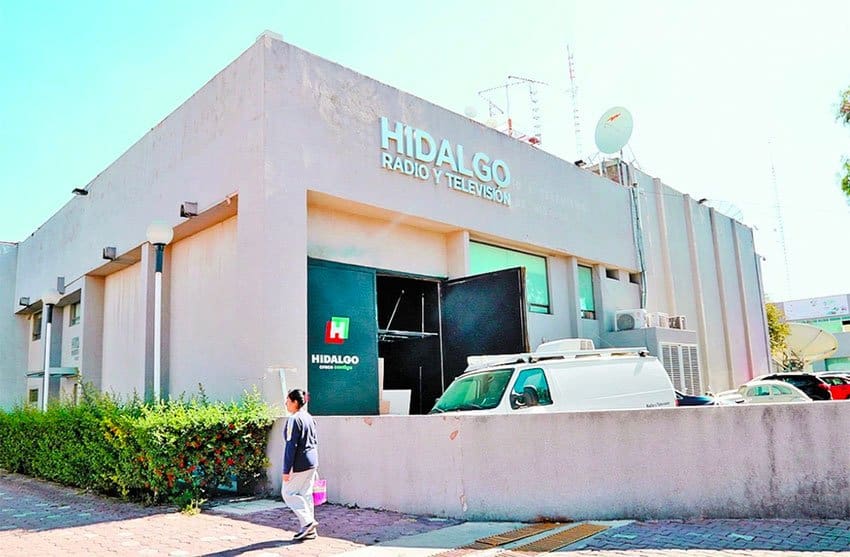
Between 2014 and 2015, the federal Secretariat of Social Development (Sedesol) paid public broadcaster Radio y Televisión de Hidalgo (RTVH) more than 955 million pesos (US $47.5 million at today’s exchange rate) to conduct surveys about the impact of its social programs and to produce and broadcast commercials detailing progress of the National Crusade Against Hunger (CNCH).
But instead of carrying out the work it was contracted to do, RTVH disbursed the money to dozens of different companies and 66.1 million pesos (US $3.3 million at today’s exchange rate) ended up in bank accounts in China, Pakistan, South Korea, Israel, Denmark, Belgium, Ecuador and the United States.
The Federal Auditor’s Office (ASF) filed two criminal complaints with the federal Attorney General’s office (PGR) in relation to the case, one in October 2017 and another in October this year.
When the ASF detected that the money had been sent overseas, it sought the assistance of the Financial Intelligence Unit (UIF), a division of the Secretariat of Finance (SHCP), in order to conduct an investigation to determine who were the ultimate beneficiaries of the funds, according to information obtained by the media organizations Milenio and La Silla Rota.
But whether the UIF did in fact conduct an investigation is uncertain, according to SHCP officials of the new federal government who are now making inquiries into the case.
Santiago Nieto, a former chief electoral crimes prosecutor who was dismissed by the past government, now heads up the UIF and has pledged to combat corruption and impunity.

The UIF chief during the time in question was Alberto Bazbaz, who served under former finance secretaries Luis Videgaray, who later became foreign secretary, and José Antonio Meade, who left the role to contend this year’s presidential election.
According to ASF investigations, the Sedesol official responsible for orchestrating the allegedly corrupt agreements with RTVH was Claudia Morones Sánchez.
The social development secretary at the time was Rosario Robles, who has been embroiled in several corruption scandals but denies any wrongdoing.
A month after Robles left Sedesol to become the secretary of agrarian development and urban planning, Morones took up a management position in a government body with links to the secretariat her former boss moved to.
Radio y Televisión de Hidalgo, a broadcaster owned by the government of Hidalgo, claimed that it didn’t have the capacity to carry out the work Sedesol contracted it for and consequently subcontracted a total of 61 companies during 2014 and 2015.
However, the ASF detected a range of irregularities related to the contracts, including the companies’ failure to complete the work for which they were contracted.
The money RTVH received gradually disappeared as it outsourced more and more work and made more and more bank transfers. Several companies that received the money made the transfers to the foreign bank accounts, according to the ASF investigation.
Former RTVH officials who made statements to the ASF claim that the Hidalgo state broadcaster was forced to enter into two separate agreements with Sedesol and Morones decided which subcontractors the money would be directed to.
Two former RTVH directors were arrested in relation to the scheme. One of them is now a fugitive from justice.
But Robles, a cabinet secretary during the entirety of former president Enrique Peña Nieto’s six-year term, has not faced any criminal charges.
During a defiant appearance before Congress in October, she rejected all allegations of corruption against her, declaring “my hands are clean and my conscience is clear.”
Asked by a Milenio journalist this week whether in two or three years “we won’t find out” that she has millions of dollars to her name, Robles responded: “Unless I win the lottery, I don’t think you’ll hear about that.”
The anti-poverty program she was charged with implementing failed to achieve its ambitious goal of eradicating hunger and yet more of its funds were allegedly embezzled through corruption schemes.
Source: Milenio/La Silla Rota