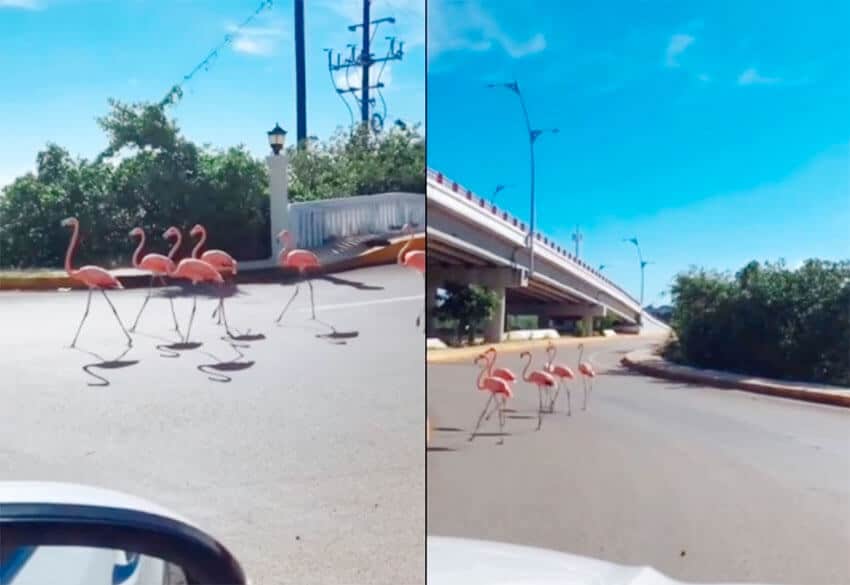
A group of flamingos is called a flamboyance, a particularly adept description of a group of the long-legged and elegant birds that strutted their stuff across an avenue in Progreso, Yucatán, Friday morning.
Captured by bystanders, one video uploaded to social media had NYSNC singing Bye, Bye, Bye in the background, while the birds, unperturbed by the human onlookers, strut across the street with flair.
These majestic birds are not generally sighted in this part of the state and are much more likely to be spending time in Celestún where over 35,000 flamingos spend the winter mating season, or the salt flats of Los Colorados near Río Lagartos, where they are one of the region’s most popular natural attractions with visitors during their yearly migrations.
This made their traffic-stopping appearance in Progreso even more impressive, in addition to the fact that these birds are generally only in the area from November to April each year.
There are, however, always a few, like these six living in the fast lane in Progreso, that stick around for the entire year and are joined by their feathered friends in the winter.
The chance to spot them without having to go to their breeding ground is rare and it delighted residents in Progreso.
With reports from Por Esto