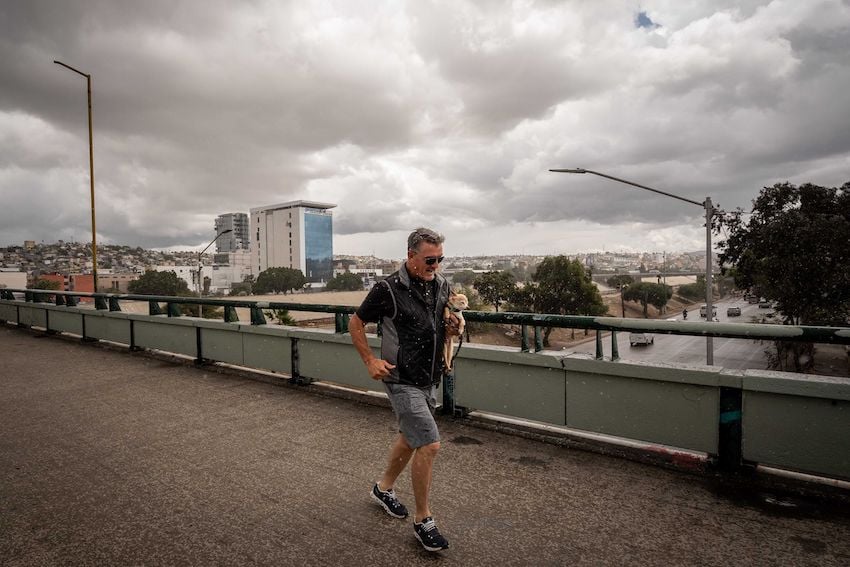
Perceptions of insecurity in Mexico have fallen to their lowest level since President Claudia Sheinbaum took office, but around six in ten Mexicans still consider their city an unsafe place to live, according to the results of the latest National Survey of Urban Public Security (ENSU).
Conducted by the national statistics agency INEGI between Feb. 23 and March 13 with adult residents of 27,300 households in 91 urban areas across Mexico, the first quarter ENSU found that 61.5% of respondents consider their city an unsafe place to live.
That figure declined 2.3 percentage points compared to the fourth quarter of 2025 and 0.4 points compared to a year earlier. It is the lowest ENSU result since Sheinbaum took office in October 2024. The incidence of various crimes, including homicides, have declined over the past 18 months.
The first quarter ENSU found that 67.2% of women and 54.6% of men consider their city an unsafe place to live. The figure for women declined 2.2 points compared to the previous quarter and 0.3 points annually. The figure for men fell 2.5 points compared to the fourth quarter of last year and 0.4 points compared to a year earlier.
The latest ENSU results stand in stark contrast to the results of Mexico News Daily’s inaugural Expat Safety Perceptions Index (ESPI) survey. While the ENSU found that a majority of Mexicans consider their city an unsafe place to live, MND’s ESPI survey found that foreign residents of Mexico overwhelmingly feel very safe in their day-to-day lives.
Perceptions of insecurity surge in Puerto Vallarta
The city in which perceptions of insecurity increased most markedly between the final quarter of 2025 and the first quarter of 2026 was Puerto Vallarta, located on the Pacific coast of Jalisco. The percentage of respondents who consider Puerto Vallarta an unsafe place to live increased to 59.9% in the first quarter of the year from 32% at the end of 2025.
The latest ENSU began the day after Jalisco New Generation Cartel leader Nemesio “El Mencho” Oseguera Cervantes died after being shot in a military operation in Tapalpa, Jalisco. The operation triggered a violent cartel response, including in Puerto Vallarta. The violence in Puerto Vallarta on Feb. 22 appears to be the main reason why the percentage of residents who consider the city unsafe increased almost 28 points from one quarter to the next.

Tepic, the capital of Nayarit, and Zapopan, a municipality in the metropolitan area of Guadalajara, also saw sharp increases in the number of residents who consider the cities unsafe. In Tepic, the figure increased to 53.9% from 37.9% in the final quarter of 2025, while in Zapopan it rose to 70.8% from 54.7%.
Which cities have the highest percentages of residents with personal security concerns?
INEGI reported that 92.1% of residents of Irapuato, Guanajuato, consider their city an unsafe place to live. Known as “the strawberry capital of the world,” Irapuato was the city with the highest percentage of residents with personal security concerns, up from fifth in the final quarter of 2025.
The only other city that more than 90% of residents consider unsafe is Guadalajara, which was also affected by violence after “El Mencho” was killed. According to the results of the latest ENSU, 90.2% of residents of the Jalisco capital consider the city unsafe.
After Irapuato and Guadalajara, the cities with the next highest percentages of residents with personal security concerns in the first quarter of 2026 were:
- Ecatepec, México state: considered unsafe by 87.6% of surveyed residents of the densely populated municipality that adjoins Mexico City.
- Uruapan, Michoacán: considered unsafe by 86.7% of surveyed residents. Uruapan had the highest percentage of residents with security concerns in the final quarter of 2025, a period in which the city’s mayor was murdered.
- Reynosa, Tamaulipas: considered unsafe by 86.1% of survey respondents who live in the northern border city.
The other cities considered unsafe by more than 80% of surveyed residents were Culiacán, Sinaloa; Ciudad Obregón, Sonora; Chilpancingo, Guerrero; Cuernavaca, Morelos; Villahermosa, Tabasco; Cuatitlán Izcalli, México state; Puebla city; Chimalhuacán, México state; and Naucalpan, México state.
Which cities have the lowest percentages of residents with personal security concerns?
The cities with the lowest percentages of residents with personal security concerns in the first quarter of 2026 were:
- San Pedro Garza García, an affluent municipality in the metropolitan area of Monterrey, Nuevo León: 4.4%
- Piedras Negras, a border city in the northern state of Coahuila: 12.9%
- Benito Juárez, one of the 16 boroughs of Mexico City: 16.4%
- Saltillo, the capital and largest city in Coahuila: 16.7%
- San Nicolás de los Garza, another municipality in the metropolitan area of Monterrey: 19.4%
The places where Mexicans most commonly feel unsafe
Almost 71% of ENSU respondents reported feeling unsafe while using ATMs on the street, while 65% expressed security concerns about walking on the streets they regularly use.
Just over 64% of those surveyed said they felt unsafe traveling on public transport, while 60% expressed concerns about traveling on highways.
More than 54% of respondents said they felt unsafe at the bank.
The percentages were higher among women than among men in all those places — and several others, including the home and the workplace.
How safe is Mexico according to its foreign residents? The survey results
Crime and anti-social behavior
Among the respondents who reported having seen or heard criminal activity or anti-social behavior near their homes in the first quarter of 2026, almost six in 10 said they had observed people drinking in the street.
More than 45% of respondents reported having witnessed a robbery or mugging, and around four in 10 told INEGI they had seen people buying or using drugs.
More than 38% of those surveyed said they had witnessed homes or businesses being vandalized, and 36.5% reported having heard frequent gunshots.
Just under one-quarter of respondents said they had witnessed some kind of gang activity near their home.
Opinions on Mexico’s security forces
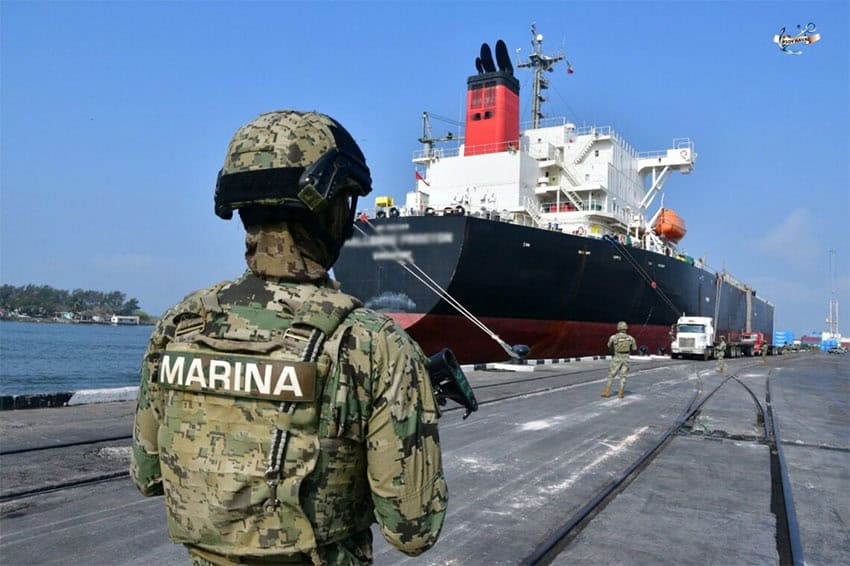
The Mexican Navy is the country’s most effective security force, according to the results of the latest ENSU. Just over 87% of respondents said they believe the Navy is very or somewhat effective in preventing and combating crime.
More than 85% of those polled said the same about the Mexican Army, while the figures for the Air Force and the National Guard were 84.9% and 77%, respectively.
Just over 56% of respondents said that state police forces are very or somewhat effective in preventing and combating crime, while 50.8% said the same about municipal police.
Citizens’ security expectations
Around one in three survey respondents (30.1%) said they expected the security situation in their city to remain “just as bad” during the next 12 months, while 27.1% predicted a deterioration.
Almost a quarter of respondents (24.7%) said they expected security to improve in their place of residence during the next 12 months, while 17% anticipated that the situation would remain “just as good” as it currently is.
Mexico News Daily