The Mexican economy is showing signs of cooling as gross fixed investment and private consumption registered monthly declines in January.
Data published by the national statistics agency INEGI on Monday indicated a slowdown in the two main drivers of growth even as public investment rose slightly.
After a promising end to 2025, fixed investment started 2026 with renewed caution, according to INEGI’s Monthly Indicator of Gross Fixed Capital Formation (IMFBCF) which showed a month-on-month decrease of 1.1% in the first month of the year, thus cutting a three-month streak of recovery.
The IMFBCF figures are in line with those of the Global Indicator of Economic Activity (IGAE) for the month of January (published on March 24), which revealed a monthly decrease of 0.9% in the Mexican economy.
It must be noted that the IGAE figures indicate the behavior of economic activity on the supply side, while fixed investment data examine the aggregate demand side.
January’s IMFBCF performance represented the sixth month-on-month decline in the last 12 months, while the year-on-year comparison showed a decrease of 2.2%, marking 17 consecutive months of negative figures in this metric.
The main drag on investment came from the machinery and equipment sector, which fell 8% annually, reflecting fewer acquisitions of productive assets by companies.

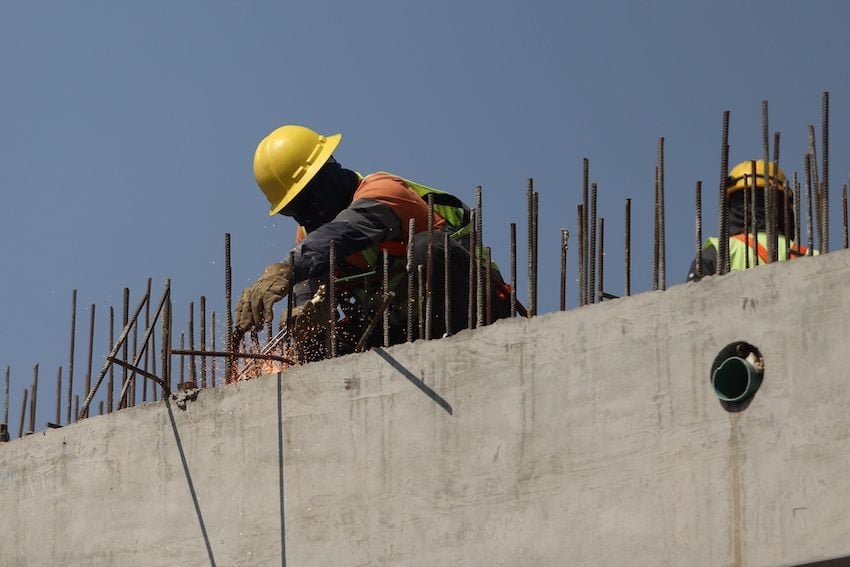
In contrast, construction managed to stay in positive annual territory (3.8%), although it also registered a monthly drop of 0.8%, indicating that the observed slowdown in this sector is ongoing.
Private investment fell 4.5% year-on-year, while public investment rose 3.8%. However, overall investment declined 2.2% in January compared to the previous month, according to seasonally adjusted data.
To put the figures in context, Mexico’s gross fixed investment grew 3.4% in 2024 and soared 19.7% in 2023 amid the boom in the nearshoring phenomenon.
INEGI reported that seasonally adjusted private consumption fell 1.6% month-on-month in real terms, its largest recent decline, although it still showed year-on-year growth of 2.7%.
The decline in consumption was concentrated in reduced spending on imported goods, which plummeted 6.8% month-on-month. On the other hand, consumption of national goods and services fell 0.7%, with declines in both goods (-0.9%) and services (-0.5%).
Purchase of imported goods actually increased year-on year by 12.2%, but the monthly decline suggests a loss of dynamism as 2026 begins.
Private consumption is the main driver of economic growth in Mexico, with a share of close to 65% of GDP, so even mild deterioration in its dynamics directly impacts economic activity.
With reports from Expansión, El Economista, La Jornada and El Sol de México