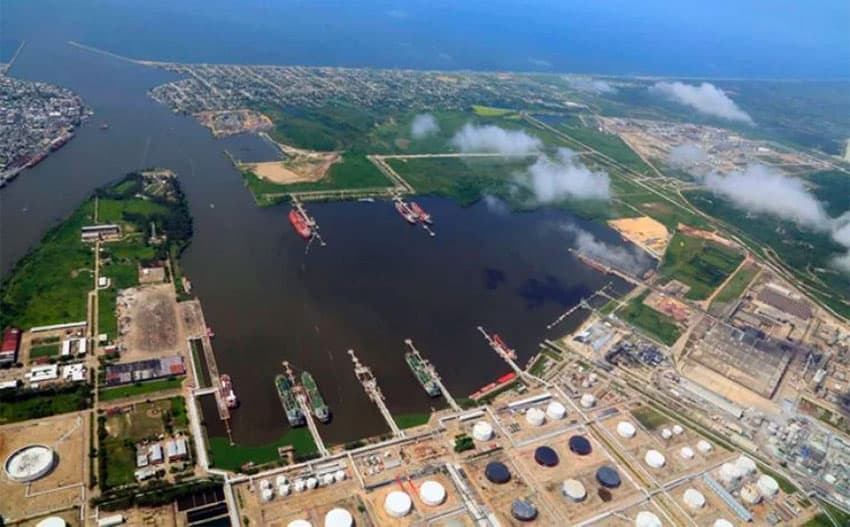
Modernization of the railway between Coatzacoalcos, Veracruz, and Salina Cruz, Oaxaca, could increase cargo capacity between the two ports by more than 11 times, according to the state-owned Isthmus of Tehuantepec rail company.
The company said the new rail link between the cities – planned as part of the federal government’s Isthmus of Tehuantepec trade corridor project – would allow shipments between the Gulf of Mexico and Pacific coasts to increase from an estimated 443,165 tonnes in 2019 to 5.61 million tonnes annually.
Communications and Transportation Secretary Javier Jiménez Espriú told the newspaper El Financiero that studies for the upgrade of the 303-kilometer railway are currently being carried out prior to the project going to tender.
As part of the trade corridor project, the government also plans to expand the ports in Coatzacoalcos and Salina Cruz. Ten industrial parks are expected to be developed in and around both cities.
Héctor López Gutiérrez, chief of the government’s ports and merchant marine agency, said that 16 companies have expressed interest in building and operating new container terminals at the two ports.
In addition, the Isthmus region is slated to become a free zone, where value added and income taxes will be cut by half.
The entire trade corridor project is expected to cost some 259 billion pesos (US $13.6 billion) of which the government will provide around 100 billion.

Federal authorities will invest 31.2 billion pesos in the expansion of the ports, 23.3 billion on electrical energy projects, 10.4 billion on highway upgrades, 10 billion on natural gas infrastructure, 17 billion on the Salina Cruz and Coatzacoalcos refineries, 1.1 billion on the railway and 440 million on telecommunications, according to a plan presented to the European Investment Bank (EIB).
Rafael Marín Mollinedo, chief of the trade corridor project, said the EIB has expressed interest in participating in the project.
According to a report in the newspaper El Heraldo de México, shipping companies’ use of the Isthmus of Tehuantepec trade corridor will save them as many as four days in comparison with using the Panama Canal.
But the president of the Mexican Shipping Agents Association said in April that any notion that the new rail project will allow Mexico to compete with the Panama Canal is a “pipe dream.”
Cristian Bennett Lira said that at least 200 trains a day would have to run between Salina Cruz and Coatzacoalcos in order for the railway to be able to compete with the 105-year-old United States-built feat of engineering.
Source: El Financiero (sp), El Heraldo de México (sp)