All but two of Mexico’s states collected more revenue in 2017 than they had forecast, according to a new study, creating ample opportunity for corruption among governors and other public officials.
In its study State budgets: simulation and discretion, the Mexican Institute for Competitiveness (IMCO) found that states last year took in almost 320 billion pesos (US $16.8 billion) above what they had predicted.
The surplus funds came from higher than anticipated tax revenue, the collection of fines and other unspecified transfers to state coffers.
However, rather than allocating the excess money to projects and programs that would benefit citizens or paying off state debt, the funds were used on bureaucratic expenses, the IMCO study says.
IMCO director Juan Pardinas said the practice occurs because there are no firm regulations that prevent the funds from being used by state governors and other high-ranking state officials at their own discretion.
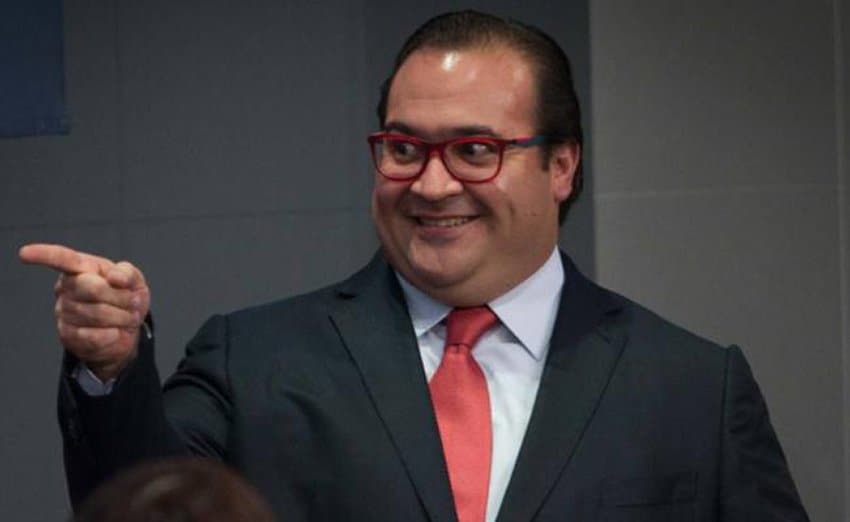
He added that there is an urgent need to enforce regulations that put an end to discretionary spending, otherwise officials will continue to have a ready-made opportunity to embezzle public funds, following in the footsteps of former state governors such as Javier Duarte of Veracruz.
“If we don’t change this, Javier Duarte will be a [mere] anecdote of the system. What should surprise us is that we haven’t heard about new Javier Duartes within this context of opacity,” Pardinas said.

The IMCO chief said that discretionary spending could also undermine proposed austerity measures.
“. . . What’s the point of an official earning very little when 130 million pesos can be spent per year on ceremonies and they have discretion to hire whoever they want to organize the party,” Pardinas said.
IMCO researcher Diego Díaz said the lack of legislation governing the use of excess resources was akin to giving a “blank check” to state authorities.
“Due to the fact that they are not properly regulated, [surplus funds] are blank checks for state governments . . . There is a very significant incentive for governments [to consider the money as a slush fund]. . . that governors can use for whatever they wish without consulting the state Congress,” he said.
Of Mexico’s 32 federal entities — 31 states and Mexico City — 30 collected more revenue than they had anticipated last year and of those, eight underestimated their income by 25% or more.
Only Yucatán and Chihuahua received lower than forecast revenue.
Quintana Roo underestimated its revenue by 79%, Veracruz by 42% and Nuevo León by 37%, the IMCO study found.
Across all states, the average underestimation was 18% and last year was the third year in a row that states had forecast lower revenue than they collected.
The study also determined that despite the windfall, 14 states spent less than they had budgeted for infrastructure while across all entities, spending on government publicity was 83% higher than forecast.
The Chihuahua government spent over 1.4 billion pesos (US $73 million) on official advertising, the same amount it spent on public security.
The Baja California government’s expenditure on travel for officials was 265% higher than its spending on health while the Guerrero government spent 645% more on events and ceremonies than it had budgeted and 342% more on travel.
Source: Milenio (sp)