Ash falling from the skies. Hundreds of people evacuated. The destruction of federally protected land. These are some of the consequences of one of the worst forest fire seasons in a decade.
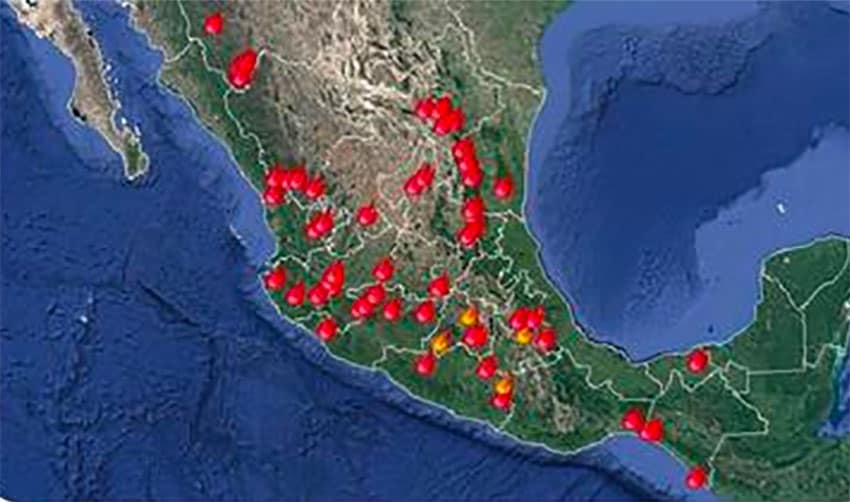
According to a report by the National Forestry Commission (Conafor) Mexico had recorded 1,684 forest fires as of March 11, affecting 29,559 hectares of land, the third most extensive loss of forest lands in Mexico in a decade, the report said.
And the fight is by no means over: last month, Conafor issued a warning that Mexico was in danger of experiencing a critical forest fire season this year. As of Wednesday, the federal agency said Mexico was battling 61 active forest fires in 20 states, representing 11,478 hectares of land.
That’s up from 52 fires in 17 states on 14,160 hectares on Tuesday. Conafor said 2,844 firefighters were at working on the blazes.
A major reason for the high number of fires is Mexico’s wide-ranging drought. As of March 15, the National Water Commission (Conagua) said that 1,694 of Mexico’s 2,643 municipalities, or 83%, were in drought conditions. In December, the agency declared seven of Mexico’s northeastern states to be in a state of natural disaster due to drought.
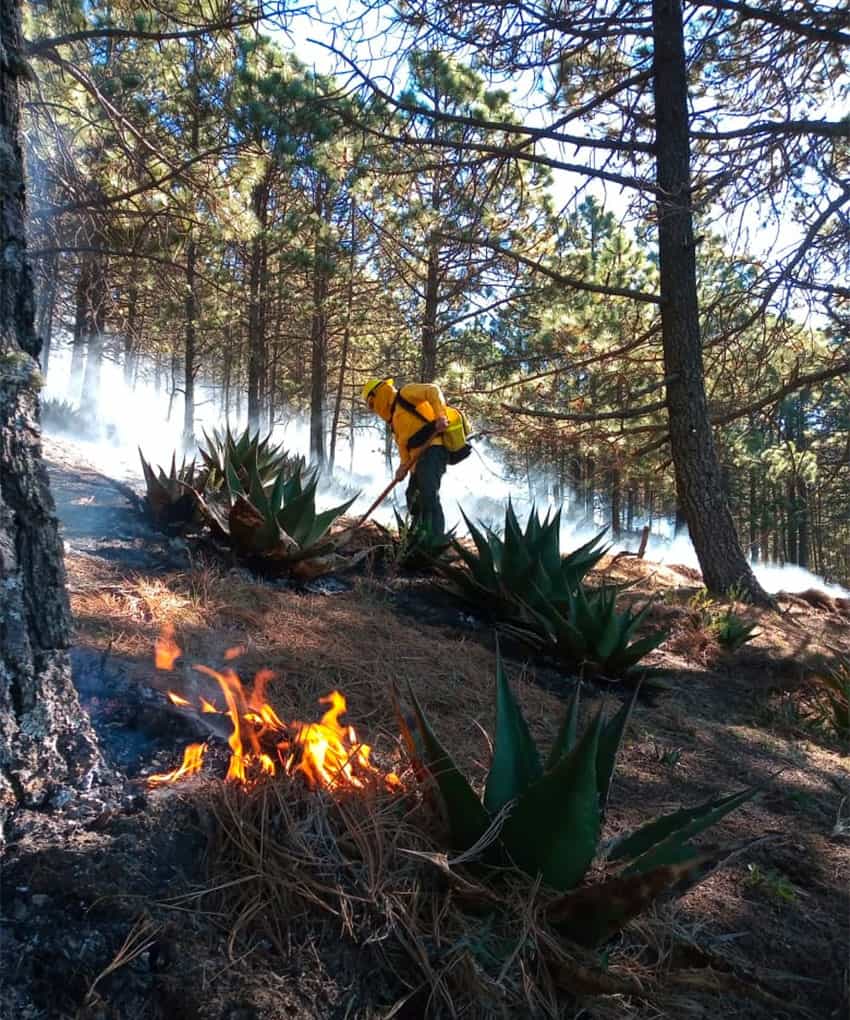
Meanwhile, this year’s La Niña weather phenomenon is only increasing drought conditions.
The consequences of such dry conditions are clear in two northern states, where fires in the Sierra de Arteaga region of Coahuila and the Sierra de Santiago region of Nuevo León have destroyed more than 2,000 hectares of land and displaced 400 people, according to Forbes México. In Monterrey last week, residents saw ash falling from the sky due to that fire and an ongoing fire in the nearby Cumbres de Monterrey protected reserve, where 2,100 hectares of land were threatened.

Cumbres de Monterrey is just one of 14 federally protected reserves that currently have areas on fire, according to Conafor. Another is the Sierra de Manantlán, which in the last few years has been identified as part of Mexico’s jaguar corridor.
Meanwhile, Conafor is working with a continually shrinking budget and financial resources that states battling wildfires could normally turn to for help have been dismantled in the last year. In 2016, Conafor’s budget was 7 billion pesos, according to the newspaper La Jornada. This year’s budget is a mere 2.76 billion, an 8.6% cut from last year. Meanwhile, President López Obrador eliminated the Natural Disaster Fund, known as Fonden. It was one of more than 100 trusts, or fideicomisos, eliminated by the federal government.
There doesn’t seem to be much good news on the horizon for emergency crews in the coming days: a high-pressure weather system is expected to keep temperatures hot in the northeast and in many other areas of the nation.
Forbes México (sp), Infobae (sp), El Sol de México (sp), La Jornada (sp)