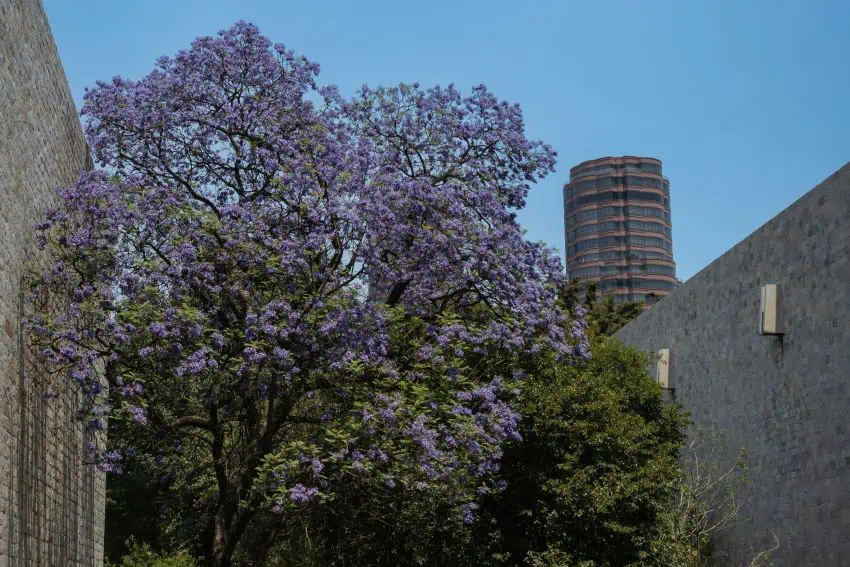
Every year, Mexico City residents eagerly anticipate the blooming of the capital’s jacaranda trees, signaling the beginning of spring. Typically, these iconic trees in Mexico’s capital bloom a few days before the spring equinox, but in recent years, they’ve got an earlier start.
According to Dr. Héctor Benavides Meza, a researcher at the National Center for Disciplinary Research, Conservation and Improvement of Forest Ecosystems (CENID-COMEF), the jacarandas’ early blooming affects their growth and increases their vulnerability to drought, pests and diseases.
“The jacarandas are warning us of climate alteration and of lower environmental humidity, a situation aggravated by the drought in which we find ourselves,” Benavides explained last year as scientists expressed concerns over the early blooming of the capital’s iconic trees.
According to news outlet Chilango, blooming jacarandas have already been spotted in some areas of Mexico City’s historic center, including around the Palacio de Bellas Artes, as well as in some areas of the Benito Juárez and Cuauhtémoc boroughs.
The National Autonomous University of Mexico (UNAM) posted on its official social media channels that early blooming of jacaranda trees reflects a phenomenon known as “early spring,” which UNAM says has been developing over the last 30 years.
“Today, air and soil are warmer due to the rise of CO2 and greenhouse gases, which advances flowering,” a UNAM infographic explains.
Early blooming affects other plants, leading to a mismatch with pollinators and reducing fruit and seed production, the UNAM said. However, insects and other pollinators do not depend on jacarandas, since they’re not native to Mexico.

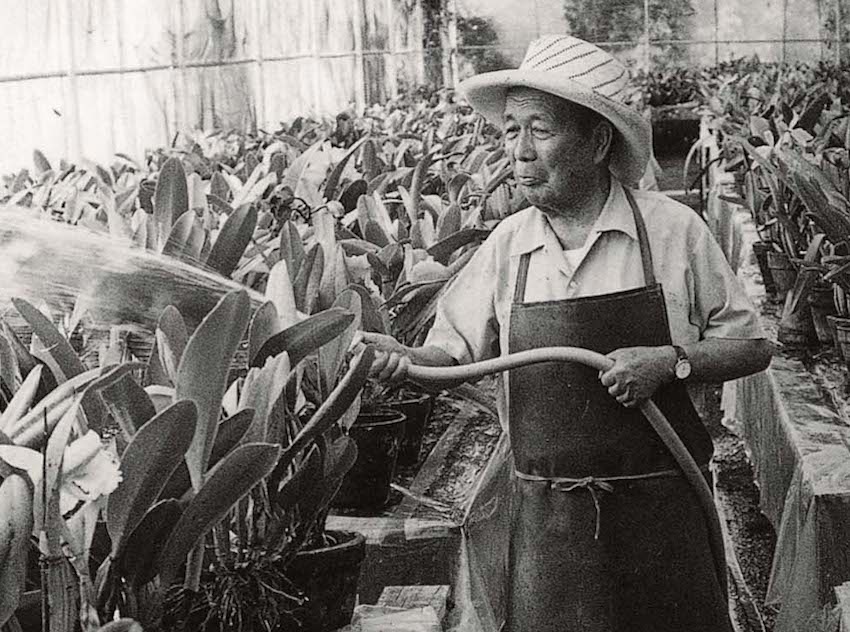
Jacarandas were brought to Mexico by Japanese immigrant Tatsugoro Matsumoto in the 1930s following a request from President Pascual Ortiz Rubio, who wanted cherry blossoms in Mexico City. Tatsugoro warned that the flower wouldn’t blossom, since winters in Mexico City are not as cold as in Japan.
Instead, he suggested jacarandas, originally from South America.
Through the years, jacarandas have become ornamental trees across Mexico City and other parts of the country due to the vibrant purple color of its flowers.
Follow this map to see jacarandas in Mexico City.
With reports from Chilango