The governors of nine states have indicated that they won’t strictly follow the plan announced by the federal government on Wednesday to start lifting coronavirus restrictions on June 1.
The governors of Jalisco, Baja California Sur, Michoacán, Morelos, Tamaulipas, Guerrero, Puebla, Coahuila and Nuevo León said they won’t reopen schools before the end of the current academic year, while Jalisco Governor Enrique Alfaro also announced that his state will follow its own economic reactivation plan.
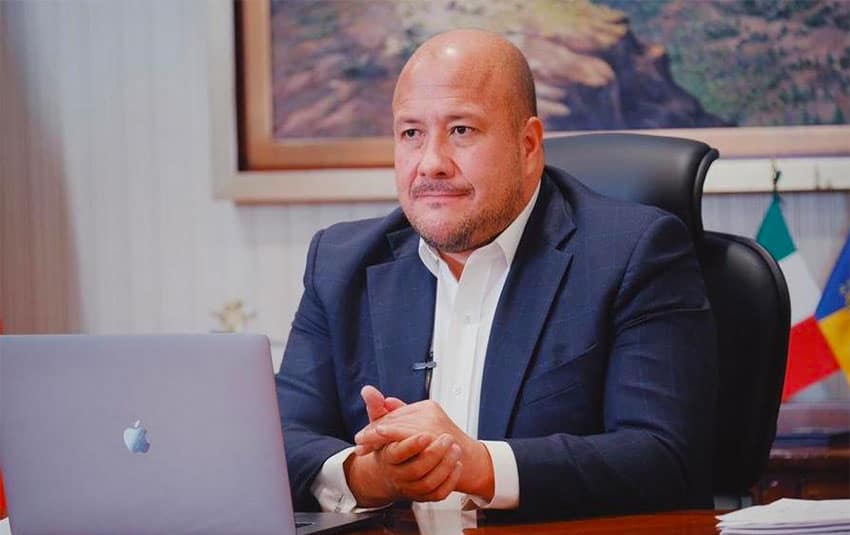
During a virtual meeting attended by federal Education Minister Esteban Moctezuma, Interior Minister Olga Sánchez and state governors, Alfaro said that is is too soon to think about reopening schools and to do so on June 1 would be a “grave error.”
Eight of his counterparts agreed. Among the dissenters was Miguel Barbosa of Puebla, a governor with Morena, Mexico’s ruling party. “We can’t return to normality on June 1,” he said, because Covid-19 cases are still on the rise.
Miguel Riquelme of Coahuila said that students will attend virtual classes for the rest of the school year to avoid possible coronavirus infections, while Silvano Aureoles of Michoacán said that his government “won’t expose” children to a “forced” return to classes.
Other governors gave similar explanations to justify their decision not to resume classes according to the federal government’s timetable.
Schools could open as early as June 1 according to the government’s “stoplight” indicator, which stipulates that it must be green for them to do so.

Alfaro announced later that the Jalisco government had developed its own plan to reopen the economy and would not follow that announced by federal authorities. He said that phase zero of his state’s plan will begin on Monday and last for at least 15 days.
The governor said industries that were not designated as essential by the federal government, and which are vital for supply chains, will be able to restart activities during phase zero once they have put health protocols in place to prevent the spread of Covid-19.
“They’ll be able to start operations at 50% of their capacity; we’re going to establish specific protocols,” Alfaro said.
He also said that manufacturing companies will be required to collaborate with health authorities to test workers periodically for Covid-19. Their health should be monitored constantly, Alfaro added.
Hotels and motels in Jalisco will be allowed to accommodate guests during phase zero but must restrict access to common areas. Among other businesses that will be allowed to operate starting Monday are hair salons, daycare centers, car dealerships and furniture stores. Restaurants and cafes will be permitted to operate at 50% capacity.
Bars, cantinas, nightclubs, casinos, movie theaters, gyms and sports clubs must remain closed during the initial phase of the reopening and the suspension of events with more than 50 people remains in place. Churches and other places of worship can open but only for individual visits, not religious services.
Alfaro stressed that people considered more vulnerable to coronavirus, such as the elderly, pregnant women and those with chronic diseases, will not yet be permitted to return to work and should remain in their homes.
The use of face masks remains obligatory for all Jalisco residents while they are in public places.
As of Wednesday, the state had recorded 699 confirmed coronavirus cases, 218 of which are currently active, and 59 deaths.
Source: Milenio (sp), El Financiero (sp)