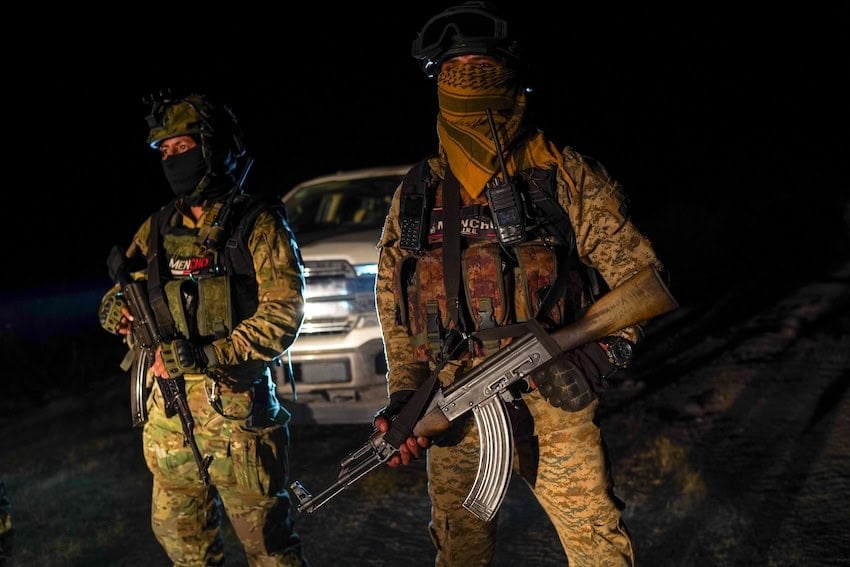
The death in February of Nemesio Rubén “El Mencho” Oseguera Cervantes did not lead to “large-scale fragmentation” of the Jalisco New Generation Cartel (CJNG), but there are signs that “some structural weakening” of the criminal organization “may have occurred,” according to a U.S. State Department-affiliated security body.
Osegeura, the founder and erstwhile leader of the CJNG, was fatally wounded during a Mexican military operation in Jalisco on Feb. 22.
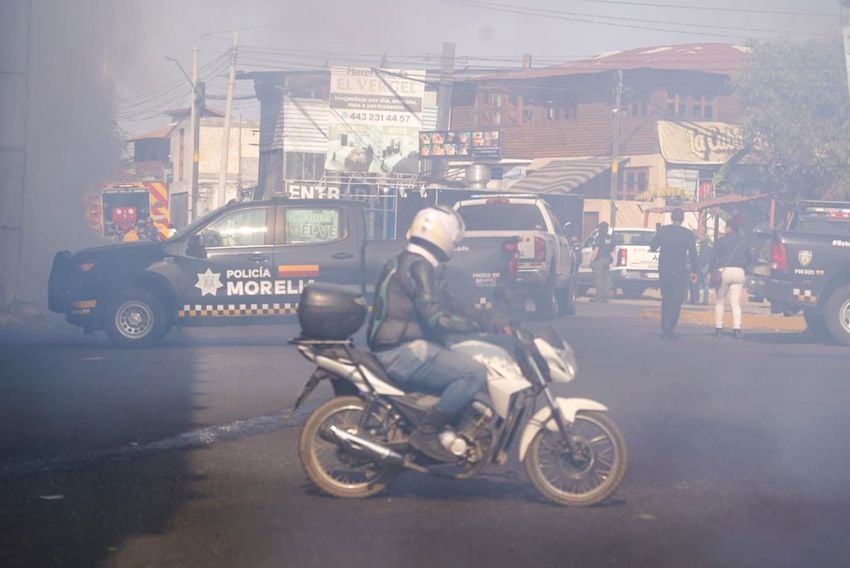
In an Oct. 9 report titled “CJNG After El Mencho,” the Overseas Security Advisory Council (OSAC) — a public-private partnership between security professionals from global U.S. organizations and the U.S. Department of State’s Diplomatic Security Service — noted that “armed CJNG personnel attacked businesses and implemented roadblocks across Mexico” in retaliation for the operation against Oseguera.
It also wrote that “El Mencho’s death sparked fears of potential intra-cartel violence, as some believed CJNG ranking members might compete for control over CJNG.”
Why hasn’t ‘large-scale fragmentation’ of the CJNG occurred?
OSAC said that “analysts can evaluate the law enforcement action against El Mencho as an example of a decapitation strike, in which a government attempts to limit the power of a criminal group by removing its leader and thereby fragmenting operations that rely on a central figure of authority.”
“In this case, the intention may have been to remove the top-level leader that inspired loyalty among high-ranking CJNG members and cause the franchise cells to fragment without executive-level direction,” OSAC said.
However, “large-scale fragmentation” of the CJNG “has not occurred” since El Mencho’s death, OSAC said. It suggested such fragmentation hasn’t occurred because “El Mencho had been under such intense pressure from the looming threat of arrest that the daily operations of CJNG had already begun to function without him.”

“The success of the brand of CJNG might have outgrown loyalty to El Mencho as an individual,” OSAC said.
No ‘significant violent competition for the top spot in CJNG’
OSAC noted that “some sources,” including the U.S. Department of State, have identified Juan Carlos Valencia González — El Mencho’s stepson — as the new leader of the CJNG.
Reward for CJNG’s new leader jumps to $25 million after ‘El Mencho’s’ death
“Other analysis suggests that CJNG has not named a new single top leader but instead relies on its network of several powerful regional leaders,” OSAC said.
“In either case, there was not a significant violent competition for the top spot in CJNG, which some analysts feared following El Mencho’s death.”
OSAC said that the absence of “significant violent competition” to succeed Osegura “may have been due to the slow shift away from centralized authority under El Mencho.”
“The relatively stable continuity of leadership has left most of CJNG’s regional operations intact,” OSAC added.
“For example, residents of Michoacán began reporting the resumption of drone attacks by CJNG members in March, just weeks after … El Mencho’s death. Furthermore, CJNG is reportedly engaging in renewed inter-cartel violence with the Mayiza faction of the Sinaloa cartel, suggesting CJNG’s resources are robust enough to defend territory.”
Are authorities winning the fight against the CJNG?
While the CJNG continues to operate across much of Mexico, the criminal organization was “not entirely unaffected” by the death of El Mencho, according to OSAC.
“CJNG has not conducted a large-scale attack or territorial push since February,” OSAC wrote.
“This suggests that although they are not dismantled, some structural weakening may have occurred, limiting their capacity to impose themselves against rivals.”
OSAC noted that law enforcement actions have “continued to successfully capture CJNG personnel throughout Mexico,” including Audias “El Jardinero” Flores Silva, a former security chief for El Mencho.
“In August, Mexican security minister Omar García Harfuch announced that law enforcement operations across Hidalgo, Jalisco, and Michoacán had resulted in the arrest of 32 CJNG members,” OSAC wrote.
“Arrests have been particularly effective against the money laundering facilitators of CJNG, the Cuinis, whose leadership has been arrested, limiting their influence. Both Mexican and U.S. authorities have also been effective at freezing accounts and assets linked to CJNG and its members,” OSAC said.
The Overseas Security Advisory Council said that “[c]larity as to how strong CJNG remains since El Mencho’s death will become apparent as more reliable crime data is produced, including a clearer picture of homicides, disappearances, and measures of illicit activity in areas where CJNG predominates.”
“A precipitous fall in homicides in areas like Jalisco and Michoacan where CJNG controls large swaths of territory would be a sign that law enforcement actions have been effective at limiting CJNG’s influence,” OSAC wrote.
Data presented by the federal government on Sept. 8 showed that homicides declined 39.6% in annual terms in Jalisco in the first eight months of 2026. The year-over-year decline in homicides in Michoacán in the same period was slightly higher at 40.5%.
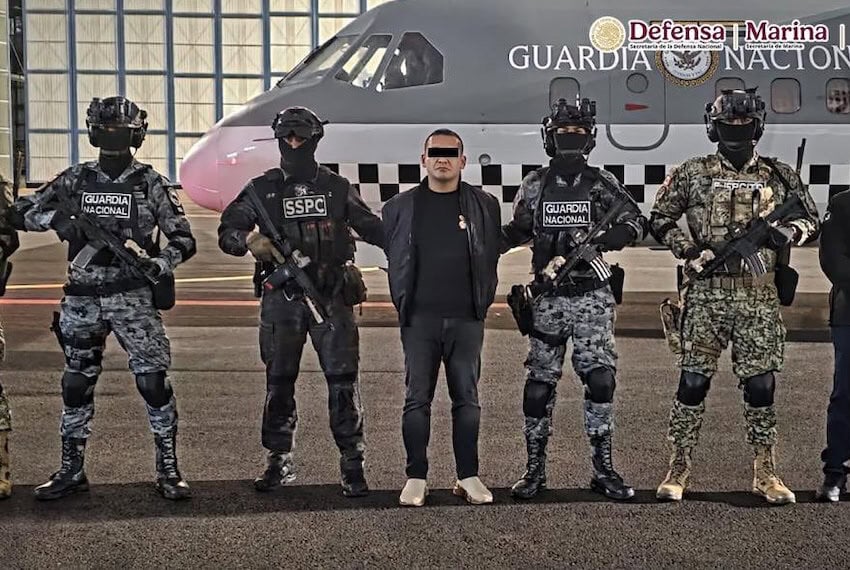
The significant reductions in homicides in Jalisco and Michoacán, as well as the arrests of numerous alleged CJNG members, indicate that the government is indeed making progress in weakening the powerful criminal organization in those states.
However, there is still plenty of work to do. Jalisco and Michoacán ranked among the 11 most violent states in Mexico in terms of total homicides between January and August, and some states where the CJNG operates, such as Guanajuato, México state and Guerrero, recorded even higher murder rates in the first eight months of 2026.
Mexico News Daily