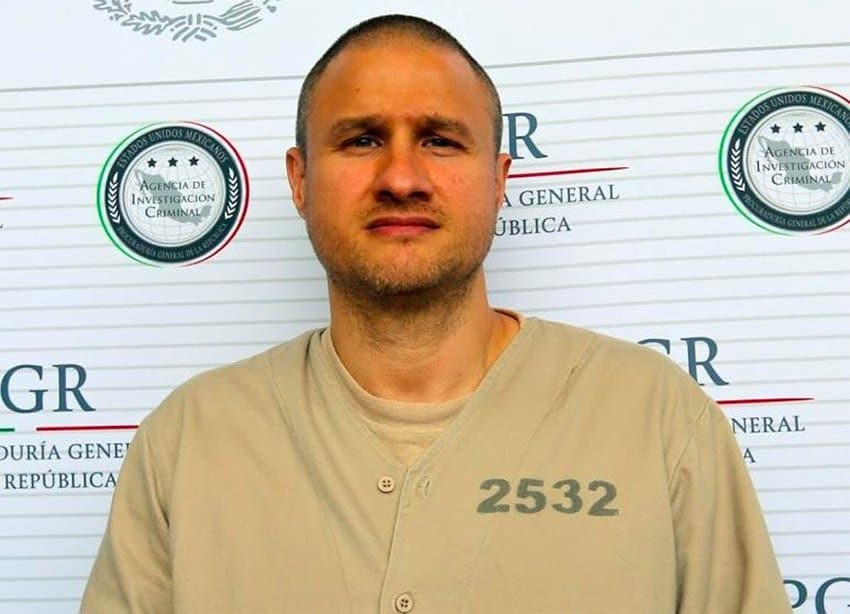
A United States citizen who prosecutors say became a powerful member of a Mexican drug cartel was sentenced yesterday by a federal judge in Atlanta, Georgia, to almost five decades in jail.
Texas-born Édgar Valdez Villareal, known as “La Barbie” because of his light eyes and fair skin, was condemned to 49 years and one month in prison on drug trafficking and money laundering charges.
The 44-year-old Laredo native was also ordered to forfeit US $192 million, which prosecutors said is a conservative estimate of the value of cocaine he imported into the United States.
After starting his criminal career selling marijuana while still playing football for his high school team in the U.S. border city, prosecutors said, Valdez became a member of the Beltrán-Leyva cartel and rose through the ranks at a time when its leaders had links with Joaquín “El Chapo” Guzmán and his Sinaloa Cartel.
With the proceeds of his illicit dealings, prosecutor Elizabeth Hathaway said, Valdez bought luxury properties, including a ranch with a zoo which housed a lion.
She also contended that Valdez cultivated a media image designed to impress people and intimidate his rivals.
At yesterday’s hearing, one of La Barbie’s six sisters and his brother pleaded with the judge for leniency while other members of his family, including his parents, looked on in a crowded courtroom.

Carla Valdez, who works as a prosecutor in Texas, told presiding judge William Duffey that her brother was a good person despite straying from an upbringing in which she and all her siblings were taught strong values and morals by their hardworking parents.
“Why are you a prosecutor and why is your brother a seriously evil criminal?” the judge asked her, according to a report published yesterday by the Associated Press.
Carla Valdez responded by saying that was a question her family asked every day.
Her brother was notorious for using ruthless violence to defeat his rivals and secure control of his lucrative smuggling routes into the United States.
After marines killed Arturo Beltrán Leyva — one of five brothers who headed the cartel — in 2009, Valdez and Héctor Beltrán Leyva engaged in a bloody war for control that left dismembered and decapitated bodies in the streets and hanging from bridges in cities such as Cuernavaca, Morelos and Acapulco, Guerrero.
In August 2010, Federal Police arrested Valdez and four of his associates at a holiday home in the state of México and just over five years later — in September 2015 — he was extradited to the United States along with 12 other drug traffickers.
At the time of his arrest, former president Felipe Calderón described La Barbie as “one of the most-wanted criminals in Mexico and abroad.”
In January 2016, Valdez pleaded guilty to charges of conspiring to import and distribute cocaine and conspiring to launder money. After shipping cocaine into the United States by the truckload, he would send millions of dollars in cash back over the border, prosecutors said.
Asking the judge to consider imposing a prison term at the lenient end of the sentencing guidelines, Valdez’s lawyer Buddy Parker said yesterday that his client had cooperated with law enforcement in the United States.
But Duffy remained unconvinced and noted that while he was collaborating with United States authorities Valdez had continued to engage in criminal activities by arranging regular shipments of cocaine into the U.S.
Hathaway asked for a 55-year sentence, arguing that a severe penalty was needed to send a message to other traffickers.
Valdez himself echoed a similar sentiment, saying that he wanted his life to serve as an example to young people about the perils of becoming involved in drugs. He also told the judge he accepted responsibility for his crimes and apologized to his family.
“I’m not a bad person. I am a good person who has made bad decisions,” Valdez said.
But Duffey said he hadn’t detected any real sense of remorse from the guilty party for flooding the United States with drugs and described Valdez’s action as despicable and a betrayal of his family and country.
“You haven’t earned the right to live in an American community,” he said.
Source: Associated Press (en), Milenio (sp)