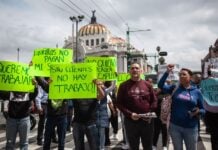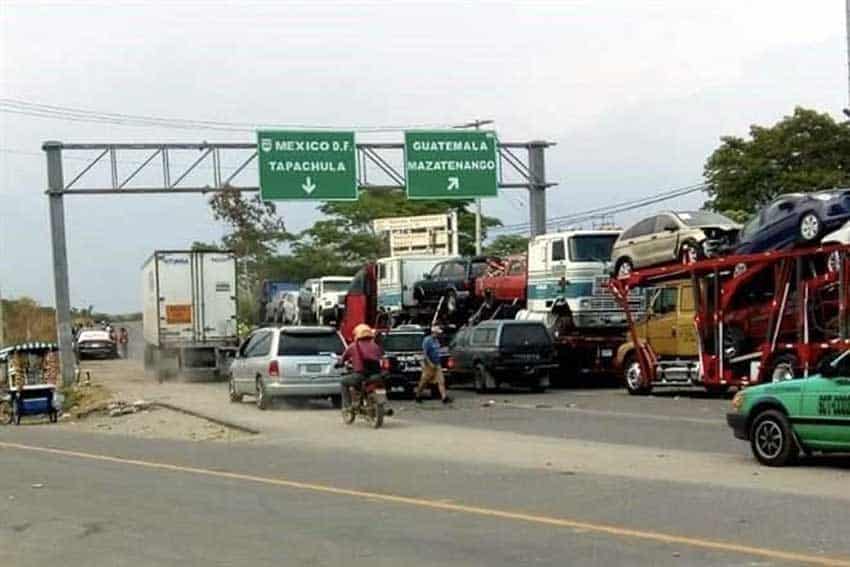
Following a three-day blockade, traffic is moving freely once again between Mexico and Guatemala after teachers and parents ended a protest demanding that schools damaged in the September 2017 earthquake be rebuilt or repaired.
The protesters used sticks and stones to block access to the Suchiate II international bridge in Tapachula, Chiapas, on Tuesday, and also blockaded the four lanes of the federal highway from Tapachula to Suchiate, Guatemala, stranding trucks on both sides of the border.
The blockades were lifted yesterday after the protesters met with representatives of the state government and reached an agreement.
A spokesperson for the protesters said the state had agreed it would “immediately” rebuild four schools and repair nine more over the course of the year.
Javier Ovilla warned that if the government fails to deliver, the blockades will go up once again.
“It’s unfortunate that authorities only turn around to see and heed the demands of citizens through their protests and blockades,” he said.
Parents and teachers are also demanding better safety conditions for students because earthquakes are common in the region and many school facilities are not prepared.

Ovilla explained that many students are currently being taught in premises rented by their parents, while others attend classes in rustic facilities with makeshift walls and roofs to protect them from the elements.
Source: Reforma (sp)