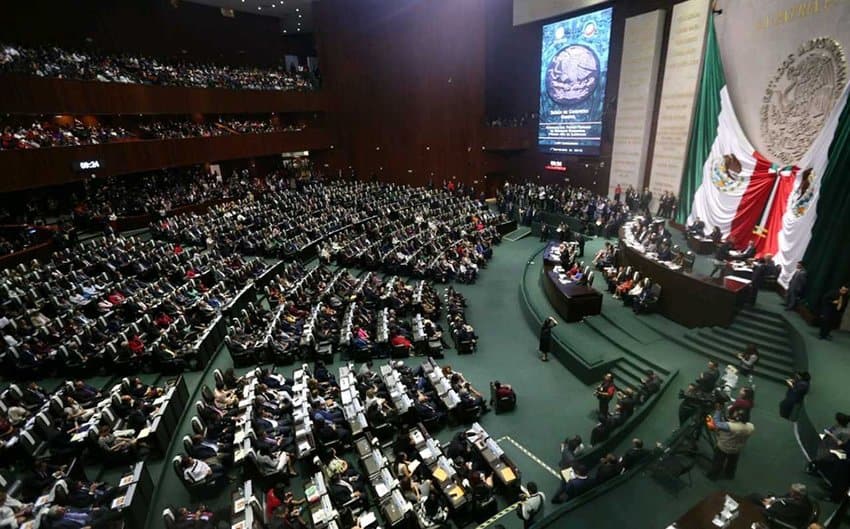
Lawmakers from Mexico’s soon-to-be ruling party yesterday presented an austerity bill in the lower house of Congress that will reduce politician and public sector salaries and benefits among other cost-cutting measures.
The Republican Austerity Law is an initiative of the National Regeneration Movement or Morena party, which dominated the July 1 elections and now, with its coalition partners, has a majority in both houses of Congress.
Party leader Andrés Manuel López Obrador will be sworn in as president on December 1.
Mario Delgado, Morena’s leader in the Chamber of Deputies, said the austerity law will reduce the monthly remuneration packages of the 500 lawmakers in the lower house by 28% from 128,230 pesos (US $6,720) to 91,507 pesos (US $4,795).
Under the proposed law, deputies’ base salary will remain the same but they will no longer have major medical, life or severance insurance and they won’t receive contributions to individual savings funds.
The legislation also seeks to reduce government spending by cutting the salaries and benefits of high-ranking officials.
All government officials will be incorporated in the public social security system instead of being covered by private insurance benefits.

Other measures proposed by the austerity bill include:
- Introducing a moratorium on the creation of new government jobs to avoid the federal bureaucracy increasing in size.
- Restricting the use of bodyguards and other personal security measures to occasions or situations in which they are strictly justified.
- Limiting the use of government-owned vehicles to tasks and duties that fulfill a justified public function.
- Restricting spending on government publicity.
- Establishing limits on the number of overseas trips officials can take and prohibiting first-class travel.
- Establishing spending limits for a range of expenses including telephone services, electricity, meals and fuel.
- Eliminating pensions for past presidents.
The legislation, which has already been unanimously approved by the political coordination committee, a group made up of the coordinators of each parliamentary party, aims to generate savings of 409 million pesos (US $21.5 million) in the final four-month period of 2018.
López Obrador has already said that he intends to adopt personal austerity measures, which include largely eschewing personal security, traveling on commercial flights and slashing his own salary by 60%.
The president-elect, who won 53% of the vote following a campaign based largely on promises to stamp out corruption, has also pledged to sell the presidential plane and convert the president’s official residence into an arts and culture center.
Source: Reporte Indigo (sp), El Financiero (sp)