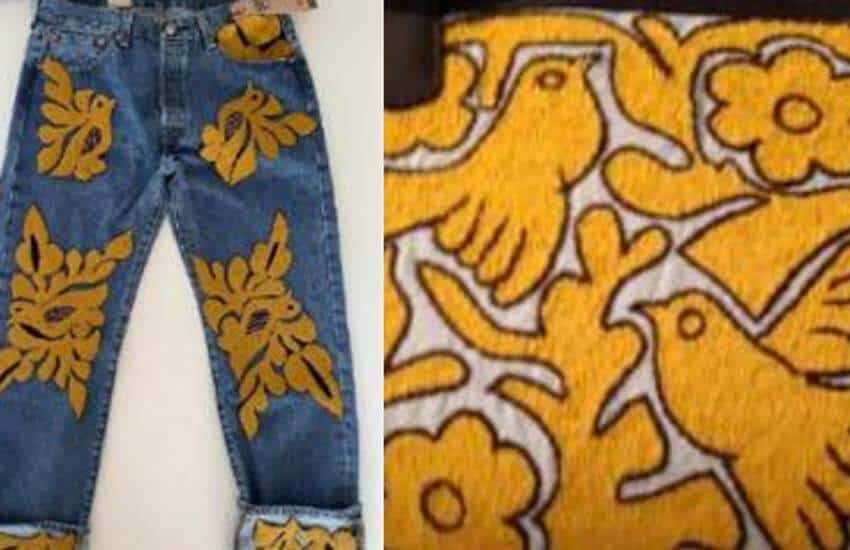
A large clothing company has once again been accused of appropriating Indigenous Mexican designs, but it did collaborate with a collective that employs Mazatec women from Oaxaca.
The Mexican subsidiary of Levi’s released a premium collection of jeans and jackets that incorporate “embroidered elements belonging to the Mazatec culture of the community of San Felipe Jalapa de Díaz,” the federal Ministry of Culture said in a letter to the company.
San Felipe is located in the northeast of Oaxaca near the border with Veracruz and Puebla.
The Culture Ministry wrote to Levi’s México and the Draco Textil collective, which collaborated on the manufacture of the Levi’s Premium Original Trucker Jacket collection, to denounce their use of Mazatec designs without obtaining permission from the community first.
It sought an explanation from both Levi’s and Draco and said that “fair economic reward” must be paid to the rights holders of the designs, which are protected by law.
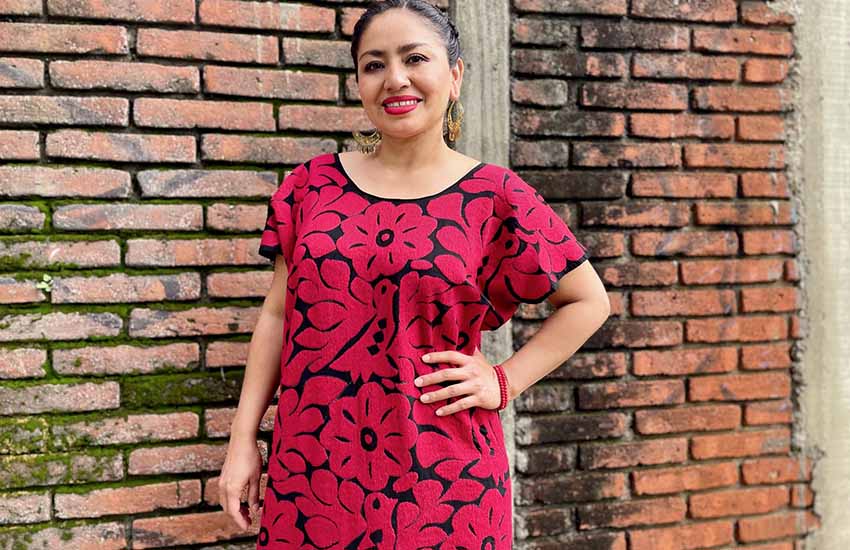
“We invite you to develop respectful work with the Indigenous communities within an ethical framework that doesn’t undermine the identity and economy of the [Indigenous] peoples,” the Culture Ministry said.
Levi’s México announced its new collection, and the opening of its first store in Oaxaca, in a social media video earlier this month, while a group of female Mazatec and Cuicatec artisans called Texturas de Oaxaca issued a statement last Thursday denouncing its collaboration with Draco Textil as “another exercise of cultural appropriation and concealment of the people and communities behind the embroidered pieces.”

“The companies and visual artists behind the project are named but the names of the artisans that did the embroidery work are omitted,” the women said.
Two days later – the same day the Culture Ministry sent its two letters – Draco said on Facebook that it was “grateful” to have had the opportunity to collaborate with Levi’s and thanked its team of Mazatec embroiders by name.
“We want to take the opportunity to mention that the intervention of these embroideries took place in our workshop in Oaxaca,” the collective said, adding that it was very proud of its all-female workforce.
Levi’s México hasn’t publicly responded to the Culture Ministry letter.
Among the other designers and clothing companies that have been accused of plagiarizing or appropriating Indigenous Mexican designs are Zara, Anthropologie, Patowl, Zimmerman, Isabel Marant, Carolina Herrera, Mango and Pippa Holt.
The Culture Ministry held an event in Mexico City last week to support Indigenous textile creators and fight cultural appropriation, but Texturas de Oaxaca said its members were not invited to participate.
With reports from El País