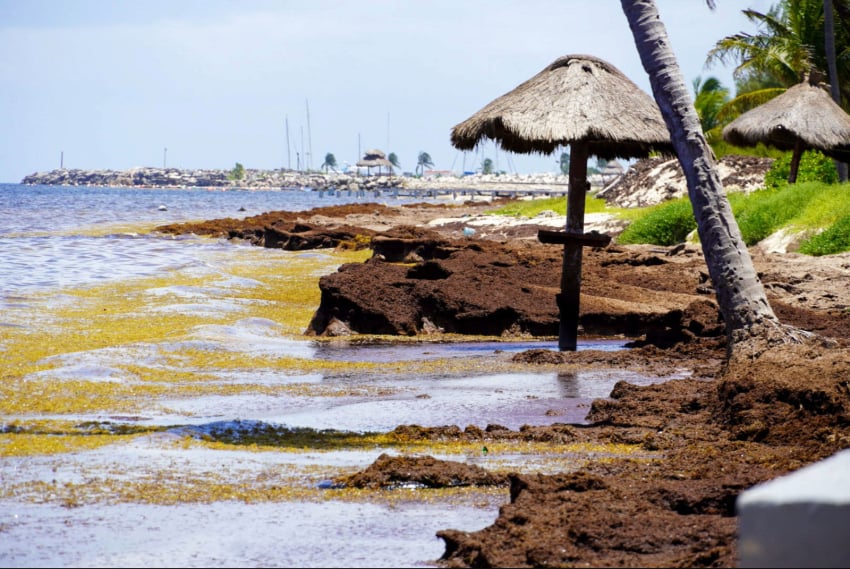
The Foreign Ministry has announced that Japan will be participating in the development of a joint program to address the massive influx of sargassum on Mexico’s shores.
Japan — which has been actively collaborating with Caribbean nations to tackle the sargassum problems plaguing the region — will offer ocean-monitoring technology, specialized equipment including robotics and sensors and financial cooperation.
Additionally, Japan will provide sargassum-collecting ships and vessels adapted for the collection of the macroalgae at sea in order to strengthen Mexico’s capacity to address the situation along its Caribbean beaches.
The collaboration will also feature satellite monitoring, biological decomposition technologies for sargassum and technical training programs through Japan’s International Cooperation Agency, in coordination with Mexico’s Agency for International Development Cooperation.
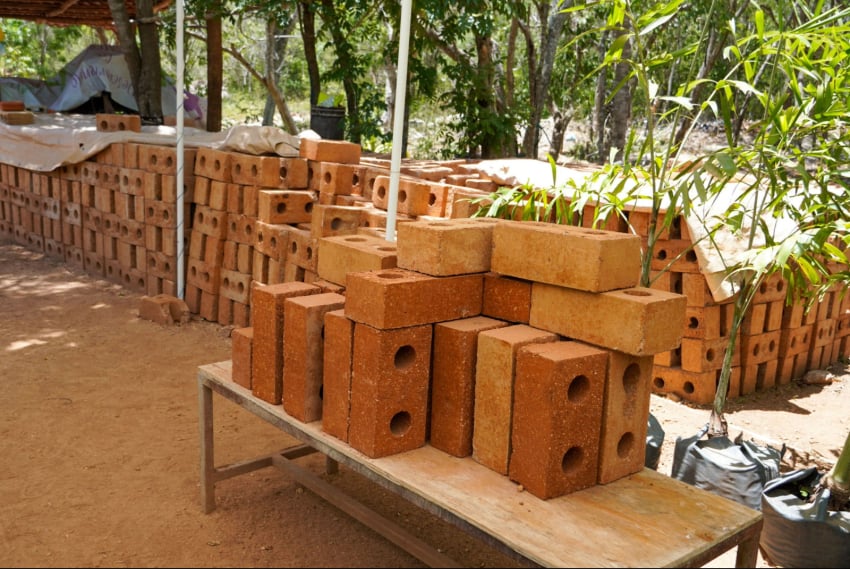
The project will include academic research, as well as business-oriented research and development. This work will focus on processes for converting the sargassum, as a raw material, into commercially viable products, such as fertilizer, biofuels, building materials and soap.
The goal is to boost marine and nearshore coastal conservation efforts, support integrated coastal management actions and mitigate negative impacts on sectors such as fisheries, public health and tourism.
The announcement came during an Aug. 3 meeting between Foreign Minister Roberto Velasco and his Japanese counterpart, Toshimitsu Motegi, in which they agreed to establish a working group to advance new areas of collaboration to strengthen bilateral relations in the political, economic, scientific and technological spheres.

In a joint statement to the media, they announced the launch of a high-level economic dialogue to boost bilateral trade, which, from January to May this year, amounted to US $9.9 billion, a 4% increase compared to the same period last year.
A few days earlier, President Claudia Sheinbaum pledged 2 billion pesos in federal funds (US $115 million) to battle an influx of sargassum in the state of Quintana Roo.
These funds will be directed toward sargassum control efforts spanning roughly 30 miles of beachfront spanning resorts including Cancún, Playa del Carmen, Puerto Morelos, Tulum and Mahahual.
El secretario de Relaciones Exteriores, Roberto Velasco (@r_velascoa), recibió a su homólogo japonés, el ministro de Asuntos Exteriores de @MofaJapan_en, Motegi Toshimitsu (@moteging), quien realiza una visita de trabajo a nuestro país.
En reunión bilateral, ambos titulares de… pic.twitter.com/iaZwAhBjjV
— Relaciones Exteriores (@SRE_mx) August 3, 2026
In October, Cancún will host the international EU-Caribbean Global Gateway Conference on Sargassum, with the aim of articulating joint strategies for the containment and management of biomass and sargassum.
The conference is expected to focus on regional cooperation, circular economy solutions and sargassum-harvesting technology.
With reports from Excelsior and MVS Noticias