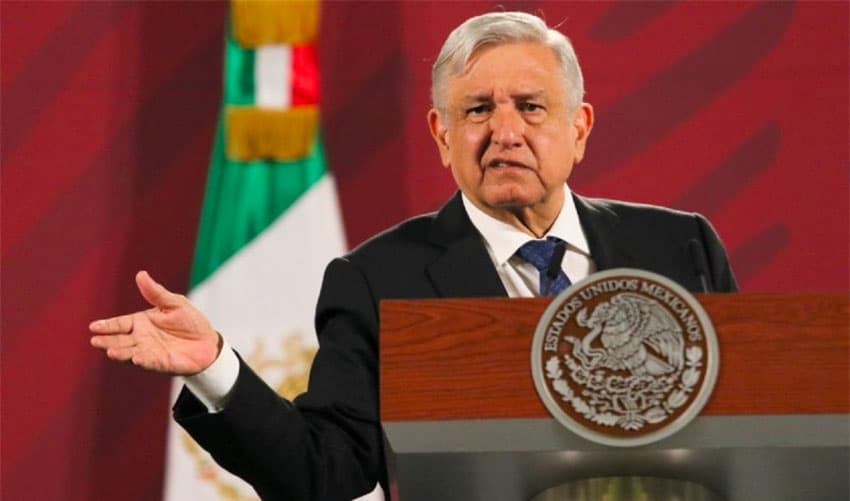
President López Obrador’s plans to force fund managers to slash their commissions as part of a pension overhaul has triggered threats of litigation.
Private pension funds would have to nearly halve their commissions to 0.54%, from 0.92% according to a bill sent to Congress in September, which is expected to pass in both houses in the coming weeks. The industry has 4.5 trillion pesos (US $212 billion) under management.
The government is seeking to revise the private pension system, which was set up in 1997, to boost retirement pay by 40% and pulled off a coup by persuading the private sector to increase its contributions. Without changes, it says workers could expect to retire on just 30% of their salaries.
The planned commissions reduction took the fund managers by surprise, Bernardo González, president of the Association of Mexican Private Pension Funds, told the Financial Times. Several private funds would no longer be able to operate and would trigger litigation under international trade treaties including USMCA, he warned.
Funds with foreign capital were evaluating litigation under the USMCA or the Pacific Alliance treaties, González said. “They [the funds] are obviously very worried … because they would have to have recourse to the treaties to defend themselves,” he added.
The populist president has upset business leaders with other decisions during his nearly two years in office, including regulatory changes that penalize renewable energy generators and the scrapping of a partially built brewery and airport projects following informal “people’s polls.”
The government argues that commissions charged by the Afores, as Mexican private pension funds are known, are some of the highest in the world and wants to benchmark them to those in the US, Chile and Colombia — currently 0.45%, 0.54% and 0.62% respectively.

The commissions reduction was “fundamental and cannot be postponed,” the government said, adding that the pension system regulator, Consar, had calculated that if commissions were halved “the average saving per worker would increase by 12%” and boost cash available upon retirement.
“This is not about wanting to protect disproportionate profits,” González said. “It could force several private funds out of the market and concentrate resources in the hands of just a few Afores, which is not good for competition.”
López Obrador told a news conference: “I want this [reduction in commissions] to be by law because that will generate more savings. The fund administrators may say it would no longer be profitable, but it would.”
But capping commissions by law would prevent new entrants into the market because a low starting client base together with low commissions would be uneconomic, González said. Funds targeting lower-income workers would be most vulnerable.
Under the reform proposal, employers will increase their contributions to enable workers to retire after 750 weeks of contributions, rather than 1,250 currently. But those higher contributions from employers would happen in two years, meaning that if commissions were slashed before then “that would push some Afores into the red,” he said.
González said the push to slash commissions would favour funds with state participation. Mexico’s biggest Afore, XXI Banorte, is half-owned by IMSS, the state social security agency, while PENSIONISSSTE is fully state owned.
© 2020 The Financial Times Ltd. All rights reserved. Please do not copy and paste FT articles and redistribute by email or post to the web.