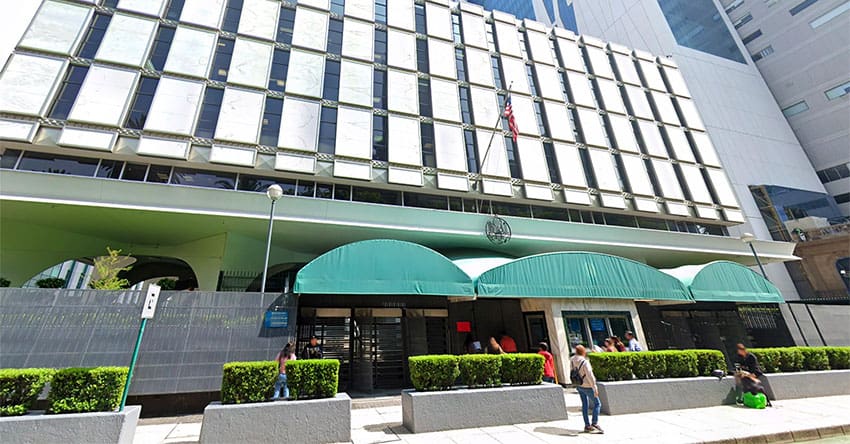
A man who worked at the U.S. Embassy in Mexico City was an “experienced sexual predator,” according to court documents, with at least 22 victims in both Mexico and the U.S.
Brian Jeffrey Raymond, a U.S. citizen who until May worked for an agency of the United States government has been charged with coercion and enticement in the United States, although more charges are expected to be added.
The indictment stems from a May 31, 2020, incident in which police were summoned after a woman shouted for help from the balcony of a Mexico City apartment owned by the embassy. The woman was scared and disoriented and was taken to the hospital where doctors found injuries indicating that she had been injured and raped.
Raymond, 44, maintained that his relationship with the woman was consensual and he was released by Mexico City police. He left the country for the U.S. the following day and after a two-week quarantine agreed to be interviewed by federal investigators.
Authorities seized his phone and other electronic devices and discovered at least 25 videos and 400 photos of naked and unconscious women. At least nine women in Mexico City appear to have been victims, the indictment alleges, as well as 15 others in the United States.
He was arrested on October 9 in La Mesa, California, where he was visiting his parents.
According to the prosecutor, Raymond would contact women through dating apps like Tinder or Bumble, meet up with the women and drug their drinks before sexually abusing them.

He continued dating women after returning to the United States, authorities say.
Raymond has been denied bond and is awaiting trial in San Diego. If convicted he could face life in prison.