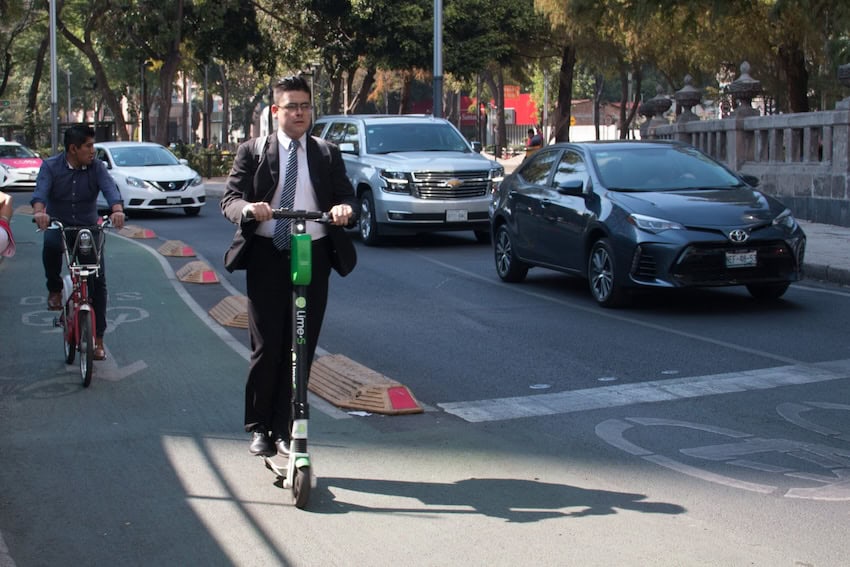
If you ride an electric scooter or battery-powered motorcycle through the streets of Mexico City, you’re going to have to get your papers in order. Vehicle licenses will soon be required.
Lawmakers last week amended the capital city’s Mobility Law which regulates transportation in Mexico City. Now, if you operate a Personal Electric Motorized Vehicle (VEMEPE) — scooters, motorcycles and electric bikes of a specified size — you will have to get a license plate as well as a driver’s license and you must comply with traffic laws.
🚦 #CDMX regula scooters y bicis eléctricas.
El @Congreso_CdMex aprobó una reforma que exigirá licencia y documentos a quienes conduzcan vehículos eléctricos personales (Vemepe) como scooters, bicis eléctricas y bicimotos que superen 25 km/h.
Plazo: 360 días para ajustar… pic.twitter.com/RvKP4gYobM
— RutaElectoralmx (@RutaElectoralmx) August 12, 2025

The new law will take effect in one year’s time so VEMEPE operators have plenty of time to apply for a license, acquire a license plate and brush up on traffic rules and regulations.
It didn’t take long for protesters to organize, however. Days after the proposal was passed out of committee on Aug. 7, people on scooters and electric motorcycles demonstrated in front of the Congress building, urging lawmakers to reject the bill.
Opponents of the measure defended VEMEPEs as practical, cheap and ecological means of transportation, decrying the reform as a new tax that will squeeze them off of roads.
Congress unanimously passed the reform on Aug. 15.
When presenting the bill to the floor for consideration, Congressman Miguel Ángel Macedo, president of the Sustainable Mobility and Road Safety Committee, said the inclusion of these vehicles in the Mobility Law “is the first step toward strengthening a regulatory framework that governs their use.”
The new law “will also establish the conditions necessary to safely guarantee the right to mobility for those of us who travel the city’s streets,” he said.
The decision to address the VEMEPEs came about because these vehicles have become increasingly popular, adding to the chaos of city streets. During committee debate, lawmakers cited a statistic that more than a million such vehicles operate within city limits.
Supporters of the amendment argued that many VEMEPE operators ignore traffic rules which prohibit riding on sidewalks, passing between cars and occupying bicycle lanes. These traffic violations endanger pedestrians, cyclists, motorists and VEMEPE riders themselves.
Lawmakers also expressed concern that many VEMEPE riders don’t wear helmets and often ignore traffic lights.
The new law requires those who operate vehicles that are capable of exceeding 25 km/h and are equipped with an electric or internal combustion engine to acquire a driver’s license. Additionally, those operating VEMEPEs that weigh up to 350 kg will require a license.
The Congress authorized two types of licenses specifically for VEMEPEs:
- Type A: for vehicles weighing less than 35 kg
- Type B: for vehicles weighing between 35 and 350 kg
Vehicles not covered by the new law are those with pedal assistance or human traction (such as a classic motorized bicycle that doesn’t exceed 25 km/h).
With reports from Record, El Gráfico, La Jornada and El Universal