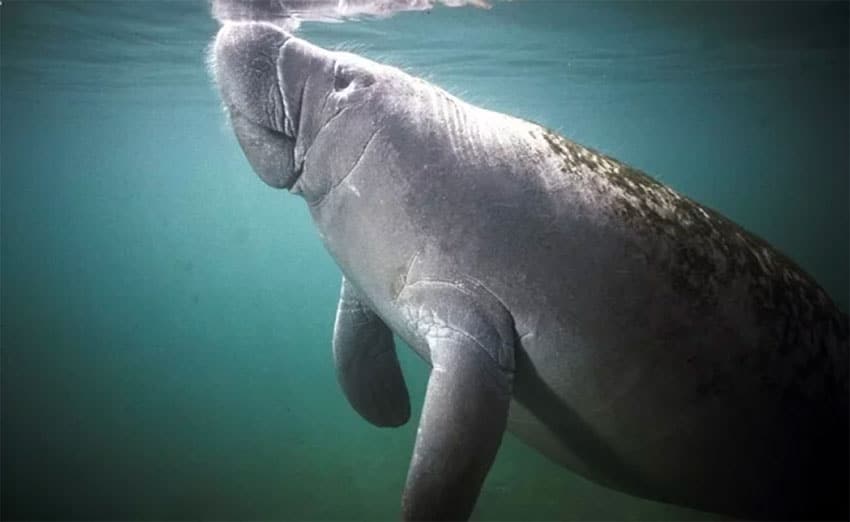
The Antillean manatee is at risk of extinction in Mexico and Belize due to a lack of laws to protect it, says a Belizean conservationist and biologist.
“. . . Our work is limited by the lack of laws and specific regulations that deal with the problems that threaten the species and provide the protection it needs,” Jamal A. Galves told the news agency EFE.
There are only around 2,000 manatees living in Mexican and Belizean waters, where they face a range of risks that are exacerbated by their curious nature and lack of speed.
According to the World Wildlife Fund, accidental fishing of the species and collisions with boats have caused manatee deaths and contributed to their current status as an endangered species.
Environmental dangers can also pose risks – 48 manatees died in Tabasco last year after eating toxic algae.
The Mexican government has implemented manatee conservation programs since 1991 but despite the efforts to protect the marine mammal, the species now only lives in three regions in the southeast of the country: the Sian Ka’an Biosphere Reserve and Chetumal bay in Quintana Roo, the Alvarado lagoon and Papaloapan river basin in Veracruz and the lower basin of the Grijalva and Usumacinta rivers, an area that extends across parts of Tabasco, Campeche and Chiapas.
The only area that is currently receiving federal financial support to protect manatees and their habitat is the Sian Ka’an Biosphere Reserve.

According to the environmental NGO Wildtracks Belize, manatees have migrated to that country from Mexico during the last five years in search of a better place to live.
Gerardo Ceballos, an ecologist at the University of Arizona, said the migration is completely natural and not the result of environmental problems in Mexican waters.
But Galves disagreed, charging that the sole reason that manatees are leaving Mexico is because Belize offers ecosystems that are “more pristine, healthier and more favorable” for their survival.
However, he added that tourism activities in Belize, including tours that allow visitors to swim with manatees, threaten the species.
“It’s good for the economy but often bad for the manatees . . .” Galves said.
To ensure the ongoing survival of the animal, Ceballos said, Mexico and Belize need to work together and establish a comprehensive conservation plan.
Source: EFE (sp)