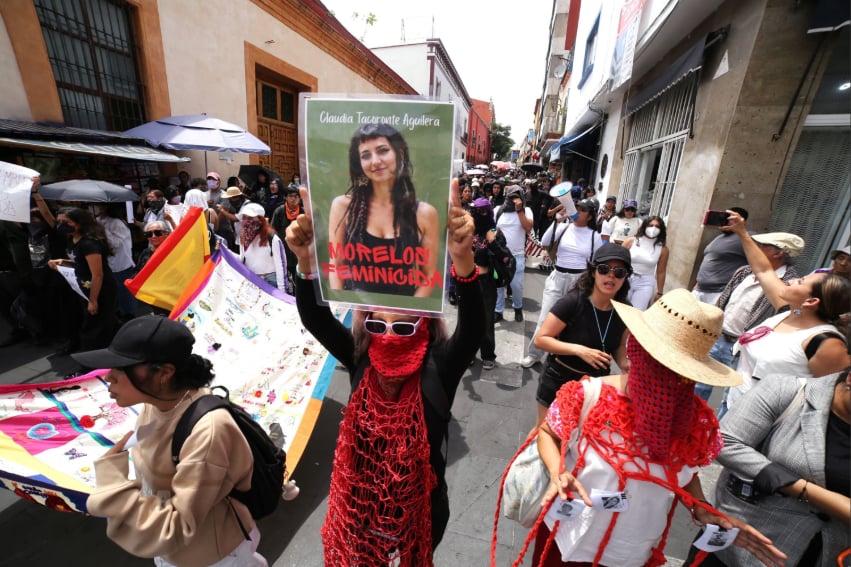
The Morelos Attorney General’s Office (FGE) has identified a suspect in the murder of a Spanish exchange student, resulting in an arrest warrant issued for Francisco Javier “N,” alias “El Trompas,” on charges of femicide, state Attorney General Fernando Blumenkron announced on Wednesday.
The breakthrough came as state authorities face accusations of a slow emergency medical response after the fatal stabbing attack on the 21-year-old Claudia Tacoronte.
“The investigative work and videos provided by the public, among other evidence, allowed the Specialized Prosecutor’s Office for the Investigation and Prosecution of Femicide to request an arrest warrant,” the FGE stated in a press release. “Personnel are currently being deployed to execute the warrant and bring Francisco Javier N. before a judge.”
The FGE also released a wanted poster with the phrase: “If you recognize him, report him!”
Morelos Governor Margarita González Saravia posted a video on social media pleading with anyone with information that could uncover the whereabouts of the suspect to contact the FGE.
Tacoronte, a student of Early Childhood Education at the Autonomous University of Morelos (UAEM) in Cuernavaca, was killed on Saturday in Cuautla, 55 miles southeast of the state capital. She was in Cuautla to attend the National Medicinal Plant Festival.
In addition to testimony from witnesses, videos of the attack show a man with a black backpack, wearing a white shirt and shorts running away from the scene, which — combined with forensic evidence — allowed the authorities to identify the suspect.

Tacoronte managed to flee from her attacker, stumbling into the nearby Casa de Cultura before collapsing. However, it took more than half an hour for the authorities to respond to the 911 calls placed by witnesses even though an ambulance service was less than four blocks away.
Residents of that area of Cuautla say this is not the first time there have been deficiencies in emergency response by municipal authorities.
They complain about difficulties establishing contact via the 911 emergency line, such as calls being dropped, sent to voicemail or placed on hold. Because of the lengthy delays in response time, they often turn to the “Convives” neighborhood watch groups established by the Cuautla Police Department.
Media reported that there were a number of voice messages requesting assistance in response to the emergency at the Casa de Cultura that morning.
The chain of institutional inattention at both the municipal and state levels — from emergency services to the police to case investigators to the FGE — is being reviewed by federal authorities.
With reports from El País, La Jornada, El Financiero and El Mundo