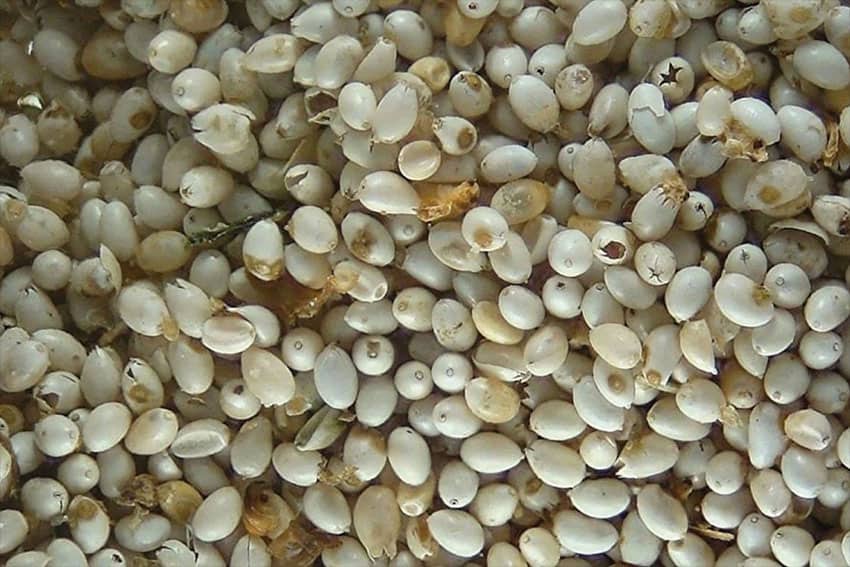
Mexico is famous for its edible bugs, from lime and chile roasted crickets sprinkled across guacamole to chicatana ants in a comal-toasted quesadilla. But one of Central Mexico’s most ancient bug proteins is now in danger of disappearing forever — ahuautle, the eggs of the aquatic insects in the Corixidae family. Those bugs, often called water boatmen in English and known as axayácatl or mosco para pajaro in Mexico, are found in the last remaining wetlands of the once-expansive Lake Texcoco, near Mexico City.
Lake Texcoco, part of the lake system that once covered the majority of the Valley of Mexico, has from the time of the Mexica (also known as Aztecs) been slowly drained and developed as Mexico’s capital expanded beyond every limit society has tried to place on it. Only a few traditional ahuautle “farmers” still collect in the remnants of Lake Texcoco at the edges of Mexico City. Juan Hernández, who in his 50s has been collecting since he was a young man, is only one of the half dozen or so collectors still harvesting and selling ahuautle, which he says is difficult and dirty work.
“Now we are just keeping ahuautle alive,” Hernández said according to the Associated Press, “I hope it doesn’t disappear, because it is a source of income for those of us who live off the land.”
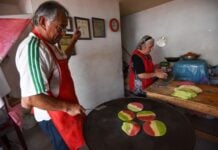
The work starts with placing pine boughs on the muddy bottom of the lake’s shallow edges during the ahuautle laying season, from June to September. Hernández then goes back to collect the boughs about a week later, slinging them onto a Styrofoam raft that he drags behind him. The boughs are dried and eggs shook onto a cloth on the shore where they dry and then pass through a cleaning process back at the Hernandez household — put through a sieve to remove any final bits of mud or pine.
A kilo of the ahuautle can cost US $50 or about $23 a pound. The price has converted these tiny eggs into a kind of culinary delicacy not accessible to just any diner. But despite their exclusivity, the ahuautle have also fallen out of vogue among younger diners, a fact lamented by those trying to preserve it.
The dish “is associated with the countryside, perhaps with poverty, as if it were an undesirable protein,” says Edday Farfán, an entomologist at UNAM that has been studying water boatmen since 2016 and has the image of one tattooed on his arm.
For Juan Hernández, who is only one of six collectors still known to be doing this work, the ahuautle are not only a source of income but a way of life.

“For me, more than anything, it means tradition,” he says.