The peso continued to drop against the U.S. dollar on Friday as U.S. President Donald Trump issued more threats against Iran seven days after the U.S. and Israel launched attacks against the Middle Eastern country.
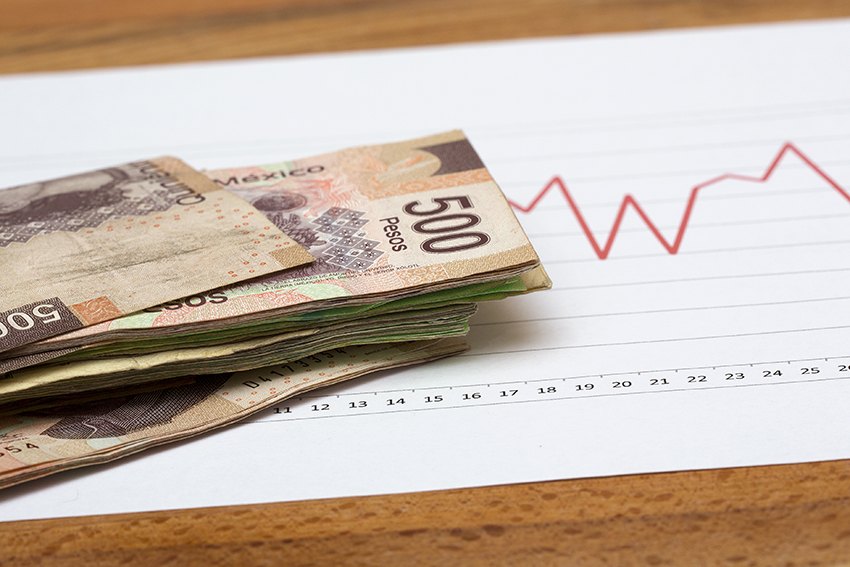
At 9:30 a.m. on Friday, Bloomberg News reported that the peso had lost 0.68% against the dollar, falling 3 cents since Thursday’s close to bring the exchange rate to 17.82 units to the dollar, a seven-week low.
As a result, the peso had declined nearly 4%, pointing to its worst weekly performance since June 2024.
Friday’s trading action came after Trump used his Truth Social network to demand an “unconditional surrender” from Iran.
El Economista newspaper reported that the market is also concerned about U.S. economic indicators that suggest the world’s largest economy might be cooling down “at a complex time due to the war.”
U.S. nonfarm payrolls fell by 92,000 jobs in February, according to the Bureau of Labor Statistics, pushing the U.S. unemployment rate up to 4.4% from a previous level of 4.3%.

Although the dollar index retreated following the jobs report, the peso remained under intense pressure due to a broader flight from riskier emerging market assets.
Gabriela Siller, director of economic analysis at Banco Base, told El Financiero newspaper that the depreciation of the peso “is due to an increase in global risk aversion, as there are no signs that the war in Iran will end soon.”
Siller also cited Thursday’s decision by the Republican-majority U.S. House of Representatives, which rejected a resolution to force an end to U.S. attacks against Iran on a 219 to 212 vote — signalling legislative support for the conflict.
Trading Economics reported that the peso’s vulnerability is compounded by energy price shocks due to the war in Iran which has also raised the risk of a global inflationary recession.
El Financiero said Banamex reported that the dollar was selling for 18.26 pesos at 10 a.m., while the purchase price for the greenback was at 17.24 units.
With reports from El Financiero, El Economista and Trading Economics