Universities in Mexico are incorporating Artificial Intelligence (AI) in their courses of study in response to the growing global demand for professionals trained in the field.
To date, higher education institutions in the country offer some 43 degree programs directly related to AI, data from the National Association of Universities and Higher Education Institutions (ANUIES) revealed.

According to the General Coordinator of Strategic Linkage at ANUIES, Gustavo Cruz Chávez, these programs have emerged in the last five years. Of the 43 total AI-focused degree programs, 24 cater to undergraduate or bachelor-level students, while 19 are available at the graduate level.
Cruz told the newspaper El Sol de México that there are about 3,600 students across the country who are currently enrolled in one of these programs. This figure, he said, will multiply in the coming years as this field continues to develop.
AI engineering, innovation and development engineering and computational technologies are some of the new degree titles that have emerged in Mexico in recent years. Cruz added that universities in the northern and central regions of the country have made the most progress in creating AI programs to respond to the needs of the industries based in that region.
Some of these states include San Luis Potosí, Guanajuato and Querétaro, focused on the automobile industry, as well as Baja California, home to several aerospace companies, among others in the northern region.

Public institutions such as the National Autonomous University of Mexico (UNAM), the University of Guadalajara (UdeG) and the University of the National Polytechnic Institution (IPN) have developed AI degree programs for their students.

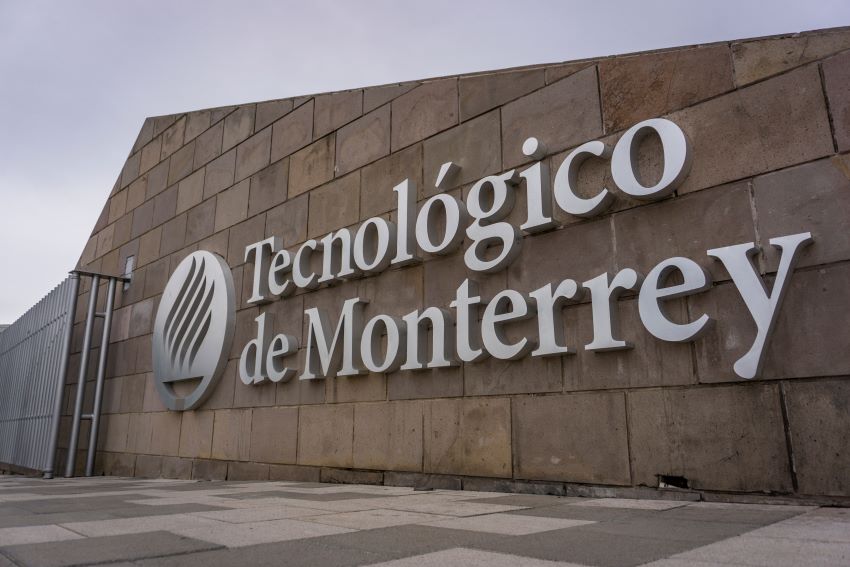
Some private institutions have also created AI programs, including Tec de Monterrey, Ibero American University (Ibero), the Autonomous Technological Institute of Mexico (ITAM) or the Autonomous University of Nuevo León (UANL).
By comparison, there are currently just over 20 universities offering AI degree programs in the United States.
Renato Salmerón, director of the AI and Data Science Program at Tec de Monterrey, told El Sol de México that “all programs in the School of Engineering and Science, regardless of the subject matter, must include AI at some point in their curriculum.”
According to the National Institute of Statistics and Geography (INEGI), more than 40% of Mexican companies are currently using AI-based solutions for their daily operations.
With reports from El Sol de México