Mexicans were clearly ready for a change. More than 50% of voters turned to a populist firebrand to elect the first leftist president in more than 30 years, a candidate they had rejected on two previous occasions.
Voters were also ready for a change 18 years ago when they ended the 70-year reign of the Institutional Revolutionary Party (PRI) and installed Vicente Fox of the National Action Party (PAN).
But little actually changed. The country went with the PAN a second time six years later with Felipe Calderón, but in many respects things got worse.
Then in 2012 the voters gave up on the PAN and turned back to the PRI, hopeful once again that the party’s grand plans would lead Mexico into economic prosperity while curbing the deeply entrenched corruption.
Again, little actually changed except that the violence became worse.
The disappearance of 43 teaching students in Guerrero in 2014 and a subsequent investigation that was widely seen as flawed and marred by cover-ups was particularly damning for the current administration.
So too was the revelation later the same year that President Enrique Peña Nieto’s wife had acquired a multi-million-dollar mansion that was built by a favored government contractor.

Peña Nieto finally apologized for the scandal in July 2016 and admitted that he had made a mistake but few considered his apology credible and soon after his approval rating hit a new low.
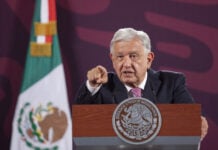
Andrés Manuel López Obrador, who has finally got his longstanding wish to be president, ran in both the last two elections and came second. Election fraud likely played a part in his defeat both times but the voters were not quite ready either.
This time round they were; they were well and truly fed up. Promises to curb corruption had not been met and economic reforms to fire up the economy failed to deliver.
Corruption scandals severely damaged the credibility of the ruling PRI, for which its candidate, José Antonio Meade, didn’t stand a chance.
Whiffs of corruption involving a land deal also hurt the chances of the PAN’s Ricardo Anaya, candidate for an unlikely coalition with the left-wing Democratic Revolution Party, previously AMLO’s political home.
Anaya also made internal enemies with his maneuvers to win the coalition candidacy. Party stalwart Margarita Zavala quit after questioning the party leadership’s honesty and ethics and campaigned as an independent before withdrawing from the race in May.
Had she become the PAN’s presidential candidate, as she had wished, things might be quite different today. It could have been a much closer race for AMLO.
But did voters actually choose the Morena party leader, or did they vote for change?
“There is so much wrong. I think some people voted for López Obrador, but the majority voted for a change that we need,” said 23-year-old publicity agent Fernando Torre in a report by The Washington Post.
That feeling of being fed up with the political status quo, referred to in Mexico as hartazgo, is emphasized by the use of the combined acronym PRIAN.
Many Mexicans believe that not only are the PRI and the PAN as bad as each other but that they are in cahoots to perpetuate their influence and power.
López Obrador repeatedly sought to tap into that sentiment by referring to the country’s political and business elite as “the mafia of power.”
While the “it’s time” factor likely played a role in his election, AMLO didn’t leave anything to chance, criss-crossing the country during the campaign period, often visiting isolated, rural communities where voters feel even more neglected by federal governments than most.
He also appeared to make a greater effort than other candidates to connect with voters on a personal level and continued to paint himself, as he has long done, as a common man of the people with humble roots who shuns luxuries such as first-class travel.
While pundits, political scientists and opposition parties will no doubt continue to analyze the reasons behind AMLO’s overwhelming victory, millions of Mexicans, expats and observers around the world, will wait eagerly — or otherwise — to see exactly what kind of change Andrés Manuel López Obrador brings to Mexico.
Mexico News Daily