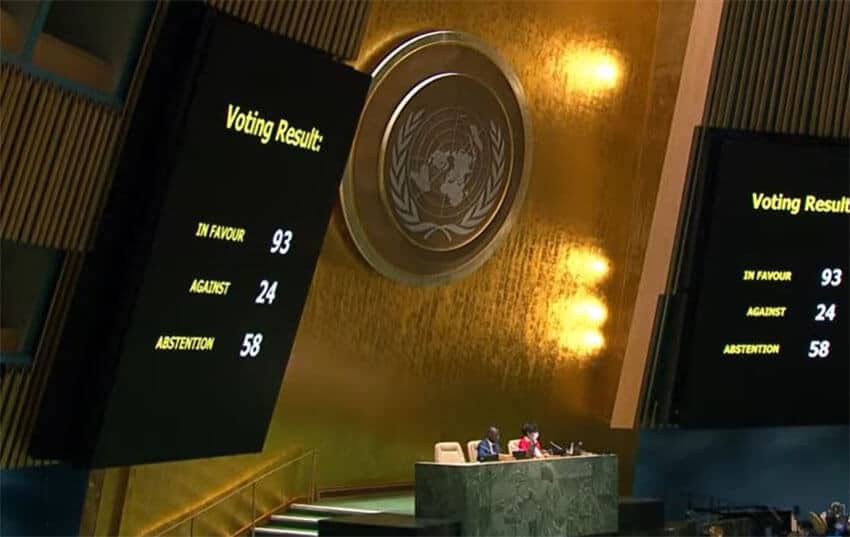
Mexico on Thursday abstained in a United Nations vote that suspended Russia from the UN Human Rights Council over reports of “gross and systematic violations and abuses of human rights in Ukraine,” a move that drew harsh criticism from an international human rights organization.
Ninety-three countries voted in favor of Russia’s suspension, 24 voted against and 58 abstained.
Among those that voted against suspension were Russia itself, China, Cuba and North Korea. In addition to Mexico, the countries that abstained included India, Brazil, South Africa, Saudi Arabia and Pakistan.
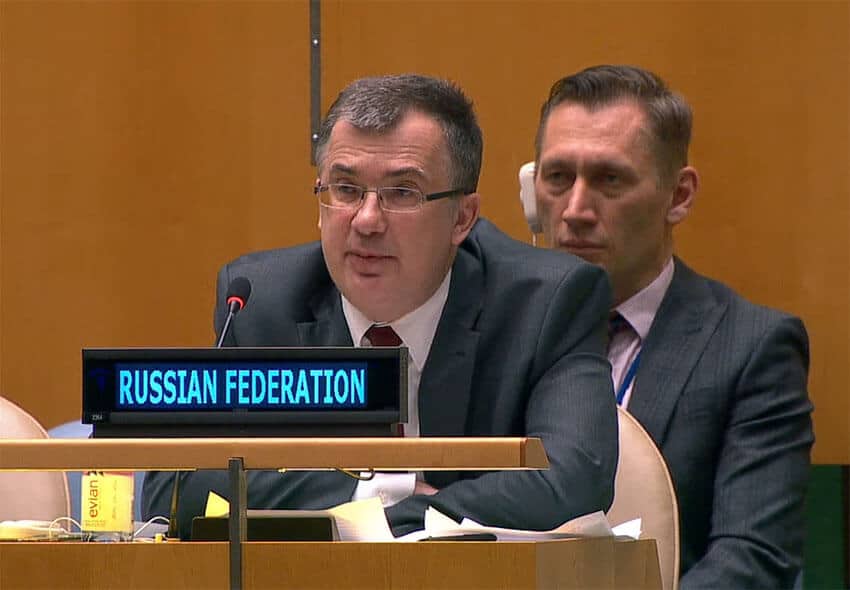
After the resolution was adopted, Russian Deputy Permanent Representative Gennady Kuzmin abruptly announced that Russia had already decided to leave the council.
President López Obrador announced Thursday morning that Mexico – which has condemned Russia’s invasion but not imposed any sanctions – would abstain in the vote.
“What we have set out is that we shouldn’t vote for the expulsion of Russia nor be against it, we’re going to abstain,” he said.
“Why the abstention, which is also a position? Because … how can we resolve Russia’s conflict with Ukraine if we don’t have mediation? What is the UN for? How … [could we] blow up an instrument that is fundamental to achieving peace agreements and avoiding war …? Why not accept that this war exposed the failure of politics? Because politics was invented to avoid war,” López Obrador said.

“… The parties have to be called to negotiation, to dialogue, to stop the war. … If the UN is not able to speak with Russia, because they expelled Russia, who will speak with the Russian government?”
Mexico’s permanent representative to the United Nations gave a more succinct explanation for the abstention.
“Exclusions at this time don’t resolve the problem and that’s why Mexico abstained in this resolution,” Juan Ramón de la Fuente said.
“… I hope that … [the suspension of Russia from the Human Rights Council] won’t be an additional obstacle for other bodies of the UN such as the Security Council and the General Assembly itself to keep working. We need to find a diplomatic solution so Mexico is in favor of everything that will keep inclusion and dialogue on the table …” he said.
Tamara Taraciuk, acting director of the Americas division of Human Rights Watch (HRW) slammed Mexico’s decision to abstain, while the secretary general of the Organization of American States (OAS) was also critical, although he didn’t specifically mention Mexico.
“Mexico’s abstention stance, along with Brazil and El Salvador, is a disgrace because … there is evidence of possible war crimes [in Ukraine],” Taraciuk told the newspaper El Universal.
“We’ve documented cases of summary executions, illegal violence against [Ukrainian] citizens and repeated sexual violence,” the HRW representative said. “… In this context, saying or suggesting that Russia can have a place at the table of the Human Rights Council is a disgrace.”
OAS chief Luis Almagro said on Twitter that he supported the UN’s decision to suspend Russia and asserted that to be neutral at a time when crimes against humanity are being committed is to be an “accomplice.”
With reports from Reforma, Expansión Política and El Universal