Mexico City officials sprang into action even as events were still unfolding nationwide Sunday following the death of drug cartel boss Nemesio Oseguero Cervantes in the western state of Jalisco.
Mayor Clara Brugada convened a “permanent” Security Cabinet session to establish protocols and guarantee that all necessary preventative steps were taken.
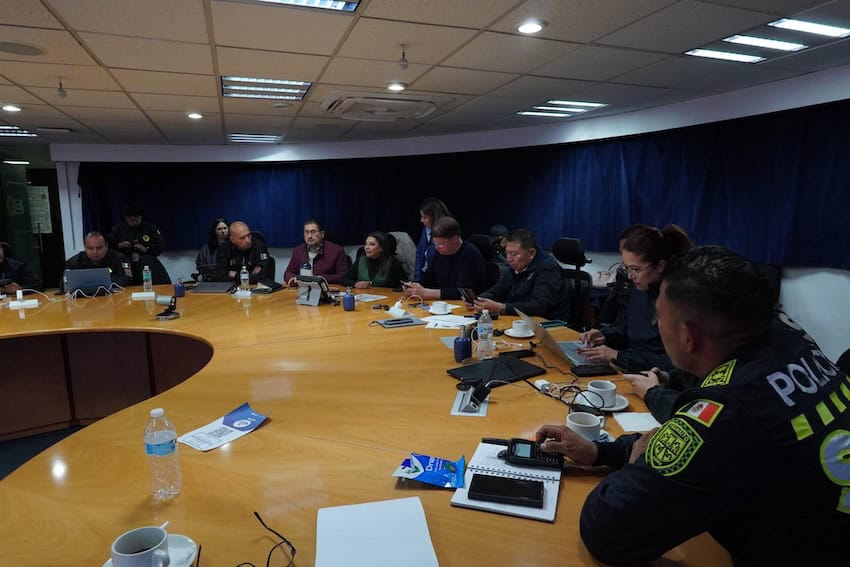
Shortly thereafter, she issued a statement confirming that her government’s top priority was the safety of all inhabitants of the nation’s capital.
In a social media post that day, Brugada urged the public to remain calm, adding that strategies were being coordinated with federal security forces.
She also called on the public to seek information only from official channels and to avoid spreading rumors. “Serenity and trust are built with verified information and coordinated efforts,” she said.
Talking to reporters, the mayor insisted that “the nation’s capital remains at peace.”
On Monday, the mayor said all services were operating normally, “and the capital’s Security Cabinet remains in permanent session, in direct coordination with [the federal government] to protect families and ensure tranquility in every borough.”

Additionally, all public offices and institutions were open, and all public transportation systems — the Metro, the Metrobús, cable cars, light rail and Cablebús — continued to operate normally.
At her Monday morning press briefing, President Claudia Sheinbaum said all highways leading in and out of Mexico City were open, adding that the Transportation Ministry’s command center was monitoring the situation. Soldiers and National Guardsmen had established checkpoints at all major entry points.
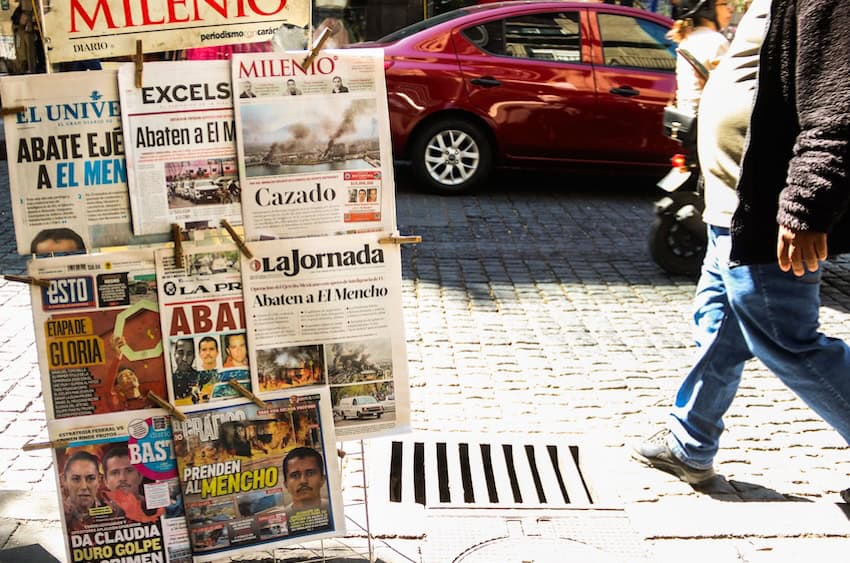
In the city, soldiers were reportedly patrolling the Segundo Piso (upper deck) of the Periférico beltway.
One exception was at the Northern Bus Terminal, where routes to the state of Jalisco and points northwest had been canceled. Suspended departures included those to the destinations of Guadalajara, Guanajuato, Michoacán, Tepic, Mazatlán, Sonora, Zacatecas and Tijuana.
The Mexico City International Airport was also operating normally, though some airlines had canceled flights to Puerto Vallarta, scene of some of Sunday’s worst violence.
Security at the airport featured a force of approximately 5,000 agents, comprising personnel from the Naval Airport Protection Unit, the Federal Protection Service, the Mexico City Police Department and private security corporations.
Public schools in the capital opened as usual and the National Autonomous University (UNAM) said activities at its main campus in southern Mexico City would proceed as scheduled.
University officials did urge professors to be flexible with out-of-town students who might have difficulty reaching the city, cautioning students to avoid travel and prioritize safety.
At the same time, UNAM campuses in Morelia, Michoacán; León, Guanajuato; and Juriquilla, Querétaro, were urged to consider holding classes remotely and online.
With reports from Chilango and La Jornada