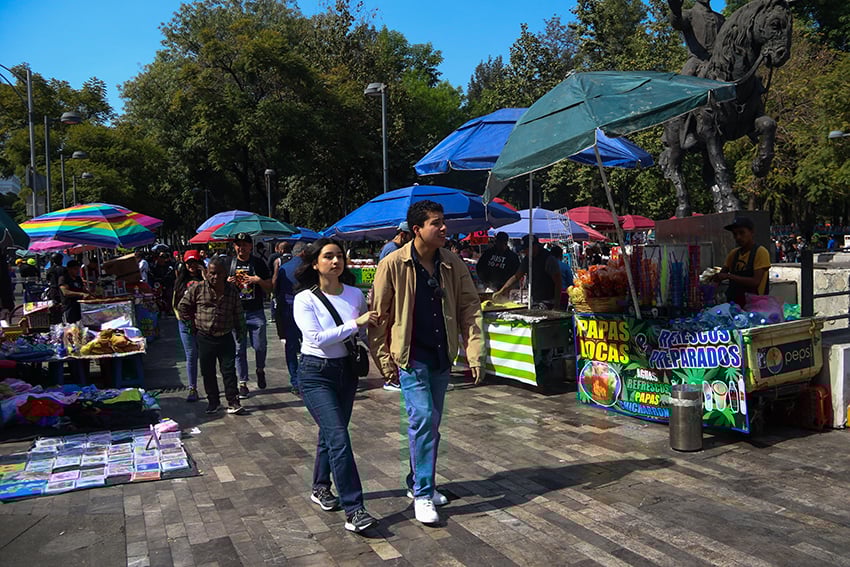
The Mexico City government has begun establishing order in the Historic Center, beginning with the temporary removal of street vendors this week.
While the ubiquitous street merchants traditionally take a one- or two-week break after the year-end holiday season, Mayor Clara Brugada said her administration had reached agreement with the vendors to coordinate the complete reorganization of informal commerce in the city center.
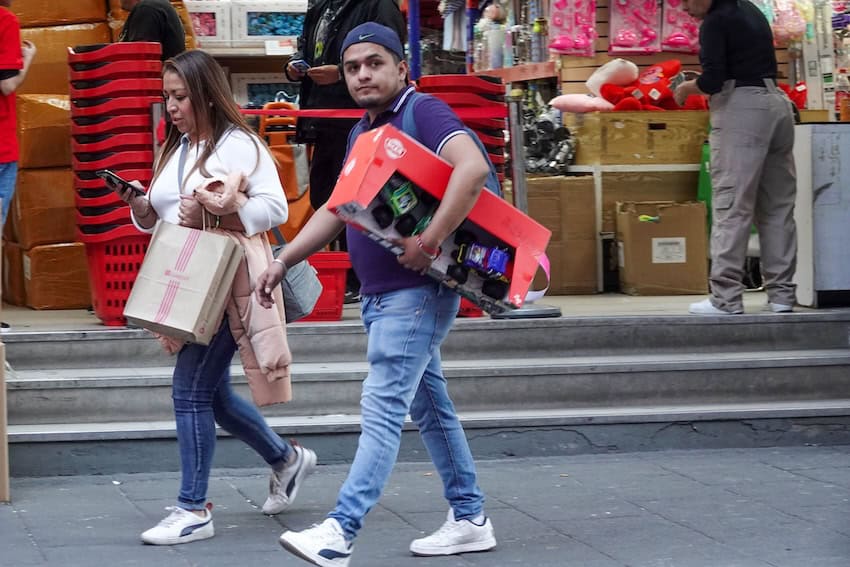
“Today the main streets and avenues of the Historic Center are clear,” Brugada said Wednesday, “in this first stage of the reorganization we have been preparing for.”
“By the end of January, commerce will return, but under the terms of the reorganization program,” she said.
Government Secretary César Cravioto said new restrictions will be established in specific areas of the Historic Center.
The main streets and avenues, as well as other public areas, are currently free of street vendors, the mayor said, inviting residents and tourists to check it out first-hand.
“Go take a look around; there are no street vendors,” she said.

The newspaper Excelsior reported that some Indigenous vendors were selling goods in and around the Zócalo on Wednesday, while Indigenous vendors from Triqui, Mazahua and Otomí communities were camped out alongside City Hall and conducting a sit-in, demanding permanent spaces to operate.
Brugada said talks with the downtown street vendors, or ambulantes as they’re often called, are ongoing via the Advisory Commission for the Reorganization and Regulation of Street Vending, which was established in October.
She said the program seeks to establish new rules while preserving freedom of movement. She said it is part of her administration’s public commitment to fully establish order by mid-year, in time for the World Cup which kicks off in Mexico City on June 11.
Brugada acknowledged the challenge is not only operational, but also legal and social.
“Our goal is to guarantee both the right to work and the recovery of public space to allow for unfettered pedestrian mobility,” she said. “The reintegration (of the vendors) will be gradual and will be carried out according to the guidelines agreed upon.”
The city’s reorganization program began last year as informal commerce in the Historic Center grew by 25% in 2025, forcing authorities to enforce existing rules, issue sanctions and carry out permit reviews.
The newspaper El Sol de México reported that the city removed more than 65,000 vendor stalls last year for violations of existing regulations. This included the confiscation of merchandise, including clothing, toys, accessories, gifts and food.
Some of the actions were prompted by formal complaints filed by downtown residents and, although city officials say 63% of all complaints were addressed, vendors often return and occupy the same spaces.
With reports from Proceso, Excelsior, El Sol de México and Infobae