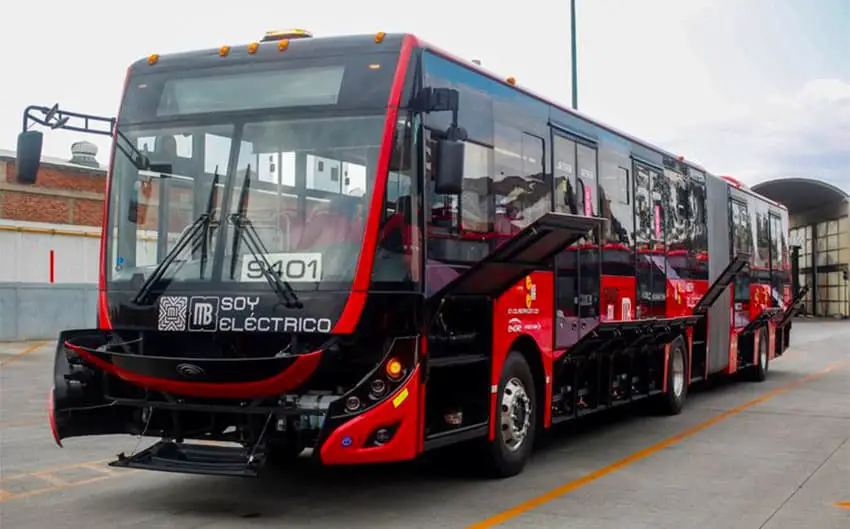
Mexico City’s first 100% electric bus debuted Thursday on Line 3 of the Metrobús, which runs from Tenayuca to Ethiopia. Nine additional units will arrive by the end of this year, at a cost of about US $750,000 each.
“It is the first fully electric bus to operate in Mexico City in Metrobús, and our objective is to continue advancing in electromobility with buses and trolley buses that operate with electricity to replace diesel,” Mayor Claudia Sheinbaum said at the bus’s unveiling.
“This helps us in two very important areas: the reduction of polluting emissions and greenhouse gases, which causes climate change, and even though the investment is a little higher, in the long run, it is much cheaper,” Sheinbaum said.
Metrobús director Roberto Capuano announced that the operating cost is 30% less than that of a diesel-fueled bus.
The new bus also promises a better experience for passengers and drivers, offering a smooth ride, free of vibrations, Capuano said. It also has spaces for wheelchairs and guide dogs, overhead monitors and USB ports for charging electronic devices.
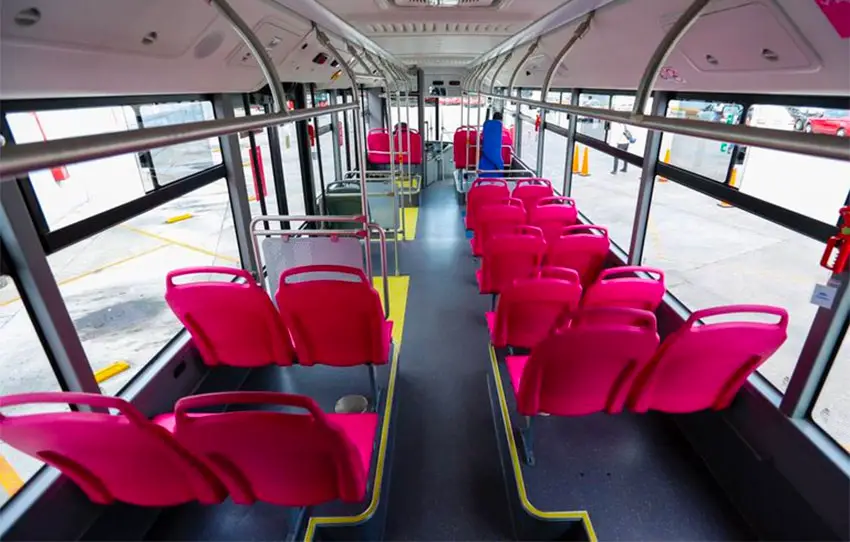
Retractable doors mean passengers won’t be hit by the door as they embark or disembark, and the buses will be equipped with a camera system for security.
They can travel 330 kilometers on a single charge and will recharge at night in just 3.5 hours.

Capuano said it is the first unit of its kind to go into commercial operation in Mexico.
Compared to a diesel bus, Capuano says “the new electric unit reduces energy use by 80% and in 10 years of operation avoids the emission of 1,300 tonnes of carbon, he noted. “Likewise, it contributes to improving air quality by eliminating, in the same period, 14 tonnes of pollutants, including particulate material, harmful to the respiratory system, and nitrogen oxides, associated with ozone contingencies.”
The vehicles, which were manufactured by the Chinese company Yutong, which also made the city’s electric trolley buses, are 18 meters long and can carry 40 seated passengers and 120 standing.
Source: El Universal (sp)