Tuesday, January 20, 2026

Mexico City’s Cablebus to be inaugurated Sunday after successful testing

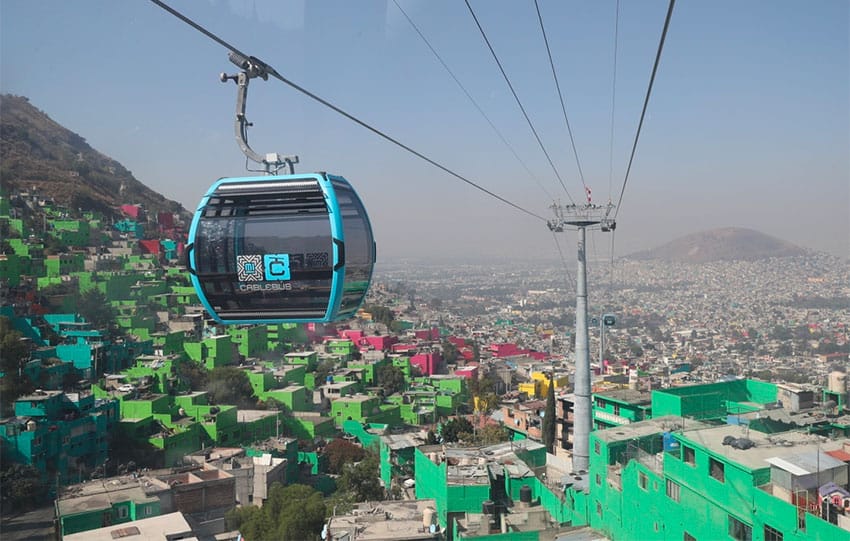
After a successful testing period, authorities announced that Mexico City’s Cablebus Lne 1 is ready for its official inauguration on Sunday.

The cable car line runs 9.2 kilometers through a hilly, working-class area in the Gustavo A. Madero borough in the north of the city, and links the Cuautepec neighborhood to the Indios Verdes Metro and bus station.

It takes 33 minutes to travel the length of the line, which has the capacity to transport 144,000 people daily. At the moment, that capacity is limited by health safety measures, which dictate that only six people be allowed per cabin.

A 1.7-kilometer section of the Cablebus line opened in March, to allow local residents to become familiar with the new form of transportation. Now, the entire line will be operational.

Tickets cost 7 pesos (US $0.35) for the general public, but seniors, children under 5 and people with disabilities ride for free. The Cablebus will run 5 a.m. to 11 p.m. Monday through Friday, 6 a.m. to 11 p.m. on Saturdays and 7 a.m. to 11 p.m. on Sundays and holidays.

Mexico News Daily

Have something to say? Paid Subscribers get all access to make & read comments.
Bank of Mexico logo on a wall

New 10 and 20-peso coins to honor Mexico’s ancestry

0
Starting this year, Mexico will gradually replace its 10 and 20-peso coins with new designs honoring Tonatiuh, the Aztec sun god, and the Maya Temple of Kukulkán at Chichén Itzá.
Mexican flag

IMF maintains 1.5% growth forecast for Mexico in 2026

0
The agency’s forecast is higher than that of other financial institutions, with the most recent Citi survey, for example, putting Mexico’s growth outlook at 0.3% for 2025 and 1.3% for 2026. 
Interior of an air control tower in Mexico City

Mexico says FAA flight warnings are precautionary, have no operational impact

2
The U.S. Federal Aviation Administration (FAA) on Friday issued advisories urging U.S. airline pilots to "exercise caution" when flying over the Mexican Pacific and the Gulf of California due to military activities and GNSS interference.
BETA Version - Powered by Perplexity