As if drought and high temperatures weren’t bad enough, Mexico City’s water crisis is being further exacerbated by thieves tapping pipelines, a practice that sees criminals make off with tens of thousands of liters of water that they sell illegally each day.
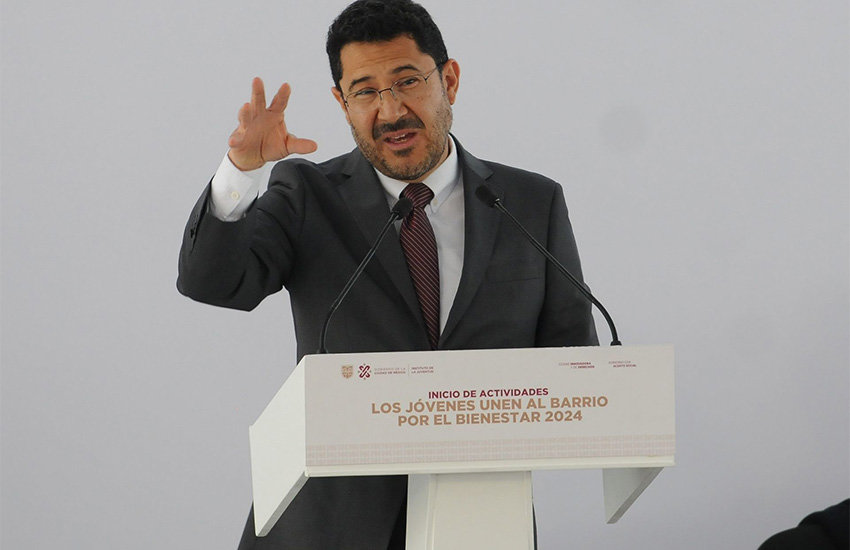
In January, Mexico City Mayor Martí Batres announced that water distribution would be reduced in 13 of the city’s 16 boroughs, citing the need to conserve supplies.
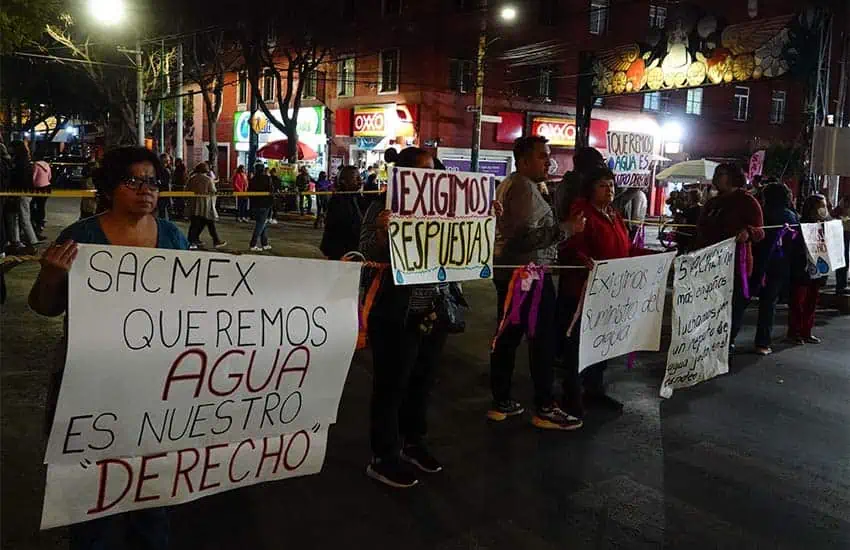
Fed up with the faulty water system and angered that they have to get up at dawn to receive the day’s ration of water from delivery trucks, residents in southern Mexico City decided to show their displeasure last week.
On the morning of March 7, about 300 people from the village of San Lorenzo Huipulco in the borough of Tlalpan blocked the avenue leading north into central Mexico City, snarling commuter traffic.
“There are five wells in Huipulco,” Lucy, a protester, told the news outlet Expansión. “It doesn’t make sense that there are five wells underneath us that we as residents don’t have access to but that the water trucks are doing a booming business with.”
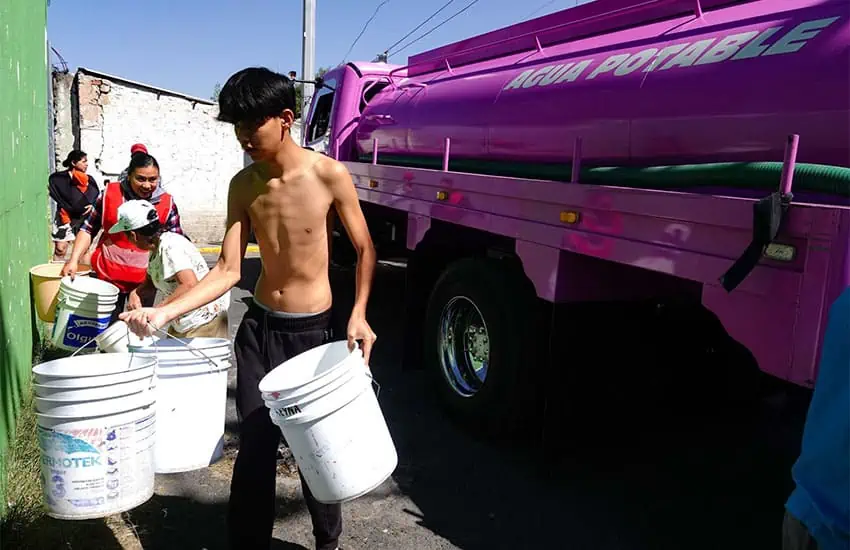
While Lucy and her neighbors have to carry water from a truck to their homes, dozens of water tanker trucks, known in Spanish as pipas are illegally siphoning water and selling it or delivering it to other boroughs.
Local officials are not ignorant of the situation. In January, Batres told reporters that putting an end to the practice of stealing water was “a top priority of the Mexico City government.”

It’s easy to see why he’d feel the need to say that: since 2018, the Mexico City water agency (Sacmex), which oversees water distribution in the capital in conjunction with borough governments, has received nearly 1,400 reports of illegal tapping operations. Only 153, however, were confirmed and closed down by officials.
The Mexico City Congress is considering legislating stiffer penalties for water theft. A proposed bill would increase fines for domestic theft — installing a connection from city pipes to one’s home — from 10,857 pesos (US $650) to up to 37,000 pesos (US $2,216). Fines for commercial theft — stealing water to sell it clandestinely for profit — would rise from 108,570 pesos (US $6,502) to 290,624 pesos (US $17,405).
Legal authorities are also taking action: an illegal tap on a water pipe in Tlalpan that was siphoning water from an aquifer was shut down by local police and federal Interior Secretary (Segob) agents in January.
Stealing water to sell illegally — known as huachicoleo, a word that more commonly refers to fuel theft — has become more profitable as the capital’s delivery system has become increasingly unreliable. Old, leaky pipes lose up to 40% of their water and the supply is being further depleted by drought, high temperatures and poor management that has caused the extraction rate of the city’s aquifer — which supplies 65% of the city’s water — to surge to 2.5 times the natural recharge rate.
A recent National Autonomous University of Mexico (UNAM) study suggested that an investment of 97 billion pesos (US $5.8 billion) is required for much-needed maintenance on the aging Cutzamala aqueduct system, which supplies about 28% of Mexico City’s water. Another report by a public policy think tank confirmed this month that “severe, extreme and exceptional droughts” were affecting more than 1,600 municipalities around the nation and the densely populated Valley of México is no exception.