The federal government’s total revenues reached a record high last year, surpassing 6 trillion pesos and increasing by 4.8% in real terms compared to 2024.
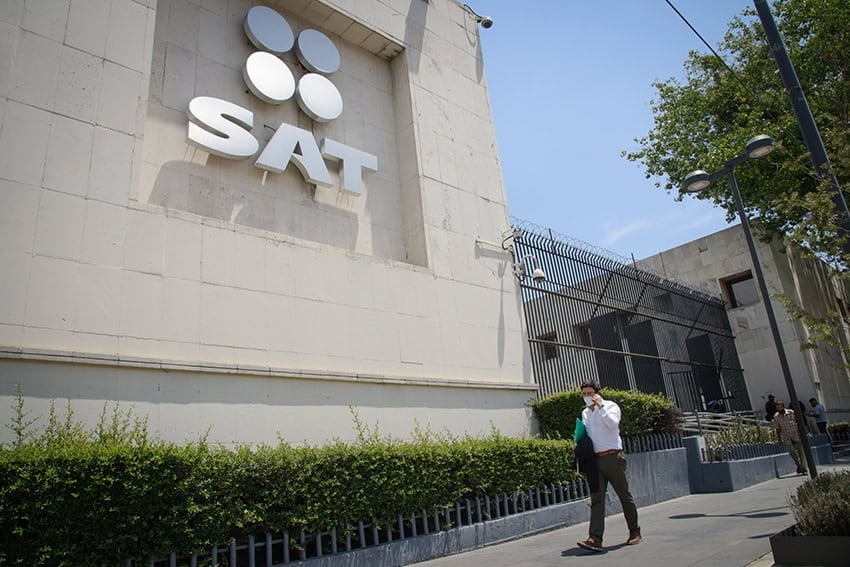
The tax collection part of that revenue also established a new record, according to a Thursday press release from the Tax Administration Service (SAT), bringing in 5.351 trillion pesos (nearly US $303 billion), a 4% increase over 2024 tax revenues.
The total government revenues of some 6.046 trillion pesos (US $342.3 billion) in 2025 was nearly 487.5 billion pesos (US $27.6 billion) more than in 2024. The total revenues collected even surpassed what was programmed, reaching 101.6% of the amount anticipated in this year’s federal budget.
Analysts attributed the record tax collection to the SAT’s new and more aggressive auditing strategy that relies on Generative Artificial Intelligence to carry out more comprehensive electronic audits, which provide more information and more documentation of taxpayer behavior.
Cynthia Valeriano, a professor at the Monterrey Institute of Technology and Higher Education, said the SAT’s tax strategy will go a long way in reinforcing the role it will play after Congress reformed federal tax laws late last year.
“The SAT has sufficient teeth and will have direct control mechanisms … to reduce the margins of tax evasion,” she said, adding that its aggressive strategy of constantly conducting audits of large and medium-sized companies will also discourage tax evasion.
The reforms, approved in November, focus on boosting collection through stricter controls, digital platform taxation (higher withholdings), increased excise taxes (tobacco, sugary drinks, video games), and enhanced measures against fake invoice schemes. Congress had estimated that fake invoice schemes were depriving the Treasury of 1.41 billion pesos (US $79.8 million) each year.

The SAT provided detailed information about the taxes it collected last year:
- 2.889 trillion pesos (US $163.7 billion) in income tax (ISR), 204.5 billion pesos (US $11.6 billion) more than in 2024
- 1.499 trillion pesos (US $84.9 billion) in value-added tax (IVA), an increase of nearly 91.5 billion pesos (nearly US $5.2 billion) compared to 2024
- 671.27 billion pesos (US $38 billion) from the special tax on production and services (IEPS), 42.9 billion pesos (US $2.4 billion) more than in 2024
Valeriano did express concern about the government’s continued reliance on the same tax base, saying it must look to implement other measures to reduce informal employment and encourage “the self-managed economy to join the formal economy” in order to broaden the tax base.
With reports from Reforma, La Silla Rota and Forbes México