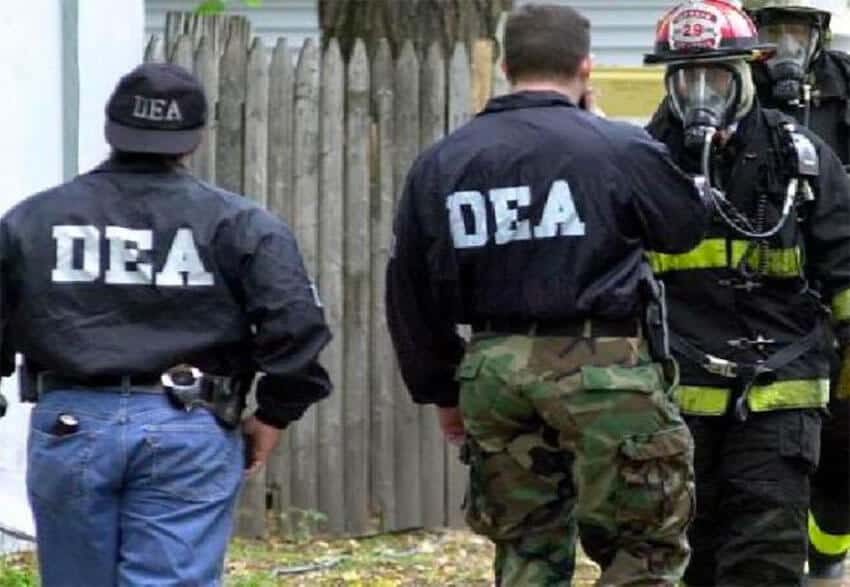
The federal government last year disbanded a United States-trained elite anti-narcotics unit that collaborated with the U.S. Drug Enforcement Administration (DEA) for almost 25 years, according to a report by the news agency Reuters.
A DEA agent with knowledge of the matter told Reuters that the government formally advised the DEA in April 2021 that Mexico’s organized crime-fighting Sensitive Investigative Unit (SIU) had been shut down. However, the unit had been inoperative for some time before that, the agent said.
A second Reuters source who is also familiar with the situation confirmed that the unit had been disbanded.
The news agency said it was unable to establish why the government didn’t publicly announce the dissolution of the elite group, which was formed in 1997.
Made up of over 50 officers, it was one of a number of DEA-trained SIUs that operate in about 15 countries, Reuters said.
According to United States officials, the units are “invaluable in dismantling powerful smuggling rings and busting countless drug lords around the globe.”
The now-disbanded SIU, which collaborated with the DEA but remained under the control of Mexican authorities, was made up of some of the country’s best officers. They received training in the United States on latest surveillance and policing techniques and were vetted by U.S. officials.
The unit worked on major cases such as the 2016 capture of former Sinaloa Cartel leader Joaquín “El Chapo” Guzmán.
Reuters said the disbandment of the unit could hinder United States’ efforts to combat Mexican cartels, which ship large quantities of drugs into the U.S., contributing to the drug – and overdose – crisis in that country.
The DEA agent who spoke with the news agency said the government “strangled” the SIU, one of two such units that were established in Mexico.
(The other one is based inside the ostensibly independent federal Attorney General’s Office and continues to operate.)
The demise of the police SIU “shatters the bridges we spent decades putting together,” the agent said.
The now-defunct unit “was the main conduit for the DEA to share leads on drug shipments and tips obtained on U.S. soil with Mexico’s government,” Reuters said.
Mike Vigil, the DEA’s former chief of international operations, told the news agency that the closure of the SIU and President López Obrador’s decision to reduce security collaboration with the U.S. – although the two countries recently reached a new security agreement and Mexico has issued new visas to DEA agents – will have a detrimental effect on both countries.
“It will mean more drugs going to the United States and more violence in Mexico,” Vigil said. He also said that “Mexico is shooting itself in the foot” given that it disbanded a unit that pursued the criminal organizations that are the country’s main instigators of violence, which remain at near record levels.
While it was made up of highly-trained, U.S. vetted officers, the SIU was not beyond beyond reproach. Its former chief, Ivan Reyes Arzate, turned himself into United States authorities in Chicago in 2017 and pleaded guilty to cocaine trafficking conspiracy in a U.S. federal court last October.
Reyes, known as La Reina (the Queen), was sentenced to 10 years in prison in a U.S. federal court in February.
Reuters said that alarm bells for the elite Mexico-based SIU rang in 2019 when López Obrador disbanded the Federal Police, in which the unit was embedded, and moved many officers from that force into the newly-created National Guard.
Another portent of the unit’s eventual fate was legislators’ approval of a law that restricts and regulates the activities of foreign agents in Mexico and strips them of diplomatic immunity.
Some observers, including veteran drug war journalist Ioan Grillo, said the legislation was retaliation for the United States’ arrest in October 2020 of former defense minister Salvador Cienfuegos on drug trafficking charges. Cienfuegos was returned to Mexico and charges against him were dropped but the episode harmed Mexico-U.S. security relations.
Six months after his detention in the U.S. and just a few months after the tougher foreign agents law took effect, the Mexico-based SIU was officially dissolved. The new law was the “nail in the coffin” for the unit, said the DEA agent who spoke with Reuters.
Víctor Hugo Michel, director of information for the Milenio media group, said on Twitter that the decision to disband the SIU was not clearly a bad thing or a good thing.
“Is closing the Sensitive Investigative Unit that the DEA trained for decades positive? Yes and no, I think. … It reduces bilateral cooperation and sends a message of mistrust to Washington. But the unit was involved in scandals such as the Allende massacre [of as many as 300 people in Coahuila],” he wrote before citing several other positives and negatives of the now-defunct SIU.
With reports from Reuters