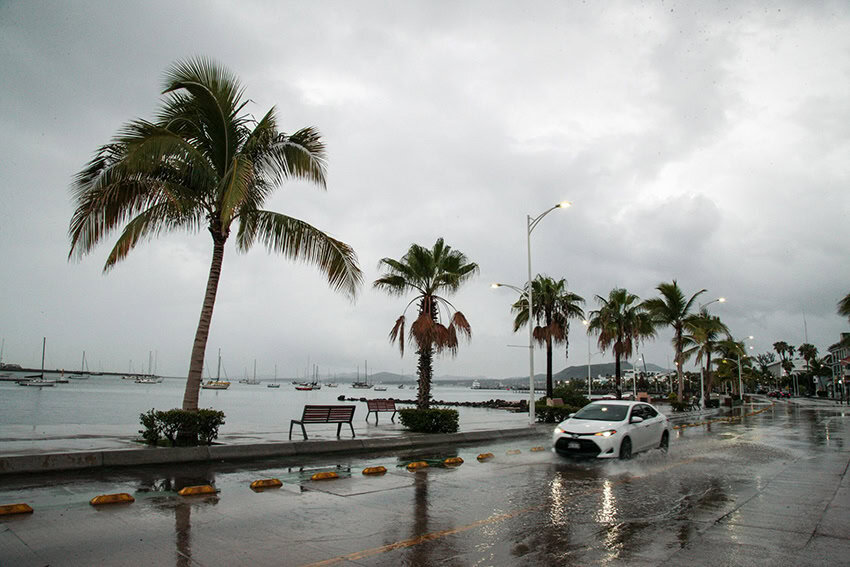
In addition to earthquake alerts, cell phone users in Mexico will soon receive alerts warning them of extreme rain events.
During this year’s hurricane season, the National Meteorological Service (SMN) will trial an “extraordinary rain” alert system, which will send cell phone messages to people in areas where extreme precipitation is forecast.
SMN chief Fabián Vázquez Romaña announced the initiative in Mexico City this week at a meeting of the World Meteorological Organization’s Region IV Hurricane Committee, which includes meteorological experts from North American, Central American and Caribbean countries.
He said that 2026 will be a “trial year,” but added that he believes sufficient progress has been made on the development of the SMN alert system for it to be a “very good approximation” of what it will eventually become.
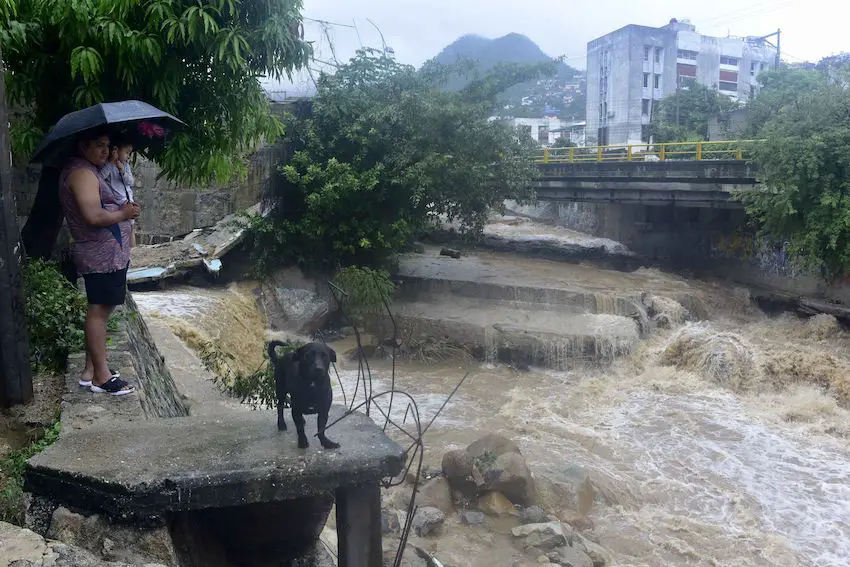
Vázquez said that when there is a forecast of “extreme rain” in an area of the country, cell phone users in that area will receive a message advising them to take precautions. He said that people would receive the alert “a few days” before a torrential rain event is forecast to occur.
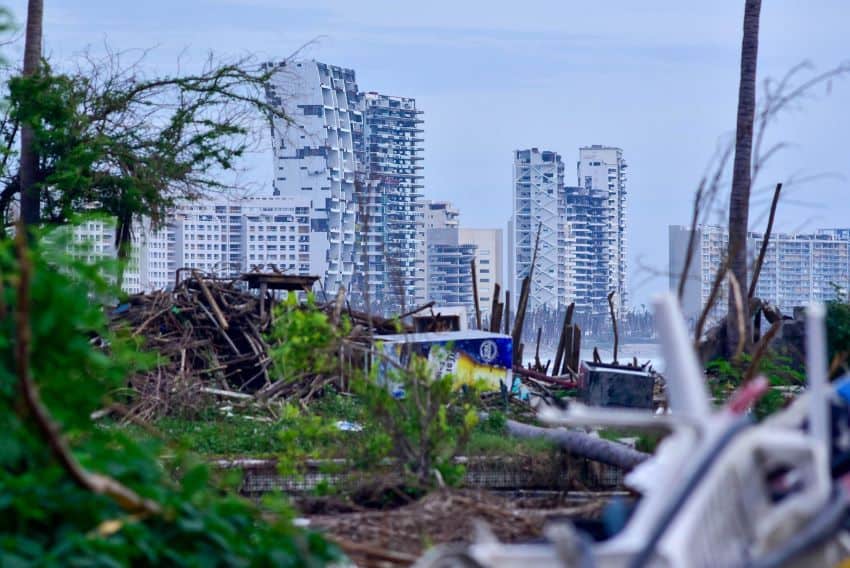
The greatest value of a such an alert system would be to advise people in a timely manner of the risk of flash flooding, landslides or other dangers in the area where they are located. It could also advise people to take additional precautions when a hurricane intensifies rapidly, as was the case with Hurricane Otis, which devastated Acapulco in October 2023.
When does the 2026 hurricane season start?
The 2026 Pacific hurricane season officially commences on May 15 and runs through Nov. 30.

The Atlantic hurricane seasons starts June 1 and runs through Nov. 30.
Vázquez said that a forecast on the number of hurricanes expected in each ocean has not yet been formulated.
“We’re still doing the analyses, it’s very early,” he said at the Hurricane Committee meeting on Tuesday.
Vázquez said that the SMN is monitoring climatic conditions, and noted that an El Niño event could begin in September.
“With El Niño, the number of tropical cyclones generally falls in the Atlantic, but increases in the Pacific,” he said.
In 2025, there were 13 named storms in the North Atlantic, including three category 5 hurricanes. Mexico wasn’t directly affected by any of the category 5 hurricanes, but Tropical Storm Barry made landfall in Tamaulipas last June.
There were 18 named storms in the Eastern Pacific last year, including Hurricane Erick, which made landfall in Oaxaca as a category 3 storm on June 19.
‘Risks associated with tropical cyclones are both real and increasing’
At the Hurricane Committee meeting in Mexico, the secretary-general of the World Meteorological Organization Celeste Saulo said that “the risks associated with tropical cyclones are both real and increasing.”
“It only takes one landfalling tropical cyclone to roll back years of development. And this was unfortunately the case with Hurricane Melissa,” she said, referring to the powerful hurricane that devastated Jamaica last October and claimed more than 90 lives.
According to a statement issued by the SMN, Vázquez told his fellow Region IV Hurricane Committee representatives that it is “essential to jointly strengthen observation, forecasting, and communication capabilities in order to cope with increasingly intense meteorological phenomena.”
With reports from Eje Central, López-Dóriga Digital and Milenio