
Last week we published Part 1 of the MND Mexico Well-being Series, which focused on eight health and healthcare indicators, including life expectancy, health expenditure per capita and hospital beds per 1,000 people.
This “Mexico in Numbers” article is a condensed version of that report — a concise presentation of the key data, complemented by visual features.
As we noted last week, the MND Mexico Well-being Series — a collection of articles on a range of topics related to well-being — will draw on the most recent internationally comparable data, as well as data from the past decade, to assess what has changed in Mexico during the eight years that the ruling Morena party has been in office.
A “Mexico in Numbers” companion piece will complement each article in the series.
Without further ado, let’s take a look at the key data from Part 1 of the series.
* The data in Part 1 of the MND Mexico Well-being Series, and hence the data in this article, comes from the OECD’s Health at a Glance 2025 report. The OECD report includes health and healthcare data for the 38 OECD countries, as well as OECD partner and accession countries in some cases.

Life expectancy at birth
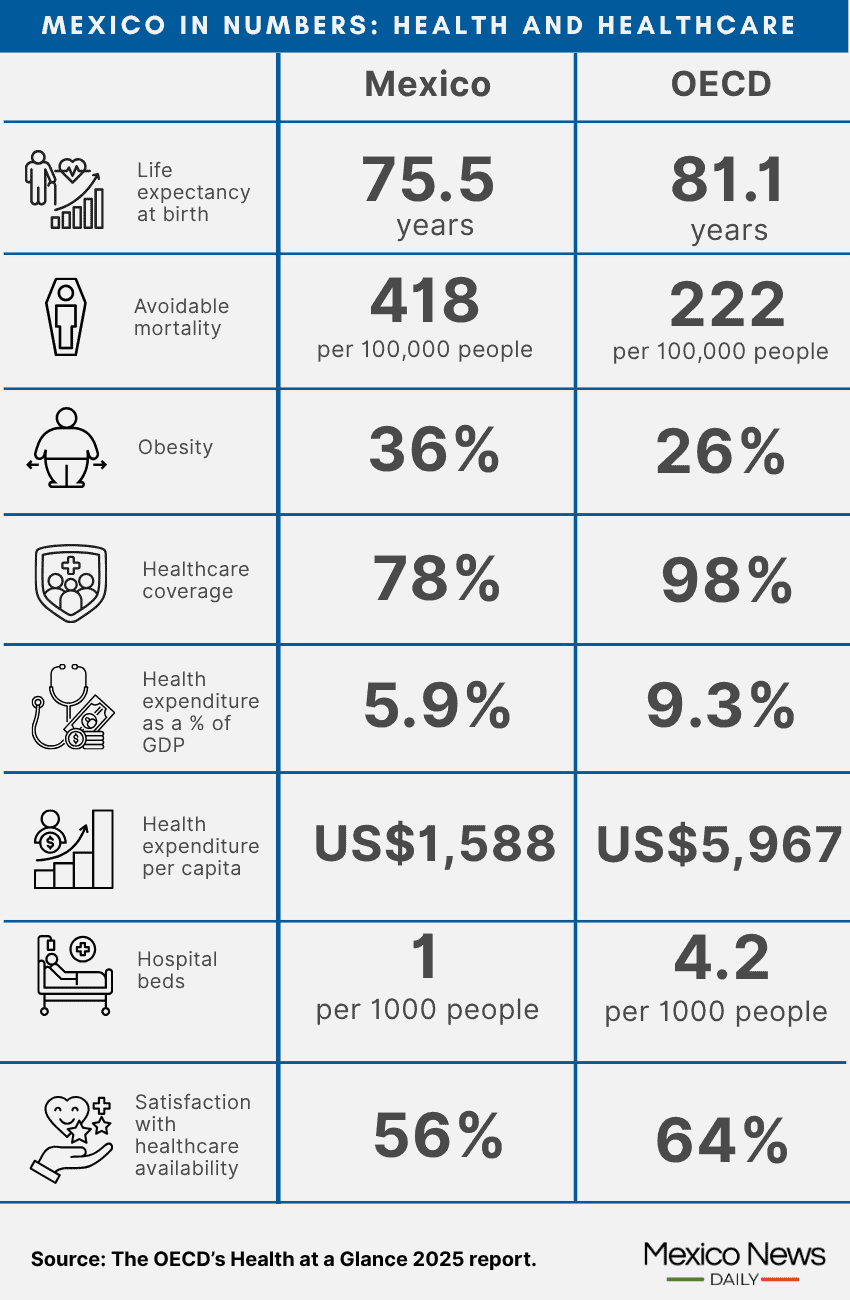
Mexico’s life expectancy rose only marginally, from 75 years in 2015 to 75.5 years in 2024, leaving it 5.6 years below the OECD average of 81.1 years. In 2024, Mexico ranked 46th of 49 countries on this measure.
Avoidable mortality
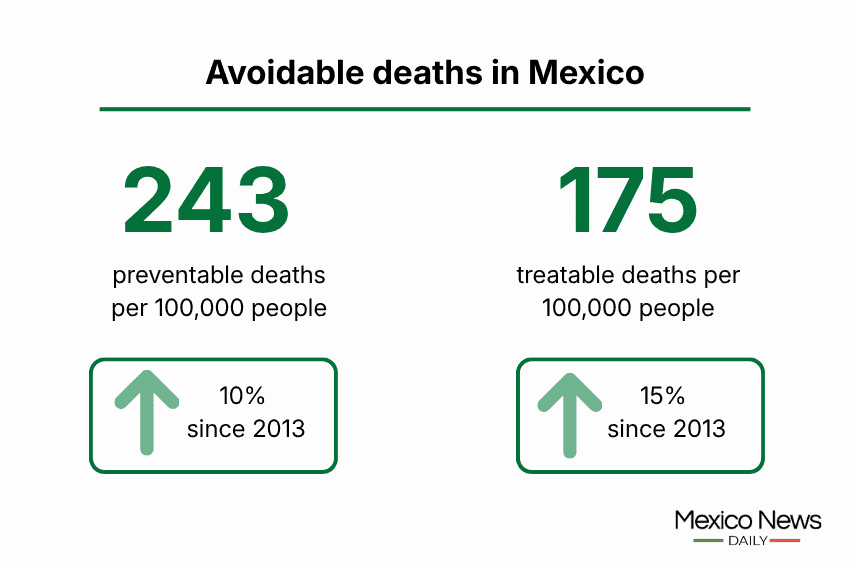
Mexico recorded 418 avoidable deaths per 100,000 people in 2023 — almost twice the OECD average of 222 — to rank 40th of 44 countries, or fifth worst. Its preventable mortality rate rose about 10% between 2013 and 2023 to 243 deaths per 100,000 people, while the treatable mortality rate increased about 15% to 175.
Obesity
Some 36% of Mexicans aged 15 and over are obese, 10 percentage points above the OECD average of 26% and the second-highest rate among the 14 countries with measured data, behind only the United States (41%). Mexico’s obesity rate has risen from 33.3% in 2015, although its combined overweight-and-obesity rate has remained broadly stable at above 70% over the past decade.
Healthcare coverage
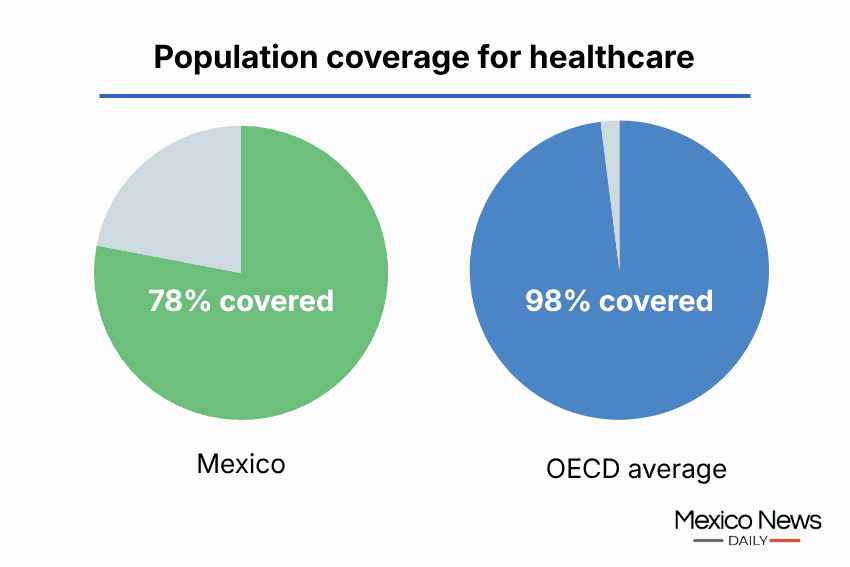
Mexico provided coverage for a core set of health services to 78% of its population in 2023, 20 percentage points below the OECD average of 98% and the lowest rate among 40 countries assessed. Coverage has deteriorated over the past decade, falling from 92.3% in 2015.
Health expenditure as a % of GDP
Mexico spent 5.9% of GDP on health care in 2024, 3.4 percentage points below the OECD average of 9.3%, ranking 42nd of 49 countries. Spending rose only marginally from 5.8% of GDP in 2016.
Health expenditure per capita
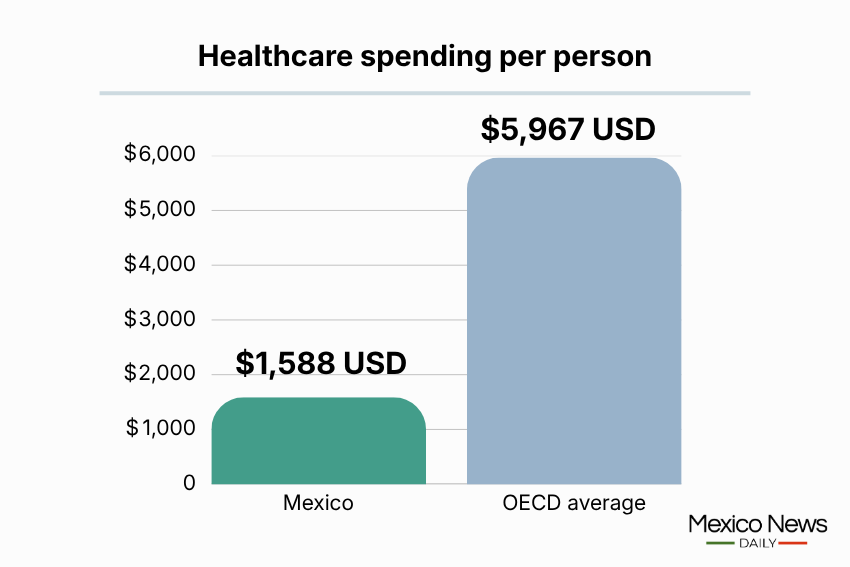
Mexico spent US$1,588 per person on health care in 2024, compared with an OECD average of US$5,967, which is 275% higher. Mexico ranked 43rd of 49 countries on this measure. Although real per-capita spending grew at an annual average of 2.1% between 2019 and 2024, Mexico’s spending gap with the OECD average widened slightly from 2016.
Hospital beds
Mexico had just 1 hospital bed per 1,000 people in 2023, compared with an OECD average of 4.2, ranking last among 44 countries assessed. The ratio was unchanged from a decade earlier.
Satisfaction with healthcare availability
In 2023, 56% of Mexicans said they were satisfied with the availability of quality healthcare where they live, eight percentage points below the OECD average of 64%. Mexico ranked 27th among 38 countries. Satisfaction increased only marginally from 55% in 2014.
Mexico News Daily