Mexico’s annual headline inflation rate was slightly lower than expected in November, falling to 4.55% from 4.76% in October.
The rate, reported by national statistics agency INEGI on Monday, was just below the 4.6% median estimate of economists surveyed by Bloomberg.
Not since March, when Mexico’s headline rate was 4.42%, has inflation been so low. Month-over-month inflation was 0.44% in November.
INEGI also reported that the closely watched annual core inflation rate, which excludes volatile food and energy prices, fell to 3.58% in November from 3.80% in October.
It was the 22nd consecutive month that the annual core rate declined. It too was just below the median estimate of economists surveyed by Bloomberg.
The decline in both the annual headline rate and the annual core rate increases the probability that the Bank of Mexico (Banxico) will make an additional cut to its key interest rate next week. The board of the central bank, which targets 3% inflation with a tolerance of one percentage point in either direction, will meet on Dec. 19.
Banxico has cut its benchmark rate by 25 basis points on four occasions this year, including after its board’s last three monetary policy meetings. The rate currently stands at 10.25%.

In a Nov. 14 statement announcing its most recent interest rate cut, Banxico said that its board expected that the inflationary environment would allow further reference rate adjustments in the near future.
High inflation for fruit and vegetables persists
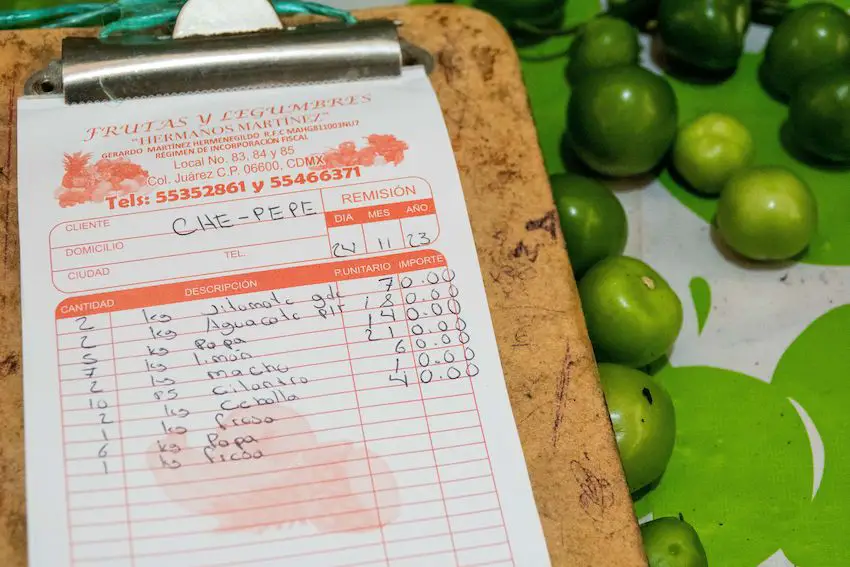
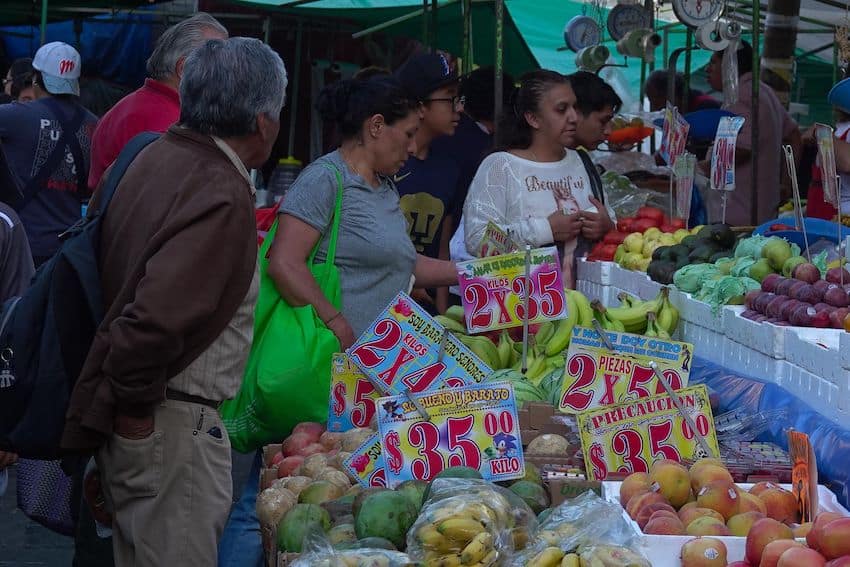
INEGI reported that fruit and vegetables were 16.81% more expensive in November than in the same month a year earlier. Inflation for those products rose from 15.90% in October.
Adverse climatic conditions have driven up fruit and vegetable prices for an extended period.
Annual inflation for meat in November was 5.14%, while the year-over-year increase in prices for the broader agricultural products category (fruit and vegetables, and meat) was 10.74%.
Services were 4.90% more expensive in November than a year earlier, while annual inflation for processed food, beverages and tobacco was 3.56%. Non-food goods were 1.19% dearer compared to November 2023, while energy prices, including those for electricity and gasoline, rose 4.55%.
The inflation outlook
Andrés Abadía, chief Latin America economist at Pantheon Macroeconomics, is predicting that Mexico’s headline inflation rate will fall again in December to end the year at 4.4%.
He said that “weaker domestic demand is pulling down core measures.”
Abadía also expects inflation will continue to slow in early 2025 due to lower oil prices, still tight financial conditions and slowing economic growth. He anticipates a headline rate of 4.2% in March and 3.8% next June.
📉 En noviembre, la inflación de México disminuyó a 4.55 por ciento, destacó la presidenta @Claudiashein.
Es una de las más bajas respecto a otros países de la OCDE. El aumento de 12 por ciento al salario mínimo para 2025 no afecta esta tendencia. pic.twitter.com/0nUdM3H5kv
— Gobierno de México (@GobiernoMX) December 9, 2024
The Mexican economy grew just 1.4% in annual terms in the first nine months of the year, well below the 3.2% rate recorded in 2023.
The Bank of Mexico is forecasting 1.8% annual growth in 2024 and 1.2% in 2025.
The central bank predicted in November that the annual headline inflation rate will trend down throughout 2025 to reach 3.1% in the third quarter and 3% in Q4 of next year.
With reports from El Financiero and Bloomberg