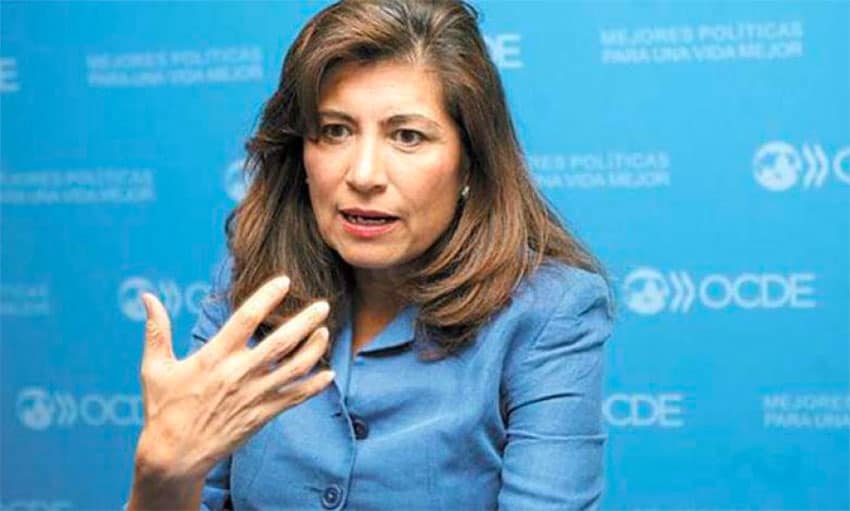
Mexico has some of the highest levels of machismo in the developed world, according to the Organization for Economic Cooperation and Development (OECD).
OECD director Gabriela Ramos said that Mexico’s predominant male chauvinism has negative effects on the economy, as it fails to take advantage of half of the country’s population.
Ramos has worked as the advisory coordinator for the OECD secretary general, José Ángel Gurría, and is in charge of the organization’s work on public policy related to gender.
She said that men’s favored treatment in the economy and society is reflected in differences in salaries, greater participation by men in the labor market, and the cultural stereotype that women should be submissive to men.
In an interview with the newspaper El Heraldo de México, Ramos said that most developed countries in the OECD — which boasts 36 member countries, including the United States, Canada, Chile, Italy, Spain, Turkey and Japan — have an average gender gap in salaries of around 15%, while in Mexico that number is closer to 30%.
Ramos did note, however, the interesting change in “social mentality” within the administration of President López Obrador, whose cabinet represents men and women equally. She also praised the fact that Mexico City has a female mayor in Claudia Sheinbaum and that the Congress has a fair representation of women.
But she said that one of the problems women face in Mexico has to do with cultural norms that tell young girls they should be submissive, help men and support them in their professional development.

“When the discrimination comes from your brain, it’s really complicated, and even more so if it passes down from generation to generation, and it’s us women who are transmitting these cultural norms,” she said.
She said that women’s professional development is always linked closely to the expectations put on them by their parents and the attitude of the household in which they grow up.
“I always had very demanding parents. We never had any differentiation of gender stereotypes, of being man or woman [in my home],” she said.
Ramos believes that demanding more of girls as they’re raised at home leads to women with high expectations and strong ambitions.
“We have clearly mapped this out at the OECD. … In one study, we asked girls if they had intentions to go into difficult disciplines like math, engineering, and the majority said no. We ask the parents, and they think the girls aren’t able.”
Ramos’ statements about the effects of machismo on the economy appear to be backed up by Mexico’s own government statistics. Data recently published by the national statistics institute Inegi reveal that women’s salaries have plummeted in the last decade.
Source: El Heraldo de México (sp)