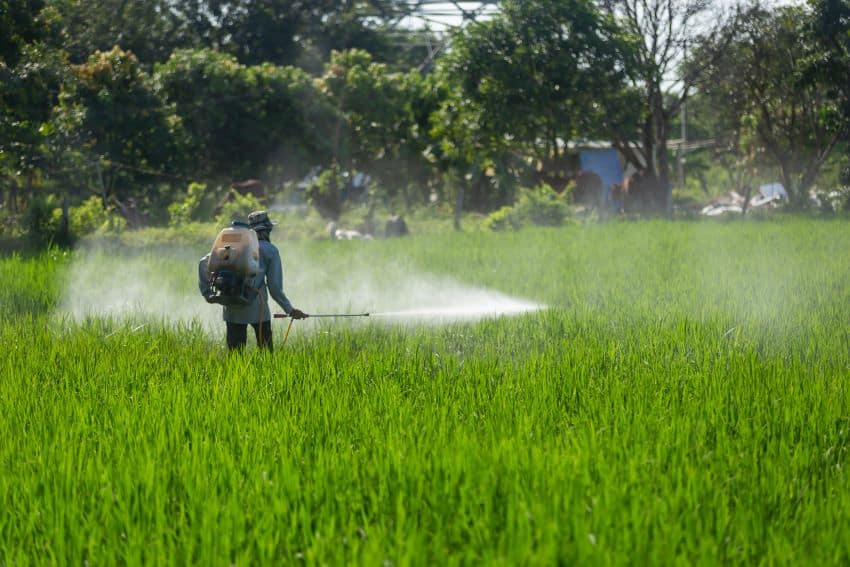
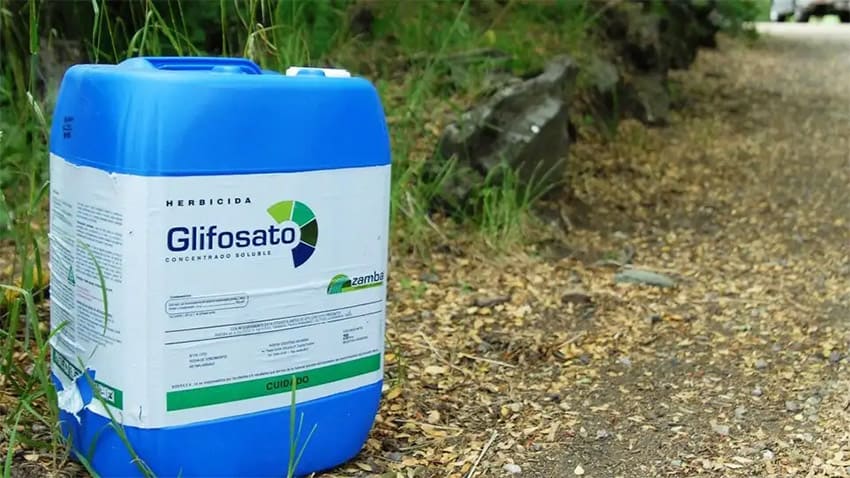
Mexico’s government paused its plan to ban glyphosate, a widely used but controversial herbicide, citing concerns about maintaining agricultural productivity and ensuring food security.
The postponement, announced on Tuesday, comes just days before a previously announced April 1 deadline that would have prohibited “purchasing, using, distributing, promoting and importing glyphosate or agrochemicals that contain it as an active ingredient.”
The weed-killing chemical is used mainly in the production of corn, citrus and fruits and is associated with the cultivation of genetically modified organisms (GMO) such as corn, cotton and soybeans. (A common genetic modification makes crops resistant to glyphosate, allowing farmers to apply large amounts of the weed-killer to those GMO crops.)
A joint statement from the Ministries of Economy (SE), Environment and Natural Resources (Semarnat) and Agriculture and Rural Development (Sader), along with the Federal Commission for the Protection against Sanitary Risks (Cofepris), acknowledges the potential health risks of glyphosate, but emphasizes that a suitable alternative has yet to be identified.
The conditions outlined in a 2020 presidential decree for phasing out glyphosate — continued agricultural output, reduced impact from substitution and viable agroecological alternatives — have not been fully met, according to the statement.
The National Council of Science, Humanities and Technology (Conahcyt), tasked with developing alternatives, did not participate in the decision to postpone the ban.
A year ago, the government said that 12 low-toxicity, broad-spectrum alternatives that can maintain productivity for farmers were in the works.

“Seven bioherbicides have been identified that are available worldwide, and five that will be Mexican manufacturing developments,” Sader stated at that time.
However, those options are reportedly not yet available in sufficient quantities or at accessible prices.
The decision to postpone enactment of the decree has been met with support from agricultural organizations who argue that glyphosate is currently irreplaceable due to its effectiveness and affordability.
Eraclio Rodríguez, national coordinator of the National Front for the Rescue of the Countryside, said applying glyphosate costs about 500 pesos per hectare, while a manual alternative such as tillage would cost up to 6,000 pesos per hectare.
The World Health Organization (WHO) has classified glyphosate as a “probable carcinogen,” though the safety of the herbicide remains a subject of debate.
In addition to calling for the elimination of glyphosate, the decree published on Dec. 31, 2020 also called for Mexico to ban the importation of GM corn for use in dough and tortillas, and gradually phase out imports of GM corn for any kind of human consumption by 2024, and for use as animal feed (depending on supply) at an unspecified later date.
The United States is opposed to this plan, and last year it requested the establishment of a panel to resolve the issue.
Moreover, in 2022, the German company Bayer obtained a court order against the application of the decree after Cofepris refused to issue it a permit for a new GMO seed variety it had developed. The decree allowed Bayer, which in 2018 acquired Monsanto, producer of the glyphosate-based herbicide Roundup, to continue supplying glyphosate and GMO seeds to Mexico.
With reports from La Jornada and Reforma