A total of 3,333 pre-Hispanic pieces from abroad have made their way back to Mexico in 2022, thanks to auction cancellations, forfeitures and voluntary returns from individuals and institutions abroad.
The pieces recovered were mainly the result of efforts by the Ministry of Foreign Affairs (SRE) and the Ministry of Culture at the direction of the president’s office, Marcelo Ebrard said in July of 2022.
“We have been instructed by President López Obrador to place the recovery of our historical and cultural heritage as a priority in foreign policy,” Marcelo Ebrard, Minister of Foreign Affairs said in a statement at the time, just after Mexico had recovered the largest single lot of such objects in 2022 — 2,522 items — through the Consulate of Mexico in Barcelona. “This means we’ve had to work closely with our Embassies and Consulates abroad.”
The items recovered in July belonged to a single family that wished to remain anonymous, Ebrard said at the time.
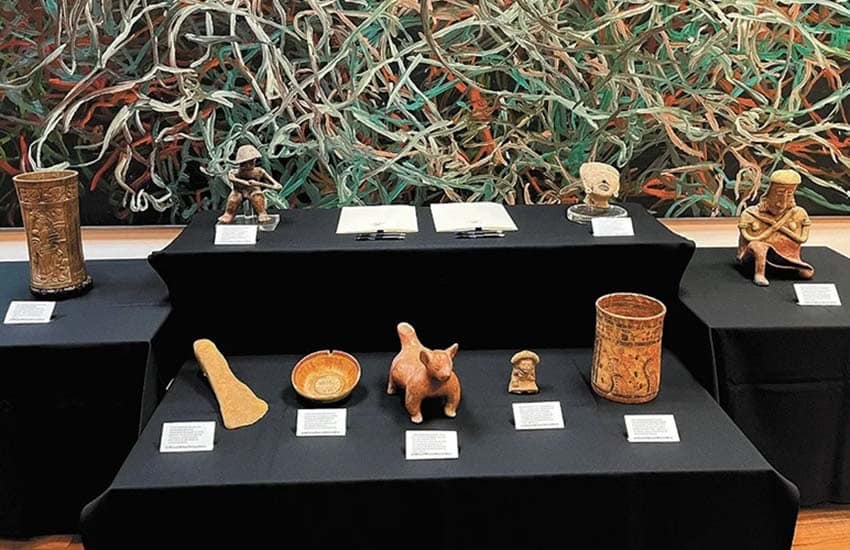
“It is a very large collection of whorls, pre-Hispanic seals, lithic material, obsidian, flint, some stone figures, a series of molcajetes and metates, and of course also an interesting amount of bone objects, many of which are sgraffito [pottery] and many are human bones,” the National Institute of Anthropology and History (INAH) said in a statement.
Also in July, Italian authorities returned 30 archaeological pieces from the Totonaca, Purépecha, Coyotlatelco, Zapotec, Mixtec and Mayan cultures, which were seized by the Carabinieri (one of Italy’s two police forces and older than Italy itself) and authenticated by experts from the Museum of Civilizations in Rome and INAH.
In September, the SRE returned a batch of 50 pre-Hispanic pieces to INAH belonging to different Mexican cultures from different periods of the pre-Hispanic era. Those pieces were voluntarily returned by individuals to Mexican embassies in Austria, Canada and Sweden, as well as to the Mexican consulates in Vancouver, Canada and Albuquerque in the United States.

Early in December, the SRE also handed over to the Ministry of Culture 223 pre-Hispanic pieces recovered by the Embassy of Mexico in Netherlands belonging to different Mesoamerican cultures dating from the Mesoamerican Preclassic period (1200 B.C.–400 B.C.) to the Postclassic period (A.D. 800–A.D. 1521).
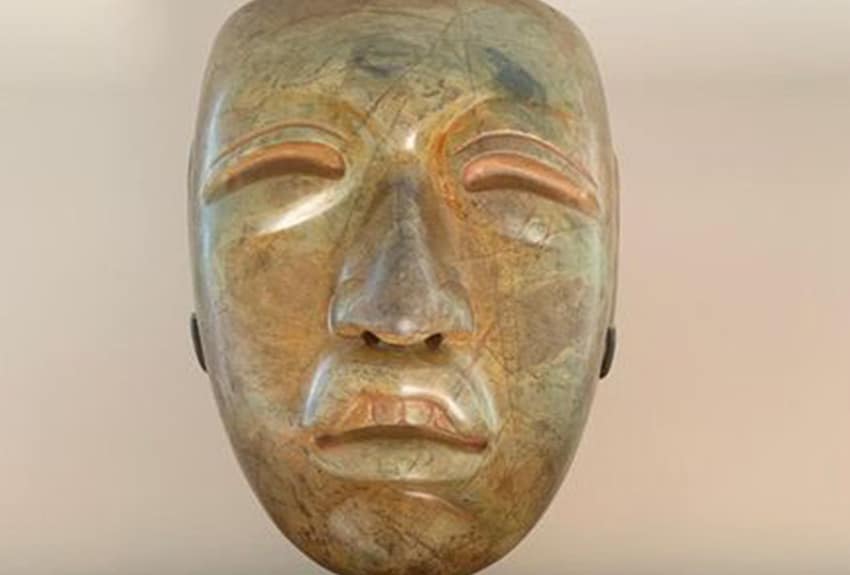
Perhaps one of the most remarkable pre-Hispanic items recovered in 2022 was a 3,500-year-old Olmec mask handed over by an anonymous individual to Mexico’s New York consulate that was returned in excellent shape, a rare event in the case of looted items, which over time in private ownership can break or deteriorate. In other cases, the artifacts have had parts broken off them at the time of their theft in order to remove them from a pre-Hispanic site.
With reports from El Economista