Mexico’s 10 dirtiest beaches are located in just three Pacific coast states

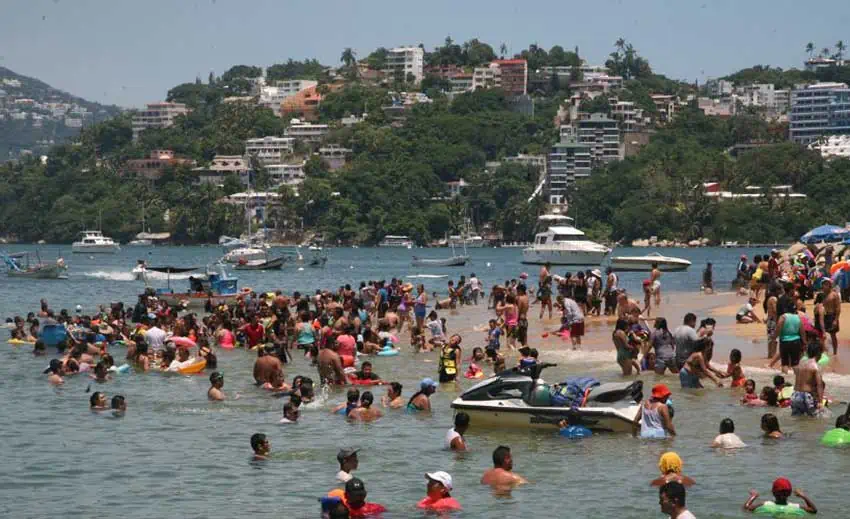
Beach-goers beware: according to the federal Environment Secretariat (Semarnat), some beaches in the Pacific coast states of Guerrero, Nayarit and Michoacán are the dirtiest in Mexico.

The department has found that although all Mexican beaches are currently within acceptable pollution levels, there are a few that are on the brink of becoming unsuitable for recreational enjoyment.

Water quality testing revealed that Papagayo beach in Acapulco is the dirtiest in Mexico, at 198 fecal coliforms per 100 milliliters of water. Anything over 200 is considered unsafe for swimming.

Papagayo is the worst of the six Acapulco beaches that made Semarnat’s list of the dirtiest 10.

Ranked second with 191 fecal coliforms is Nuevo Vallarta II beach in Banderas Bay, Nayarit, followed by Acapulco’s Icacos beach, 189, and Copacabana beach, 183.

The only Michoacán beach to make the list is Chuquiapan in the municipality of Lázaro Cárdenas, scoring 173.

Two more Nayarit beaches followed: Bucerías in Banderas Bay and Chacala in Compostela, with test results of 165 and 163 respectively.

The list closes with three more Acapulco beaches: Hornos, Caletilla and Carabali, all testing between 152 and 158.

Environmental authorities warn that high fecal coliform levels can cause stomach flu, salmonella, cholera, ear inflammation, pink eye and other skin and respiratory conditions.

Beach-goers should be aware of cold-like symptoms, fever, diarrhea and digestive upset.

In order to determine which beaches are suitable for swimming, vacationers are urged to heed warnings issued by local authorities and avoid entering water located near sewage outfalls, river mouths and lagoons.

Close attention should also be paid to weather conditions before and during a day at the beach: swimmers are advised to wait up to one day before going into the water after heavy rains. In the case of smaller, enclosed bays and coastal lagoons, the preventive waiting period is three days.

Beach-goers are also advised to be aware of water conditions before going in: the water should not be dirty, smelly or murky, and foam should not have unusual colors.

Source: Animal Político (sp)

Have something to say? Paid Subscribers get all access to make & read comments.
Manzanillo, Colima, México, 13 de marzo de 2026. La doctora Claudia Sheinbaum Pardo, presidenta Constitucional de los Estados Unidos Mexicanos en conferencia de prensa matutina, “Conferencia del Pueblo” desde Colima. La acompañan Indira Vizcaíno Silva, gobernadora Constitucional del Estado de Colima; Omar García Harfuch, secretario de Seguridad y Protección Ciudadana (SSPC); Raymundo Pedro Morales Ángeles, secretario de Marina (Semar); Bulmaro Juárez Pérez, divulgador de lenguas originarias, presentador de la sección “Suave Patria”; Ricardo Trevilla Trejo, secretario de la Defensa Nacional (Sedena); Jesús Antonio Esteva Medina, secretario de Infraestructura, Comunicaciones y Transportes; Bryant Alejandro García Ramírez, fiscal general del Estado de Colima; Fabián Ricardo Gómez Calcáneo; Rocío Bárcena Molina, subsecretaria de Desarrollo Democrático, Participación Social y Asuntos Religiosos de la Secretaría de Gobernación; Efraín Morales López, director general de la Comisión Nacional del Agua (Conagua); Marcela Figueroa Franco, secretaria ejecutiva del Sistema Nacional de Seguridad Pública (SESNSP) y Guillermo Briseño Lobera, comandante de la Guardia Nacional (GN). Foto: Saúl López / Presidencia

Mexico’s week in review: Congress deals Sheinbaum her first legislative defeat

0
The week of March 9 in Mexico was marked by standoffs between allies in Congress and adversaries at the airport. Here's what you missed.
A soldier displays seized handguns

The US and Mexico, growing together and growing apart: A perspective from our CEO

1
From a historic drop in homicides to opposite bets on electric vehicles, Mexico News Daily's CEO breaks down where the U.S. and Mexico are converging — and where they're not.
Veracruz Gov.

Veracruz governor blames private vessel for 200-kilometer Gulf Coast oil spill

1
The spill, which has spread to over 200 kilometers of Mexico's Gulf Coast beaches, has been traced to a private oil tanker off the coast of Tabasco.
BETA Version - Powered by Perplexity