The incoming government’s new security strategy is a “colossal mistake” and “potentially disastrous,” the international non-governmental organization Human Rights Watch (HRW) has warned.
President-elect López Obrador and future public security secretary Alfonso Durazo this week presented a new national security plan whose central element is the creation of a national guard that will be under the control of the army.
A range of NGOs including Amnesty International have already rejected the plan, charging that it only perpetuates the unsuccessful militarization model implemented by former president Felipe Calderón in 2006 and continued by the current federal government.
Late yesterday, HRW added its voice to the criticism.
“López Obrador is inheriting a human rights catastrophe that has been caused in large part by the militarization of public security in Mexico,” said José Miguel Vivanco, the organization’s Americas director.
“By doubling down on that failed approach, he is making a colossal mistake that could undercut any serious hope of ending the atrocities that have caused so much suffering in Mexico in recent years,” he continued.
Deploying the military to contain criminal violence has produced widespread human rights violations – including executions, enforced disappearances, and torture – and underscores why the military should not be used for law enforcement, HRW said.

More than 200,000 homicides have been recorded since the militarized war on drugs strategy began 12 years ago and last year was the most violent year in at least two decades with 31,174 murders, according to the National Statistics Institute.
“We urge López Obrador to reconsider this ill-advised and potentially disastrous policy,” Vivanco said.
“He should commit himself instead to improving the country’s civilian police forces, however difficult, which is essential to achieve a sustainable end to the violence and abuse that have flourished under his predecessors,” he concluded.
Public policy think tank México Evalúa also joined the chorus of criticism, contending that the new security plan is the wrong approach because it replicates the “exhausted militarization formula.”
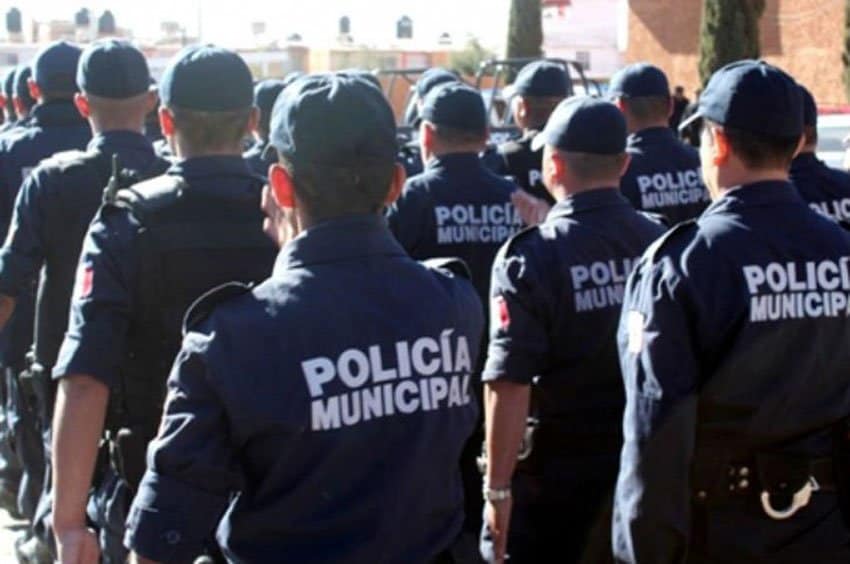
It also said that it was worrying that the new plan doesn’t contain proposals to strengthen police forces at municipal, state and federal levels and better train their officers.
Responding to the criticism, a senator with López Obrador’s Morena party said he will propose that the new government meet with experts to discuss how the security plan can be improved.
Primo Dothé Mata, a member of the Senate’s national defense committee, called on people not to be polarized over the plan because what the country needs is unity and commitment.
Source: Milenio (sp)