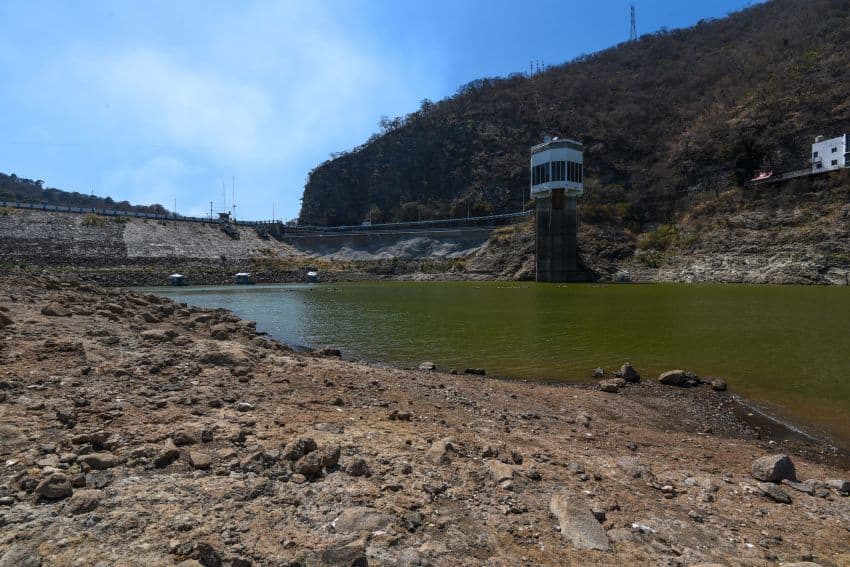
As Mexico bids farewell to a very rainy summer season, the country is still experiencing historically low water reserves.
According to the National Water Commission (Conagua), the total water storage of Mexico’s 210 main dams is 80.1 billion cubic meters — 64% of their total capacity — a figure that is 12% lower than the historical average of 91.3 billion cubic meters.
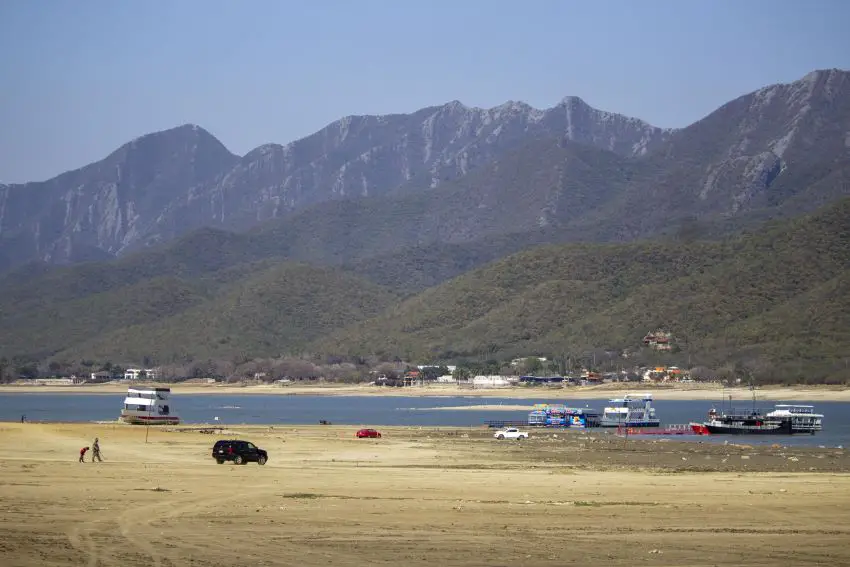
Conagua reported that from Jan. 1 to Nov. 3, the country recorded 697.5 millimeters of rainfall, an average amount according to records from 1991 to 2020.
According to data from the Technical General Subdirectorate of Conagua, the 2024 rainy season “will statistically end on Nov. 30.”
Mexico’s water reserves in numbers
Forty-two dams in Mexico are at or beyond full capacity, according to Conagua, amounting to 8.8 billion cubic meters of water. Meanwhile, 77 of Mexico’s dams reached 75% to 100% of their storage capacity totaling 35.1 billion cubic meters.
In contrast, 32 dams are between 50% and 75% of their storage capacity, amounting to 28 billion cubic meters. Finally, 57 dams recorded levels below 50%, totaling 8.2 billion cubic meters.
#Comunicado
Continúa en aumento el almacenamiento del Sistema #Cutzamala: #Conagua.Más información en:https://t.co/u2fkUBoyZG pic.twitter.com/CLoSQcen8N
— Conagua (@conagua_mx) November 5, 2024

As of Nov. 4, the reservoir with the highest water levels was the Marte R. Gómez dam in Tamaulipas, with a 122% storage level.
Conagua also reported that the three reservoirs that make up the Cutzamala System — which supplies around 28% of the capital’s water — are at 67% capacity, with a total volume of 524.5 billion cubic meters.
Drought conditions in Mexico
According to the drought monitor published by Conagua and the National Meteorological System (SMN), as of Oct. 31, at least half of the country is not suffering from drought conditions.
However, parts of the Baja California Peninsula, Sonora, Chihuahua, Sinaloa, Durango and Coahuila are still seeing exceptional levels of drought.
In Chihuahua, which is experiencing drought conditions throughout the entire state, authorities have declared a state of emergency for the second year in a row. Furthermore, authorities expect Chihuahua to receive 40% less rainfall in 2025 than in 2024.
With reports from Raichali, Infobae and El Economista