The Michoacán state government has announced a new best practices certification for avocado producers, which seeks to reduce deforestation using satellite surveillance.
The voluntary certification, called Pro-Forest Avocado, will guarantee to consumers in the United States and Europe that their avocados come from registered farms that don’t engage in environmentally destructive practices like illegal logging.

Criminal gangs have long carried out illegal logging operations that threaten the region’s environment, including monarch butterfly reserves. The same groups engage in clear-cutting to illegally extend farming acreage into protected natural reserves. The deforestation has often been linked to Michoacán’s lucrative avocado industry, as criminal groups clear protected land to grow the “green gold.”
Using technology to protect Michoacán’s forests
To implement the avocado certification, Michoacán is working with Guardián Forestal (Forest Guardian), a civil society-led program that uses satellite surveillance and data analysis to monitor forests.
Speaking in Mexico City on Wednesday, Michoacán Governor Alfredo Ramírez Bedolla explained that Guardián Forestal will help detect illegal deforestation operations and changes in land usage.

Using Guardián Forestal, the new certification program automatically files complaints with the Michoacán attorney general when it detects potential acts of deforestation.
The governor confirmed that there have already been 327 formal complaints identifying illicit deforestation enterprises. State authorities are also handling another 500 cases related to illegal activities affecting Michoacán’s forests and farmers.

Farmers fed up with extortion
Criminal gangs have been terrorizing Michoacán farmers for years, extorting money from the avocado and lime industries in particular. Farmers, distributors and truckers have been victims of threats and violence.
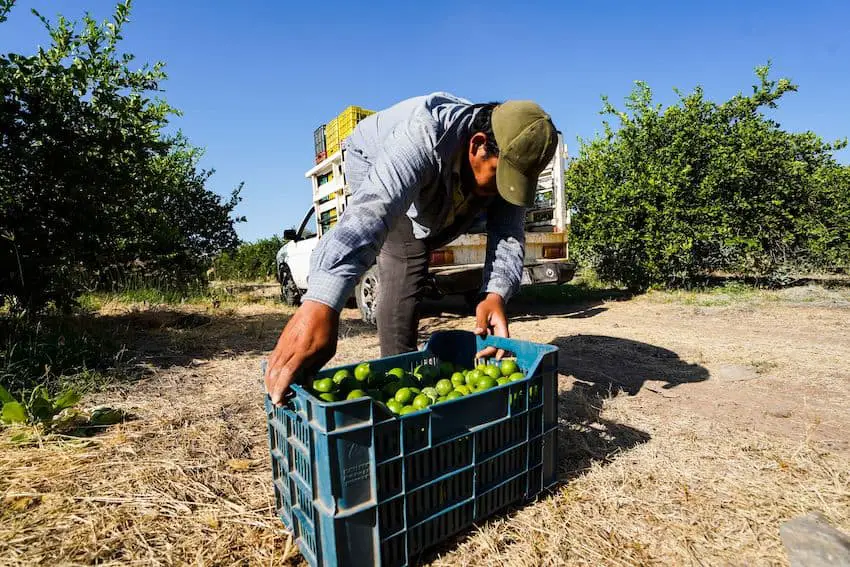
Lime producers staged an eight-day strike at harvest time earlier this month to protest the lack of security. The strike and repeated pleas from industry participants prompted authorities at both the federal and state level to send additional security forces to the region.
In June, the U.S. Department of Agriculture (USDA) suspended inspection operations and halted exports of avocados and mangos for 10 days after two of its employees were threatened. Ramírez said then that officials from both governments had agreed on a new security model for the avocado export sector.
Michoacán led all Mexican states in agricultural exports in the first quarter of 2024, according to the newspaper El Economista. Farmers in the western state exported US $1.3 billion of agricultural products — led by avocados, blackberries, strawberries and lentils — from January through March.
The state is responsible for roughly three-quarters of the avocados produced in Mexico, the global leader in production of the fruit. The amount of land used for avocado farming in Mexico more than tripled over the 40-year period ending in 2022. At that time, Mexico was cultivating nearly 45% of all avocados on the planet.
It is this industry that Ramírez wants to protect through the new certification program, a policy he proposed in June. The program aims to halt deforestation by avocado producers and to block trade of avocados grown in unlicensed orchards.
There are presently more than 49,000 hectares of avocado farmland licensed and certified for export, Michoacán authorities say, whereas 819 hectares of avocado orchards failed to meet the certification standards for exportation.
The certification program rewards those avocado farmers who use environmentally sound practices. Ramírez says he hopes the USDA will accredit the state’s certification program.
With reports from Milenio, La Razón, Quadratín Michoacán and El Economista